
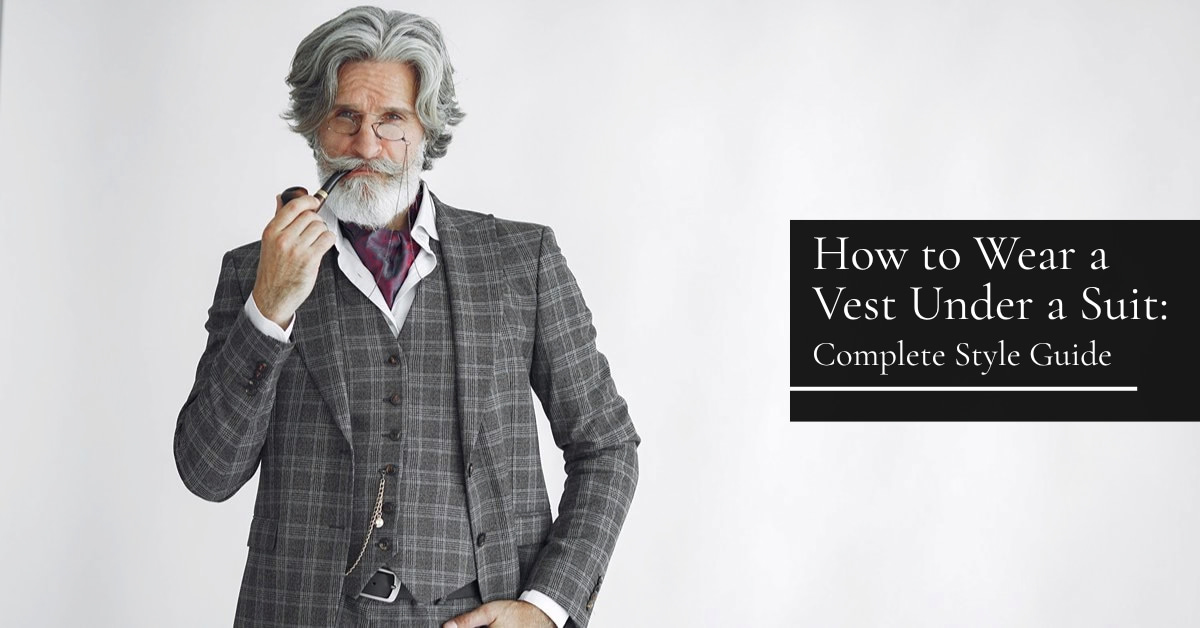
A vest under a suit can turn an ordinary two-piece outfit into a more considered, complete look. It can also expose fit problems quickly. A vest that is too short reveals the shirt or belt, one that is too tight pulls across the buttons, and the wrong neckline can compete with the jacket.
Knowing how to wear a vest under a suit is therefore less about adding another layer and more about creating a clean visual line from the shirt collar to the trouser waistband.
What Does a Vest Add to a Suit?
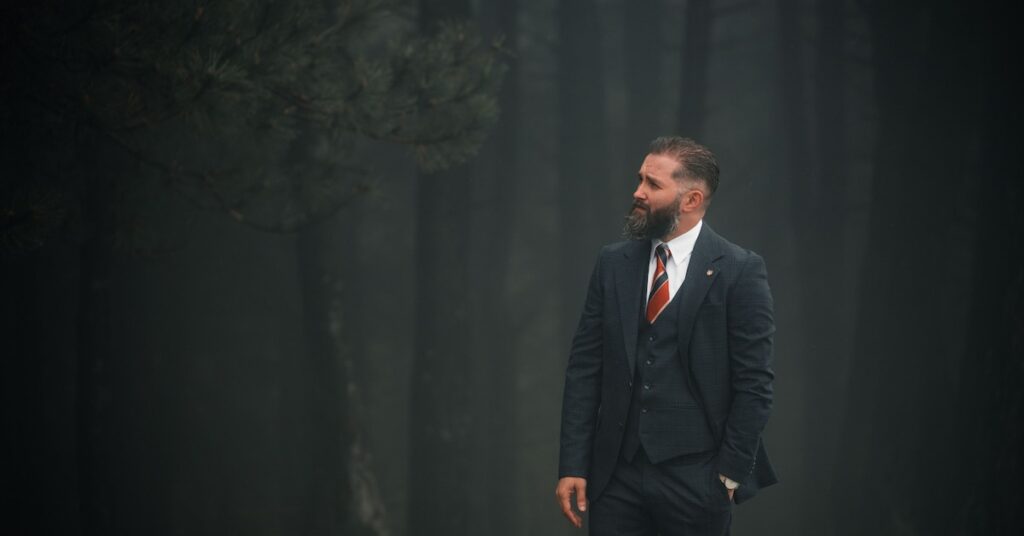
A waistcoat adds a third layer across the centre of the body and changes both the structure and formality of the outfit.
Its main benefits are:
- Covers the shirt-to-trouser transition: This keeps the centre of the outfit visually continuous.
- Strengthens the jacket silhouette: The additional layer gives the suit a more structured appearance.
- Keeps the outfit looking finished: When the jacket comes off, the waistcoat maintains a tailored look.
- Adds formality: Even relatively relaxed fabrics can appear more polished when worn as part of a three-piece combination.
There are two main approaches:
- Matching waistcoat: Cut from the same cloth as the jacket and trousers to create a traditional three-piece suit.
- Contrasting waistcoat: Uses a different colour or texture for a more individual look, particularly at weddings, daytime events, and some smart-casual occasions.
Decide which effect you want before choosing the vest. Mixing unrelated pieces without considering colour, texture, and formality can make the combination look accidental.
Which Vest Should You Choose for Your Suit?
The right choice depends mainly on the occasion, the suit itself, and how much contrast you want.
| Vest Style | Best For | How to Wear It |
|---|---|---|
| Matching waistcoat | Business, interviews, formal ceremonies | Match the jacket and trousers in cloth, colour, and pattern for a traditional three-piece suit |
| Contrasting waistcoat | Weddings, daytime events, less formal tailoring | Use controlled contrast in colour or texture without competing with the suit |
| Adjustable-back waistcoat | Wearing mostly beneath a jacket | Keep the strap comfortably fitted so the back stays flat without bunching |
| Fully faced waistcoat | Occasions where the jacket may come off | Choose this when you want the back of the vest to look more finished on its own |
Matching Vest for a Traditional Three-Piece Suit
A matching vest is the safest choice for formal business settings, ceremonies, and events with a defined dress code.
If the suit has a subtle check, for example, a matching waistcoat maintains the same pattern rather than introducing another competing design.
Contrasting Waistcoat for More Visual Interest

A contrasting waistcoat can add depth to navy, blue, or grey tailoring. Charcoal flannel under a navy jacket creates controlled contrast, while a textured tan or stone vest can soften a blue suit for a daytime wedding.
The key is moderation. If both the suit and waistcoat have strong colours or patterns, the outfit can lose its visual centre.
Adjustable-Back or Fully Faced Waistcoat
Many waistcoats have a smooth back with an adjustable strap, particularly when they are intended to remain beneath a jacket. A waistcoat made with the same fabric across the back can appear more complete when the jacket is removed.
Either approach can work. The important point is that the back lies flat and the adjuster does not create bunching beneath the jacket.
How Should a Suit Vest Fit?
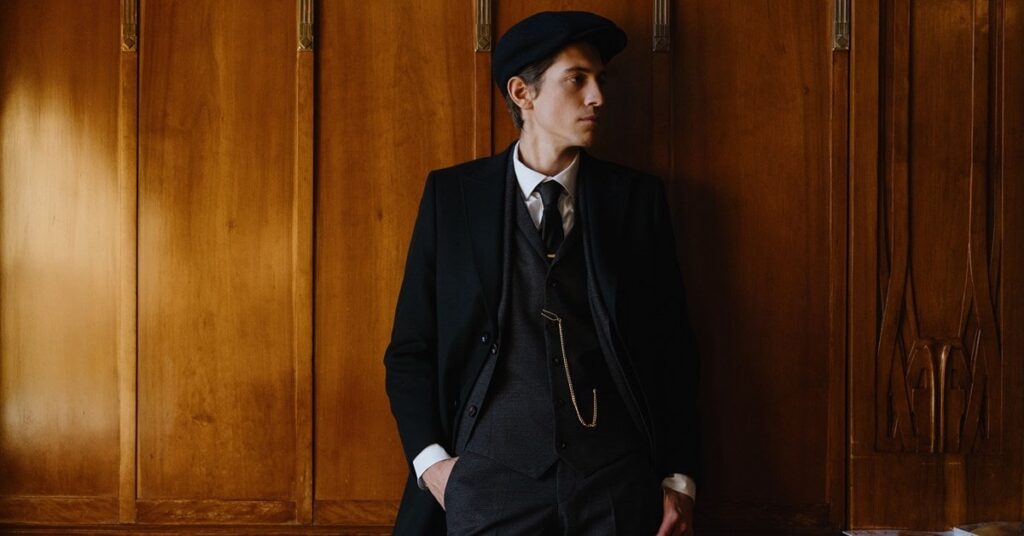
Good suit vest fit depends on more than simply choosing the correct chest size. Check the length, waist, armholes, neckline, and back while both standing and moving.
1. The Vest Should Cover the Waistband
The bottom edge should meet or slightly overlap the trouser waistband. No shirt should show between the vest and trousers when you stand naturally.
This is one of the most important three-piece suit rules because a visible strip of shirt breaks the continuous line through the centre of the outfit.
2. The Buttons Should Lie Flat
Fasten the vest and take a full breath. The buttons should remain flat without creating X-shaped tension lines across the front.
If the garment pulls across the chest or abdomen, it is too tight. If excess fabric balloons around the waist, taking in the sides or back may improve the shape.
3. The Armholes Should Allow Natural Movement
Raise your arms, sit down, and reach forward. The vest should remain close to the body without cutting into the armpits.
Armholes that are too deep can leave excess fabric around the sides, while overly tight armholes can restrict movement and feel uncomfortable beneath the jacket.
4. The Neckline Should Work With the Jacket
A standard V-neck leaves enough shirt and tie visible to work with most suit lapels. A higher or narrower V can look more formal but may leave less room for a large tie knot.
Ideally, the opening of the vest should complement the jacket’s lapel line rather than compete with or obscure it.
5. The Back Should Stay Tidy
The back should sit close to the body without riding up noticeably when you move.
Use the rear adjuster only to refine the fit. Pulling it too tightly can create horizontal wrinkles and distort the front. A well-fitted waistcoat should achieve its shape primarily through its cut rather than tension from the buckle.
Which Vest Buttons Should Stay Undone?
With a traditional single-breasted waistcoat, the usual convention is to leave the bottom button undone. This gives the lower part of the vest more freedom to sit naturally around the waist and hips.
The remaining buttons are normally fastened for formal and business settings.
A double-breasted waistcoat creates more coverage across the torso and a stronger visual statement. Because it already adds detail, it usually works best with restrained shirts, ties, and pocket squares.
Whatever the style, avoid leaving several buttons undone simply for effect. A waistcoat should look structured rather than loose or unfinished.
How Should You Match the Shirt, Tie, Vest, and Jacket?

The vest should connect the other parts of the outfit rather than introduce another competing colour.
With a navy suit, a white shirt with a burgundy, navy, or similarly restrained tie is an easy combination. A grey suit can work with a pale-blue shirt and deeper green or burgundy accents, while a brown or tan vest can soften a blue suit for a daytime event.
A few simple combinations help keep the outfit balanced:
- Patterned vest: Choose a relatively simple shirt and tie.
- Striped shirt: Keep the vest plain and avoid another strong pattern.
- Bold suit: Use a quieter waistcoat, shirt, and accessories.
- Contrasting vest: Repeat or complement one of its tones elsewhere rather than adding several unrelated colours.
The tie should also sit naturally within the V of the vest rather than appearing crowded by the neckline.
How Should You Wear a Vest for Different Occasions?
Business and Interviews
Choose a matching navy, grey, or charcoal waistcoat with a white or pale-blue shirt and a restrained tie.
For conservative workplaces or interviews, keeping the fabric matte and accessories minimal generally creates a cleaner impression. A three-piece suit naturally attracts more attention than a two-piece suit, so precise fit becomes especially important.
Weddings
Weddings allow more flexibility with colour and texture.
A light-grey suit with a tonal waistcoat creates a polished appearance, while navy with tan, stone, or textured grey creates more obvious contrast.
Consider the venue and time of day when choosing fabric:
- Outdoor daytime wedding: Linen, cotton, or lighter wool
- Formal daytime ceremony: Smooth wool or a subtle textured cloth
- Evening reception: Darker wool, refined blends, or smoother finishes
- Relaxed destination wedding: Lighter colours and breathable fabrics
Formal Evening Events
Keep the palette controlled. Midnight navy, charcoal, and black can work with a crisp white shirt and a restrained tie or bow tie, depending on the event.
Remember that adding a waistcoat does not automatically turn a normal suit into black tie. Follow the dress code stated on the invitation.
Smart-Casual Outfits
Wearing the vest without the jacket works best when the waistcoat can visually stand on its own.
For example, a navy vest can work with grey wool trousers and a structured shirt. A highly formal matching suit vest paired casually with jeans is harder to balance and can look disconnected unless the entire outfit is intentionally styled around it.
What Are the Most Common Vest-and-Suit Mistakes?
Several fit problems are easy to diagnose once you know what to look for.
| What You Notice | Likely Cause | What to Do |
|---|---|---|
| Shirt or belt visible below the vest | Vest is too short or trousers sit too low | Choose a longer vest, higher-rise trousers, or adjust both |
| X-shaped pulling around the buttons | Chest or waist is too tight | Size up or have the vest altered |
| Fabric floating around the sides | Vest is too loose or armholes are too deep | Take in excess fabric where construction allows |
| Jacket feels tight over the vest | Jacket has insufficient room for the extra layer | Reassess the jacket fit rather than tightening the vest |
| Heavy-looking torso | Vest fabric is too bulky for the suit | Match fabric weight more closely |
| Back rides up when sitting | Body length or waist adjustment is incorrect | Loosen the adjuster or have the balance checked by a tailor |
Also avoid combining too many competing patterns. Checks, stripes, textured fabric, and a bold tie can quickly overwhelm the outfit.
If colour coordination is the main concern, the guide to dress shirt colours and suit combinations can help narrow down suitable shirt and tie pairings.
Which Vest Alterations Are Worth Making?
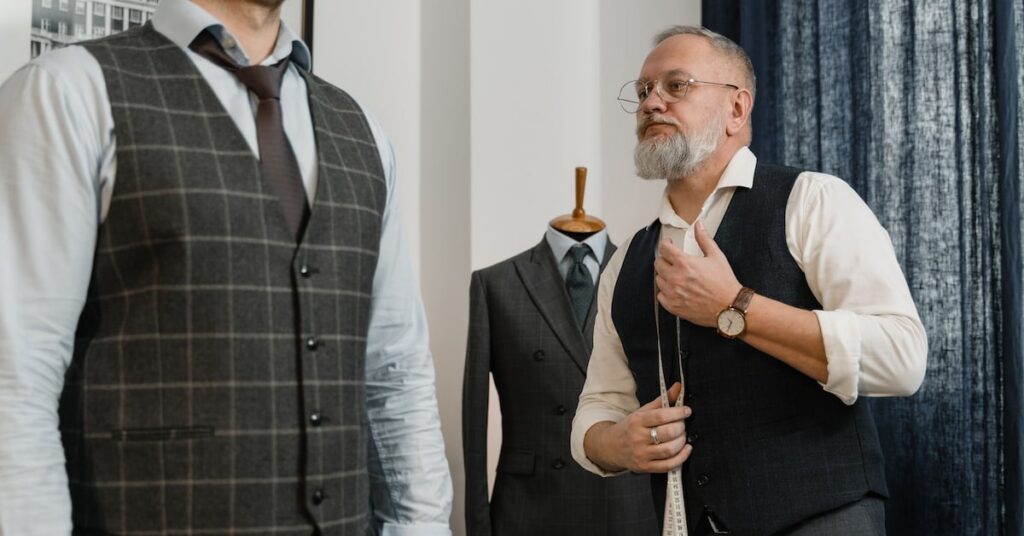
A ready-made vest can often be improved through relatively small adjustments.
Common alterations include:
- Taking in excess fabric through the waist
- Correcting the body length where construction allows
- Refining the rear adjuster
- Cleaning up excess fabric around the sides
- Checking that the neckline stays centred over the shirt placket
Bring the jacket and trousers to the fitting rather than having the vest assessed on its own. The tailor needs to see how all three pieces interact.
This is especially useful because jacket fit can change once another layer is introduced. The shoulder, chest, lapel, and fastening points should still sit cleanly. For a more detailed fit reference, see the guide to the parts of a suit jacket and how they affect fit.
When commissioning a custom waistcoat, tell the tailor whether you expect to remove your jacket regularly. That decision can influence the back treatment, lining, pocket placement, and overall finish.
It is also worth discussing whether you normally wear a belt or braces. A traditional three-piece silhouette generally looks cleaner when the trousers rise high enough to meet the waistcoat without exposing the shirt or belt.
What Should You Check Before Leaving Home?
Before heading out, run through a quick fit check:
- Fasten the vest, leaving the bottom button undone on a traditional single-breasted style.
- Check the waistband to make sure no shirt is visible between the vest and trousers.
- Look for pulling around the buttons, chest, and waist.
- Check the neckline against the shirt, tie, and jacket lapels.
- Fasten the jacket and make sure it still closes cleanly over the vest.
- Sit down and stand again to see whether the back rides up or the front bunches.
- Check the overall colour balance in natural light.
If you are still deciding between navy, charcoal, grey, or a lighter base for a three-piece outfit, our guide to choosing the right suit colour for different occasions provides a useful starting point.
Conclusion
A vest under a suit works best when every element supports the same silhouette: the waistband stays covered, the buttons lie flat, the neckline complements the jacket, and any contrast feels intentional. At Michael Tailors, we consider the vest alongside the jacket, trousers, shirt, and the way the wearer moves, because those details determine whether a three-piece outfit feels naturally balanced. If you want a waistcoat and suit shaped around your measurements, proportions, and preferred style, visit our Bangkok tailor shop to explore a fully coordinated tailored look.
Frequently Asked Questions
Should the Vest Match the Suit?
Not always. A matching vest creates the most traditional three-piece suit and is usually the easier choice for business, conservative ceremonies, and formal occasions. A contrasting vest can work well for weddings, daytime events, and less formal outfits when its colour, texture, and fabric weight coordinate with the suit.
How Long Should a Waistcoat Be?
A waistcoat should be long enough to cover the trouser waistband when you are standing naturally. There should not be a visible strip of shirt between the vest and trousers. If there is, the vest may be too short, the trousers may sit too low, or both pieces may need adjustment.
Which Vest Buttons Should Stay Undone?
On a traditional single-breasted waistcoat, the bottom button is normally left undone while the remaining buttons stay fastened. The exact treatment can vary with less conventional or double-breasted designs, but leaving several buttons open is generally unsuitable for a formal three-piece look.
Can You Wear a Contrasting Vest With a Suit?
Yes. Navy and grey suits are particularly adaptable bases for contrasting waistcoats. Keep the contrast controlled and consider colour, pattern, texture, and fabric weight together so the vest looks deliberate rather than like a mismatched suit piece.
Can You Wear a Suit Vest Without the Jacket?
Yes, particularly at relaxed events or once a jacket has been removed indoors. The vest should still fit cleanly and look finished from the back. For intentionally jacket-free styling, a waistcoat designed to work as a standalone garment is generally easier to coordinate than a highly formal vest taken from a matching suit.

More Articles
Getting a Suit Made in Bangkok on a Short Trip: Real Customer Stories
Suit vs Tuxedo: Key Differences and When to Wear Each One