
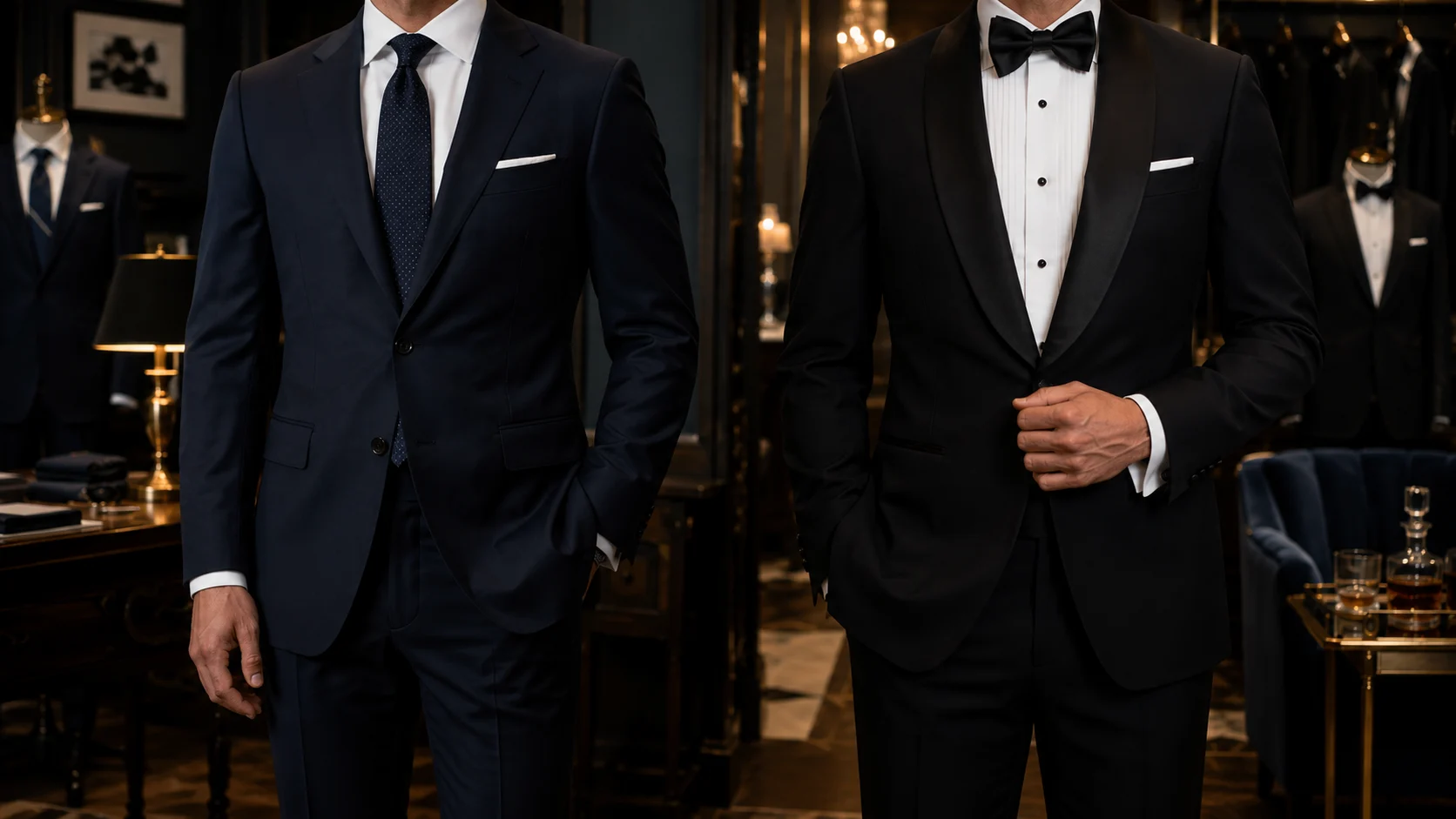
A suit and a tuxedo may look similar at first, especially when both are dark and tailored. However, they are designed for different levels of formality and are worn for different types of occasions.
Many men confuse a black suit with a tuxedo, but they are not the same. A tuxedo is formal eveningwear with satin or grosgrain details, while a suit is more versatile and can be worn for business, weddings, dinners, and smart occasions.
This guide explains the key differences between a suit vs tuxedo, when to wear each one, and how to choose the right option for your event. Whether you are dressing for a wedding, black-tie invitation, business event, or formal dinner, understanding the difference will help you look polished and properly dressed.
What Is a Suit?
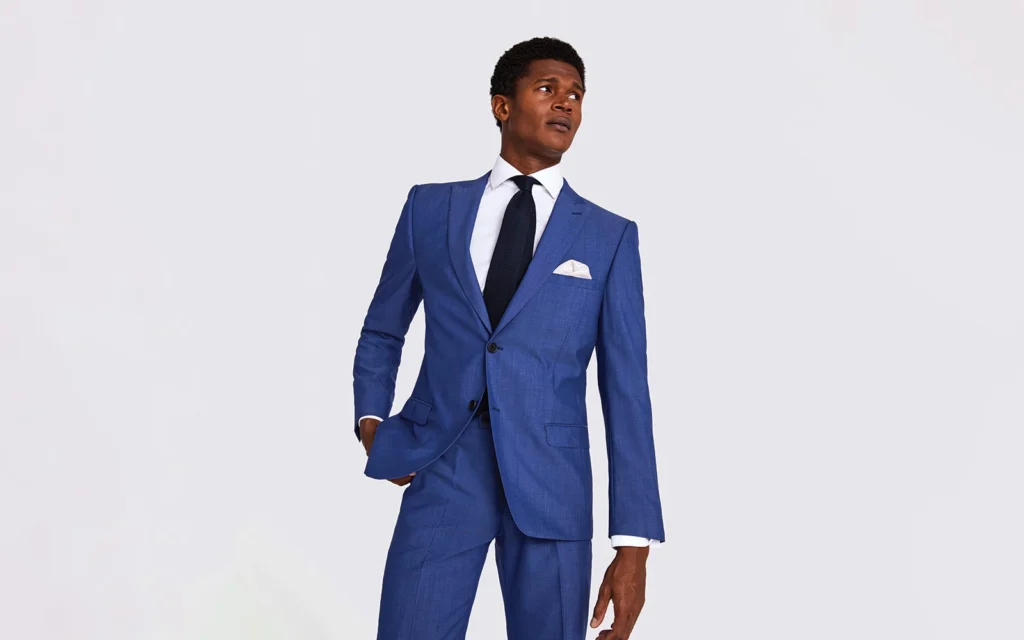
A suit is a matching jacket and trousers made from the same fabric. It is one of the most versatile pieces in a man’s wardrobe because it can be styled for professional, formal, semi-formal, and smart-casual occasions.
A men’s suit can be worn for business meetings, weddings, interviews, dinners, office wear, graduations, and many social events. Depending on the fabric, color, cut, and styling, a suit can look traditional, modern, relaxed, or highly formal.
Common suit styles include:
- Business suit
- Wedding suit
- Lounge suit
- Three-piece suit
- Summer suit
- Double-breasted suit
A tailored suit is designed to create clean lines, balanced proportions, and a sharp appearance. A formal suit in navy, charcoal, or black can work well for evening occasions, while a lighter custom suit may be better for daytime weddings or warm-weather events.
The main strength of a suit is flexibility. You can wear it with a dress shirt and tie, an open-collar shirt, loafers, oxfords, or different accessories depending on the dress code.
What Is a Tuxedo?
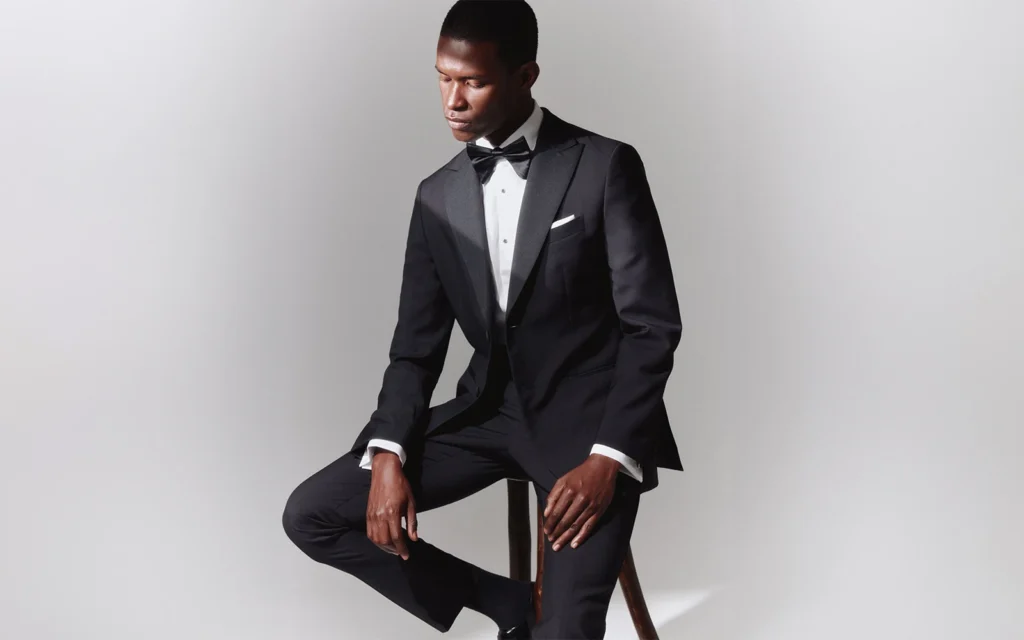
A tuxedo is a formal evening garment traditionally worn for black-tie events. It is more formal than a standard suit and is usually recognized by its satin or grosgrain details.
Tuxedos often feature satin or grosgrain on the lapels, buttons, pocket trim, and sometimes along the outer seam of the trousers. These formal details give the tuxedo a more elegant and ceremonial appearance.
A tuxedo is usually worn with a formal white shirt, bow tie, polished formal shoes, and often a cummerbund or waistcoat. It may also include shirt studs, cufflinks, suspenders, and a white pocket square.
Common tuxedo styles include:
- Black tuxedo
- Midnight blue tuxedo
- Dinner jacket
- Shawl lapel tuxedo
- Peak lapel tuxedo
- White dinner jacket
A tuxedo is not designed for everyday business wear or casual social events. It is made for formal evening occasions where the dress code requires a more refined and traditional look.
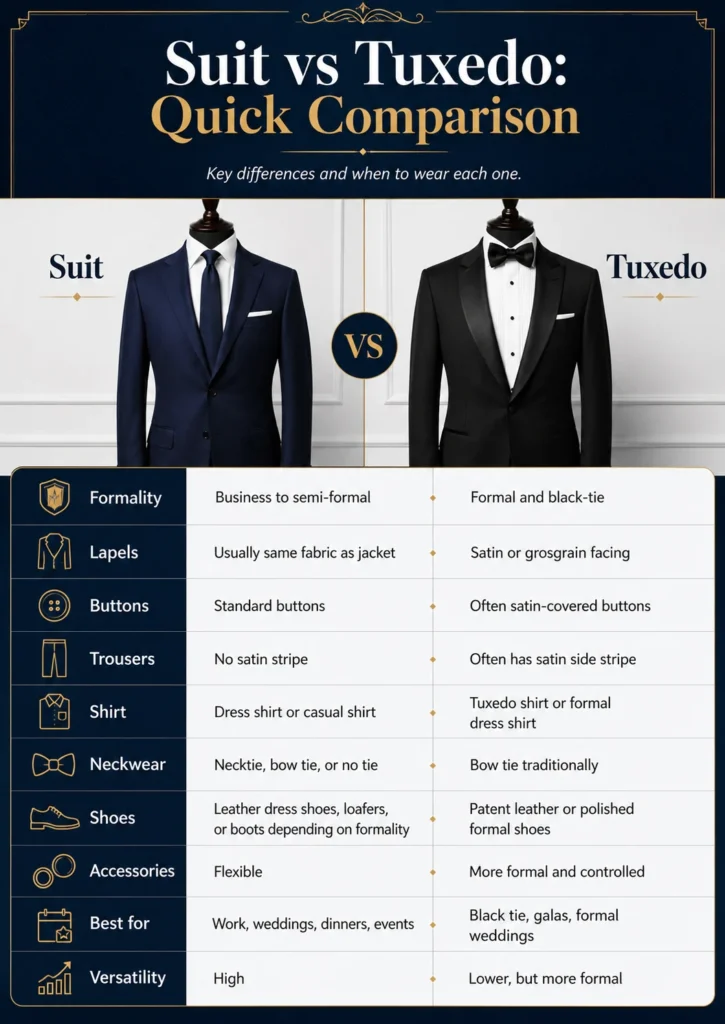
Suit vs Tuxedo: Quick Comparison
The Main Difference Between a Suit and a Tuxedo
The main difference between a suit and a tuxedo is the presence of satin or silk-like contrast details. A tuxedo usually has satin or grosgrain on the lapels, buttons, and sometimes the trousers, while a suit is usually made from one consistent fabric.
Tuxedos are designed for formal eveningwear. They create a sharper, more ceremonial look that is ideal for black-tie weddings, gala dinners, award ceremonies, and elegant evening events.
Suits are more adaptable. A suit can be worn for business, daytime events, semi-formal weddings, interviews, and dinners depending on how it is styled.
In simple terms, a tuxedo is more formal and specific, while a suit is more versatile and practical. All tuxedos are formal garments, but not all formal suits are tuxedos.
Difference 1: Lapels
Lapels are one of the easiest ways to tell the difference between a suit and a tuxedo. Tuxedo lapels usually have satin or grosgrain facing, which gives them a smooth and slightly contrasting appearance.
Common tuxedo lapel styles include:
- Shawl lapel
- Peak lapel
- Notch lapel
Shawl lapels and peak lapels are the most classic choices for tuxedos. A shawl lapel has a rounded, elegant shape, while a peak lapel creates a sharper and more formal look.
Suit lapels are usually made from the same fabric as the jacket. Common suit lapel styles include:
- Notch lapel
- Peak lapel
Notch lapels are common on business suits and everyday formal suits. Peak lapels can make a suit look more powerful and dressy, especially on double-breasted suits or formal wedding suits.
Difference 2: Fabric and Finish
Suits come in a wide range of fabrics, finishes, colors, and textures. Common suit fabrics include wool, linen, cotton, flannel, tweed, and blended materials.
A suit may be matte, textured, patterned, lightweight, or seasonal. For example, a linen suit works well in warm weather, while a flannel suit feels more appropriate for cooler months.
Common suit colors include:
- Navy
- Charcoal
- Grey
- Brown
- Beige
- Black
- Patterned fabrics
Tuxedos are usually made from fine wool or wool blends with formal contrast details. They tend to look cleaner, darker, smoother, and more refined than regular suits.
Common tuxedo colors include:
- Black
- Midnight blue
- White dinner jacket
- Ivory dinner jacket
A tuxedo is usually less experimental than a suit because formalwear depends on simplicity, elegance, and tradition.
Difference 3: Buttons and Jacket Details
Tuxedo buttons are often covered in satin or a matching formal fabric. This creates a cleaner and more refined appearance that matches the lapels and other formal details.
Suit buttons are usually made from horn, corozo, plastic, metal, or standard suit button materials. They are practical and can vary depending on the style of the suit.
Tuxedo pockets are usually more minimal. Jetted pockets are common because they create a smooth line across the jacket.
Suit pockets can be more varied. They may include flap pockets, patch pockets, ticket pockets, or jetted pockets depending on the formality and design.
Tuxedo design is usually more restrained because formalwear relies on clean lines and subtle details rather than busy styling.
Difference 4: Trousers
Suit trousers are usually made from the same fabric as the suit jacket and do not have satin stripes. They may include belt loops, side adjusters, pleats, cuffs, or plain hems.
Tuxedo trousers often include a satin or grosgrain stripe along the outer leg seam. This stripe connects visually with the satin details on the jacket and gives the tuxedo its traditional formal look.
Tuxedo trousers are often worn without belt loops. Instead, they may use side adjusters or suspenders to keep the waist clean and formal.
Suit trousers allow more flexibility. They can be styled for business, weddings, or semi-formal events depending on the cut, fabric, and break.
Tuxedo trousers should look clean, elegant, and formal. They are not usually meant to be mixed with casual shirts, belts, or everyday shoes.
Difference 5: Shirt Style
Suits can be worn with many shirt styles. This is one reason they are more versatile than tuxedos.
Suit shirt options include:
- Standard dress shirt
- Oxford shirt
- Patterned shirt
- Casual shirt
- Open-collar shirt
A business suit usually looks best with a crisp dress shirt and tie. A smart-casual suit may work well with an open-collar shirt or a more relaxed fabric.
Tuxedos are usually worn with a formal white shirt. Tuxedo shirts are designed to match the elegance of black-tie dressing.
Tuxedo shirt options include:
- Pleated front shirt
- Piqué bib shirt
- Plain formal shirt
- Wing collar shirt
- Turndown collar shirt
Many tuxedo shirts are designed for studs and cufflinks. These details help complete the formal look and make the outfit feel intentional.
Difference 6: Neckwear
Suits can be worn with a necktie, bow tie, or no tie depending on the occasion. This gives suits much more styling flexibility.
A suit with a tie is a classic choice for business, weddings, interviews, and formal dinners. A suit without a tie can feel modern, relaxed, and suitable for smart-casual events.
Tuxedos are traditionally worn with a black bow tie, especially for black-tie events. Some modern tuxedo looks use a formal black necktie, but the bow tie remains the classic and most appropriate choice.
A simple way to understand the difference is:
- Suit + tie = business or formal
- Suit without tie = smart-casual or modern
- Tuxedo + bow tie = black tie and formal eveningwear
The neckwear should always match the formality of the event.
Difference 7: Shoes
Suits allow more flexibility when it comes to shoes. The right choice depends on the formality of the suit and the occasion.
Suit shoe options include:
- Oxford shoes
- Derby shoes
- Loafers
- Monk straps
- Dress boots
For business or formal events, oxfords and derbies are classic choices. For more relaxed weddings or smart-casual settings, loafers may work well.
Tuxedos require more formal footwear. The shoes should look polished, elegant, and appropriate for eveningwear.
Tuxedo shoe options include:
- Patent leather oxfords
- Highly polished black oxfords
- Velvet slippers for certain formal settings
Casual shoes should generally be avoided with tuxedos. Sneakers, casual loafers, boots, or heavily textured shoes can make the outfit look mismatched.
Difference 8: Accessories
Suit accessories are more flexible and can be adjusted based on the event. A suit can be styled conservatively for business or more creatively for weddings and social occasions.
Suit accessories may include:
- Necktie
- Pocket square
- Belt
- Watch
- Tie bar
- Lapel pin
Tuxedo accessories are more traditional and formal. They should be elegant, minimal, and carefully chosen.
Tuxedo accessories may include:
- Bow tie
- Cummerbund
- Waistcoat
- Cufflinks
- Shirt studs
- Pocket square
- Suspenders
With a tuxedo, less is usually more. The goal is refinement, not decoration.
When Should You Wear a Suit?
A suit is the better choice when the event is formal, semi-formal, business-related, or smart but not strictly black tie. It is the most practical option for most men because it can be worn in many different settings.
You can wear a suit for:
- Business meetings
- Office wear
- Job interviews
- Daytime weddings
- Semi-formal weddings
- Cocktail events
- Formal dinners
- Graduations
- Smart-casual events
- Professional conferences
The color and fabric should match the event. A navy or charcoal suit is ideal for business and professional occasions. A light grey or beige suit works well for daytime or outdoor events.
A dark formal suit can be suitable for evening events, while linen or lightweight wool is a smart choice for warm-weather weddings. A custom suit can also be designed around your body, event, and personal style for a more polished result.
When Should You Wear a Tuxedo?
A tuxedo is best for formal evening events and black-tie occasions. It is the correct choice when the invitation clearly states “black tie.”
You can wear a tuxedo for:
- Black-tie weddings
- Gala dinners
- Charity balls
- Award ceremonies
- Formal evening receptions
- Opera or formal theatre nights
- Luxury formal dinners
- White or ivory dinner jacket events
If an invitation says black tie, a tuxedo is usually expected. A black suit may look formal, but it is not always a proper replacement for a tuxedo at strict black-tie events.
A tuxedo shows that you understand the dress code and respect the occasion. It is designed for moments when elegance and tradition matter.
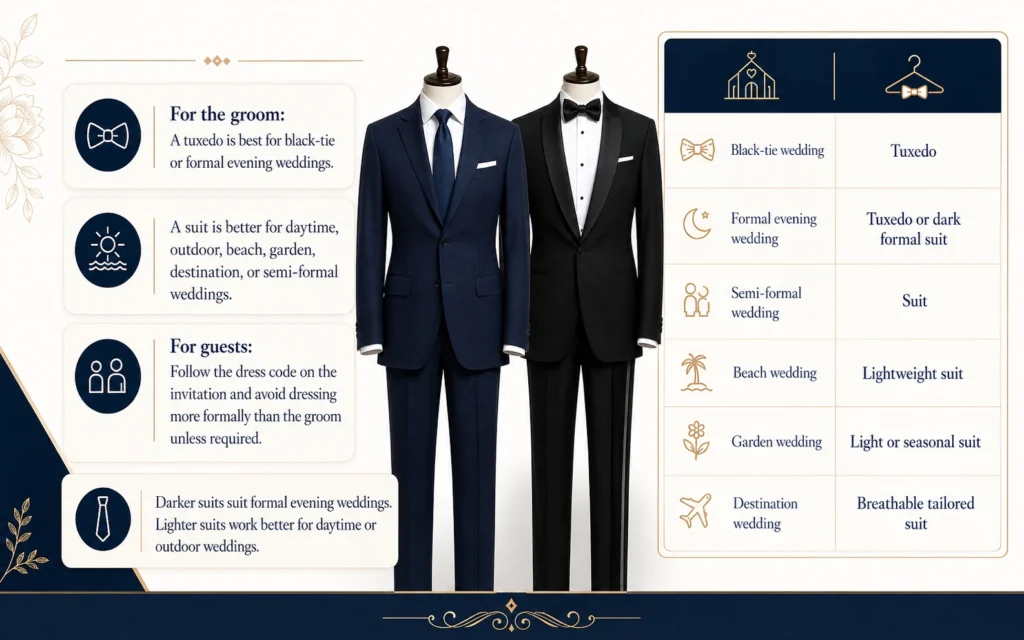
Suit or Tuxedo for a Wedding?
Choosing between a suit or tuxedo for a wedding depends on the dress code, venue, time of day, and your role in the wedding.
Can You Wear a Black Suit Instead of a Tuxedo?
A black suit can look formal, but it is not the same as a tuxedo. A tuxedo has satin or grosgrain details, formal trousers, and traditional accessories that a black suit does not have.
A black suit may be acceptable for formal events or black-tie optional occasions, but it is not ideal for strict black tie. If the invitation clearly says black tie, a tuxedo is usually the better and safer choice.
A black suit works better for:
- Funerals
- Formal dinners
- Evening events
- Business-formal settings
A tuxedo works better for:
- Black-tie invitations
- Gala events
- Formal weddings
- Ceremonial eveningwear
If you only own a black suit, you can make it look more formal with a white dress shirt, dark tie, polished black shoes, and simple accessories. However, it still will not fully replace the traditional look of a tuxedo.
Can You Wear a Tuxedo as a Suit?
A tuxedo should not usually be worn like a regular suit. It is designed for formal eveningwear, not business meetings, office wear, or casual events.
Wearing a tuxedo jacket with regular business accessories may look mismatched. The satin lapels, formal buttons, and tuxedo trousers are meant to work together as part of a black-tie outfit.
However, some dinner jackets can be styled for creative formal events if done carefully. For example, a velvet dinner jacket or white dinner jacket may work for certain evening occasions, but it still belongs in the formalwear category.
A tuxedo is powerful because it is specific. It loses its elegance when treated like an everyday suit.
Which One Is More Versatile?
A suit is more versatile than a tuxedo. It can be styled up or down, worn with different shirts, paired with different shoes, and used for many occasions.
A suit can work for business, weddings, dinners, interviews, professional events, and smart-casual settings. You can wear it with a tie for a formal look or without a tie for a relaxed modern style.
A tuxedo is less versatile, but it is more powerful for formal occasions. When the event is black tie, a tuxedo looks more correct, elegant, and refined than a regular suit.
The simple rule is:
- Choose a suit for flexibility.
- Choose a tuxedo for black-tie elegance.
- Choose both if you attend a variety of formal and professional events.
Which One Should You Buy First?
Most men should invest in a well-fitted suit first. A navy or charcoal tailored suit can cover many occasions, including business meetings, weddings, interviews, dinners, and semi-formal events.
A first suit should be versatile, timeless, and easy to style. Navy and charcoal are usually the safest choices because they work across different seasons and dress codes.
A tuxedo is worth buying if you attend black-tie events, formal weddings, galas, charity balls, or luxury evening events often. If you only attend one black-tie event every few years, renting may be more practical.
Suggested first purchases:
- First suit: navy or charcoal tailored suit
- First tuxedo: black or midnight blue tuxedo with peak or shawl lapels
A good suit builds the foundation of a wardrobe. A good tuxedo completes it for formal evening occasions.
Fit Matters More Than the Label
Whether you choose a suit or tuxedo, fit matters more than the label. A well-tailored suit can look more refined than an expensive tuxedo with poor proportions. Working with Michael Tailors, a Bangkok suit tailor, allows the garment to be adjusted around your shoulders, chest, waist, sleeve length, and trouser balance for a cleaner and more appropriate formal look.
The most important fit points include:
- Clean shoulders
- Smooth chest
- Proper jacket length
- Correct sleeve length
- Comfortable waist
- Clean trouser break
The jacket should follow the body without pulling. The trousers should sit properly at the waist and fall cleanly over the shoes.
Tailoring helps the garment match your body and the event. A properly fitted suit or tuxedo will always look more refined than one that is too tight, too loose, or poorly balanced.
Common Mistakes to Avoid
Many men make simple mistakes when choosing between a suit and a tuxedo. Avoiding these errors can make your outfit look more polished and appropriate.
Common mistakes include:
- Wearing a business suit to a strict black-tie event
- Wearing a tuxedo during the day without a formal reason
- Pairing a tuxedo with casual shoes
- Wearing a belt with tuxedo trousers designed for suspenders
- Choosing a novelty bow tie for a formal event
- Wearing trousers with too much break
- Choosing a jacket that is too tight
- Mixing tuxedo details with regular suit pieces incorrectly
- Ignoring the invitation dress code
The best outfit is not only the one that looks stylish. It is the one that fits the event, fits your body, and respects the dress code.
FAQ About Suit vs Tuxedo
What is the main difference between a suit and a tuxedo?
The main difference is that a tuxedo usually has satin or grosgrain details on the lapels, buttons, and trousers, while a suit is usually made from one main fabric without formal contrast details.
Is a tuxedo more formal than a suit?
Yes. A tuxedo is generally more formal than a suit and is traditionally worn for black-tie and formal evening events.
Can I wear a suit to a black-tie event?
For strict black tie, a tuxedo is usually expected. For black-tie optional, a dark formal suit may be acceptable, but a tuxedo is still the more traditional choice.
Can I wear a tuxedo to a wedding?
Yes, you can wear a tuxedo to a wedding, especially if it is black tie, formal, or held in the evening. For daytime or semi-formal weddings, a suit may be more appropriate.
Is a black suit the same as a tuxedo?
No. A black suit is not the same as a tuxedo. A tuxedo has satin or grosgrain details, formal trousers, and traditional accessories that distinguish it from a regular black suit.
Should I wear a bow tie with a tuxedo?
Yes. A bow tie is the traditional choice for a tuxedo, especially for black-tie events. A formal black necktie can work in some modern settings, but the bow tie remains the classic option.
Which is better for a groom, suit or tuxedo?
It depends on the wedding dress code, venue, time of day, and overall formality. A tuxedo is best for black-tie weddings, while a suit is better for semi-formal, daytime, beach, garden, or destination weddings.
Conclusion
Suits and tuxedos serve different purposes. A suit is versatile, practical, and suitable for business, weddings, interviews, dinners, and many social occasions.
A tuxedo is more formal and designed for black-tie events, formal weddings, galas, and elegant evening occasions. It has traditional details that make it stand apart from even the sharpest black suit.
The right choice depends on the dress code, time of day, venue, and personal style. If you need flexibility, choose a well-fitted suit. If the event calls for black-tie elegance, choose a tuxedo.
Whether you wear a suit or tuxedo, the most important detail is proper fit. A garment that fits well, feels comfortable, and matches the occasion will always help you look confident, polished, and properly dressed.

More Articles
Getting a Suit Made in Bangkok on a Short Trip: Real Customer Stories
Suit vs Tuxedo: Key Differences and When to Wear Each One