
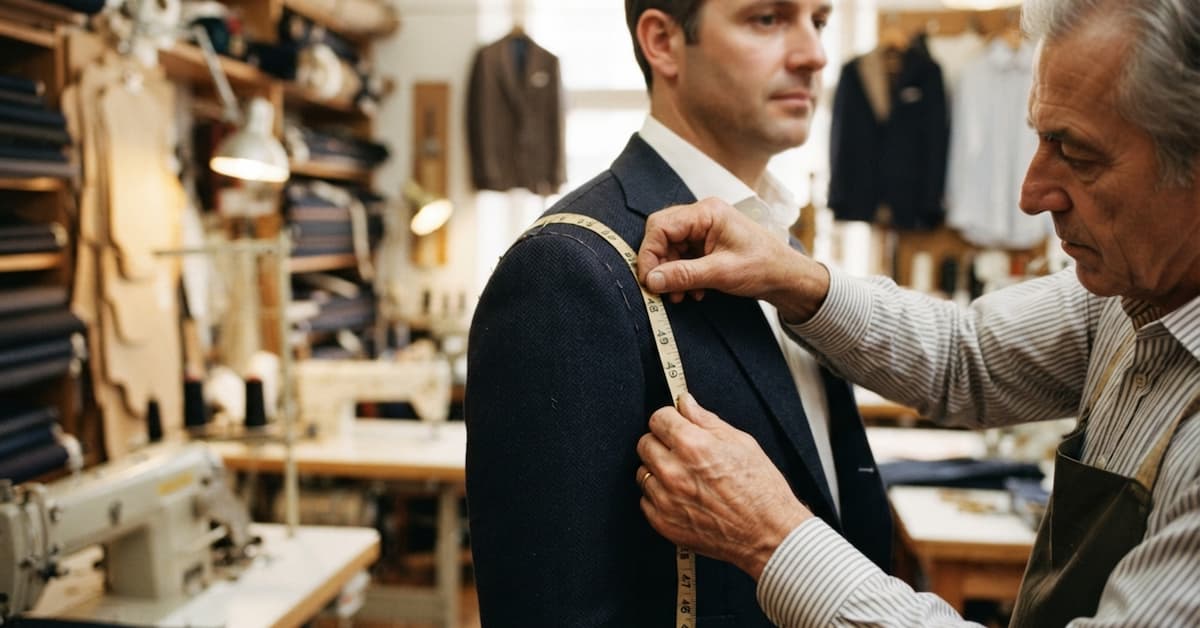
Getting a tailored suit in Bangkok gives you greater control over materials, fitting, and design compared to having to select a readymade suit. But there is more to making a successful purchase than just stating what color you would like and specifying that you need a slim-fit suit. It is important to know when you will wear the suit, how much the quote covers, how it will be made, and if you have sufficient time to do the fittings.
This guide tells you what to look out for before ordering a suit for business, weddings, or to replace an old one.
What Will You Wear the Suit For?
Begin with the event and the frequency at which you intend to wear the outfit. Suits that are meant for daily wear at the workplace will be durable enough to withstand frequent wearing, pairing well with multiple shirts and shoes. Navy blue and charcoal colors are recommended since they will do well in both business meetings, job interviews, and formal dinner events.
A suit worn for a wedding can be more expressive than one that is intended for business purposes. Depending on the dress code, you may decide on a three-piece suit, different lapel styles or even an unusual lining. For a daytime wedding during hot seasons, factors such as comfort and weight of the material should not be overlooked.
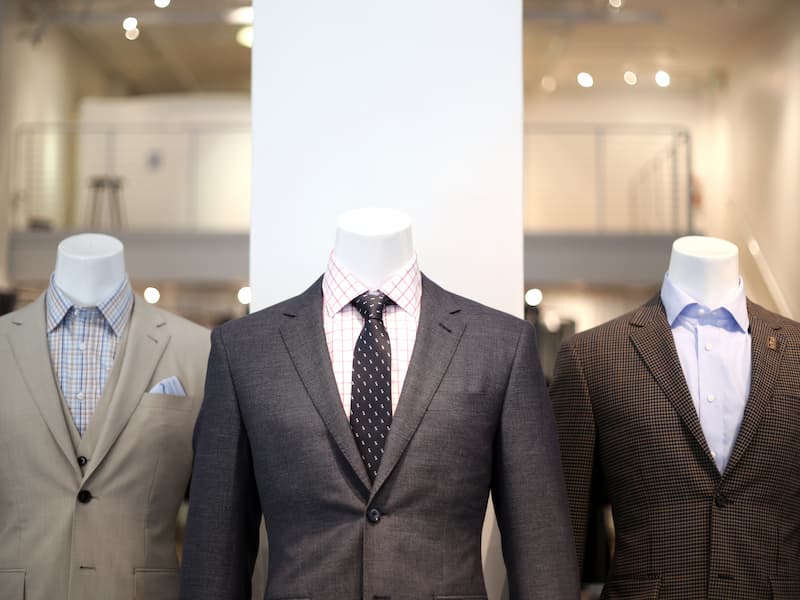
Which Suit Cut Suits Your Needs?
The basic options are classic, slim, and athletic cuts. The former usually gives more space for the body, while the latter two follow the shape of the body closely, the former trying to give enough space to the upper body while avoiding extra material around the waist. Do not consider the terms definitive; let your body be the final decision-maker.
Do take the shirt and shoes that you will wear along with you, or, failing that, pictures of them. This way, the tailor can talk about sleeve length, trouser break, and proportions, and how well the whole thing suits the event.
How Should You Compare a Tailor’s Quote?
Always insist on having the total price quoted in writing prior to making the down payment. The lower starting price may apply only to the jacket and trousers, whereas another price quote may include the waistcoat, an extra pair of trousers, or other additional services. The comparison based merely on the headline prices is thus inaccurate.
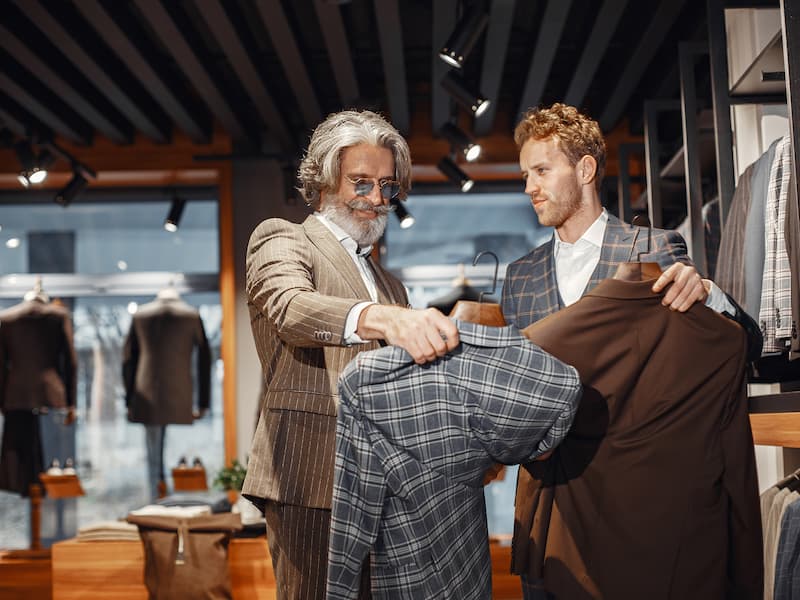
The quote you will receive should contain information about the pieces of clothing, fabric used, style of the jacket, linings used, design features, fittings, alterations, delivery arrangements, and pricing. You should find out if the price quote includes any alterations that you can make once you choose buttons, pockets, or other finishing touches.
What Should You Ask the Tailor?
- Who will be measuring and making the fittings?
- How many fittings are included and when will they be held?
- What corrections will be done on the first fitting?
- What if any corrections are needed after the final suit is made?
- Will collection be required personally or can it be delivered to me?
Examine finished suits, focusing on the shoulders, lapels, seams, and finish. Customer testimonials may give good background information, but they should not replace talking about what is being offered. Find a tailor who can give you a clear explanation of how the suit is made and your contract terms.
Which Fabric Should You Choose for Your Suit?
Fabric influences the suit’s comfort, drape, appearance, maintenance, and the frequency of use. In the hot and humid climate of Bangkok, request to see multiple samples of the fabric instead of picking it from a picture. While the weight of the fabric counts, other factors such as its weave, lining, structure, and the conditions in which you will be wearing it count, too.
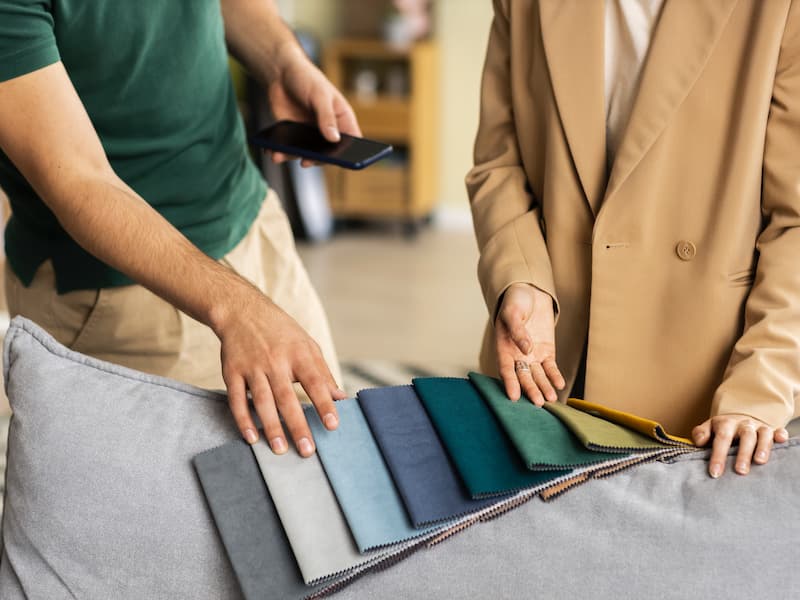
Wool is an adaptable fabric that could be drapable. Wool fabrics which are light-weight and breathable may be ideal for your business attire especially if you have to transition from outdoors to indoors. However, not all wool fabrics are heavy, nor are all lightweight wools similar.
Linen has a breezy, laid-back feel, which makes it appealing for daywear and informal wear. Creasing is natural to linen, so think about whether you are prepared to accept this aspect. The cotton fabric could be relaxed yet could vary greatly in terms of weight and weave. Fibers are combined into blends to achieve certain characteristics, so judge each blend on its merits.
Inquire how the fabric is to be washed, whether it can withstand frequent use, and what drapability is expected from this fabric in the style that you wish to have. If your suit is to be frequently worn, practical considerations could be more important than the exotic quality of the fabric.
What Suit Construction Are You Paying For?
Construction refers to how the inner structure of the jacket provides support to its outer fabric layer. It impacts how the jacket will retain its shape, but the fabric and workmanship also impact the final look.
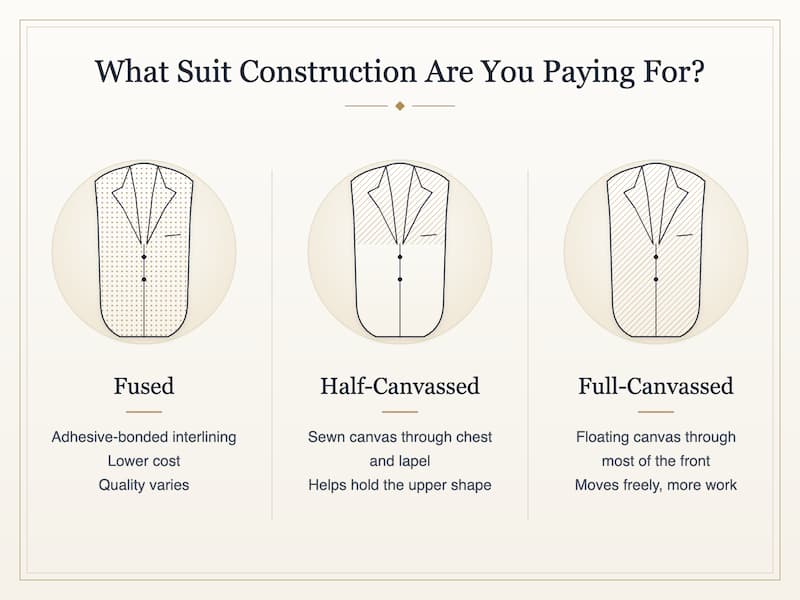
- The fused construction method entails the use of adhesive for bonding the interlining layer to the outer fabric, allowing the jacket to retain its shape with a relatively low cost of production. The quality may vary and thus the method doesn’t define the quality of the jacket.
- The half-canvassed construction method uses sewn canvas through the chest and lapel areas, with other parts being constructed in different ways. It may help retain the shape of the top part of the jacket.
- The full-canvassed construction utilizes a floating canvas through most parts of the jacket front. This allows the outer fabric to move around easily. However, this method usually takes more work than others.
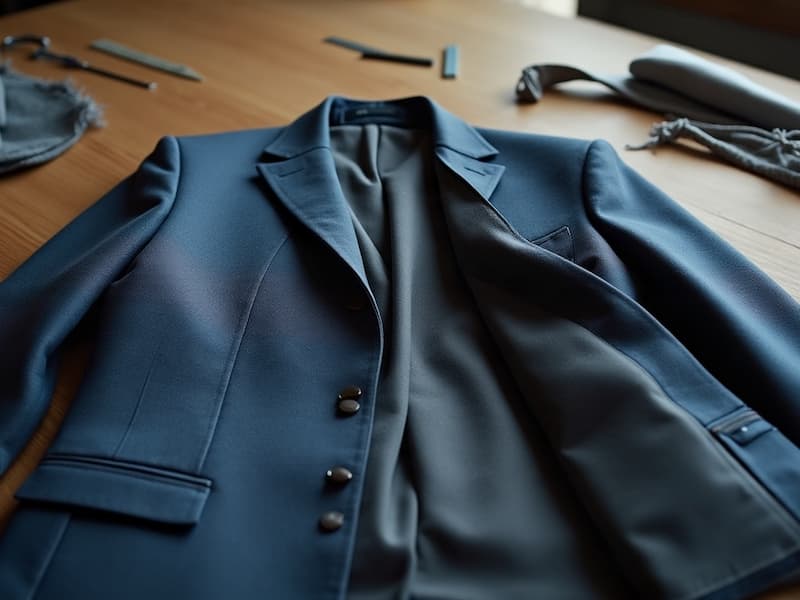
Ask your tailor about the construction method used in your quote and whether changing it impacts the pricing. You should also inquire about the type of lining, shoulder pad, and construction in order to make sure that you end up with the right amount of construction in your jacket.
What Is the Difference Between Made-to-Measure and Bespoke?
“Custom,” “made-to-measure,” and “bespoke” all mean different things at different shops. Instead of basing your understanding on just the label, it’s more important to find out what happens to your suit after taking the measurement.
A ready-to-wear suit is based on pre-established size patterns that are modified after purchasing the suit. Usually, the made-to-measure suit is tailored from the pre-existing pattern and adjusted for your measurements and chosen details. In bespoke tailoring, usually, a unique pattern is developed for the suit.
Neither of those labels will tell you everything about the fabric, style of construction, and the fit of the suit. It is better to find out how the pattern is developed, what parts of the design will be changed, and what the fitting process is going to be like.
Which Design Details Are Worth Customizing?
Details should support the suit’s purpose rather than compete for attention. For a first business suit, conventional choices tend to remain useful for longer. A special-occasion suit may justify more distinctive finishes.
Key customization options include:
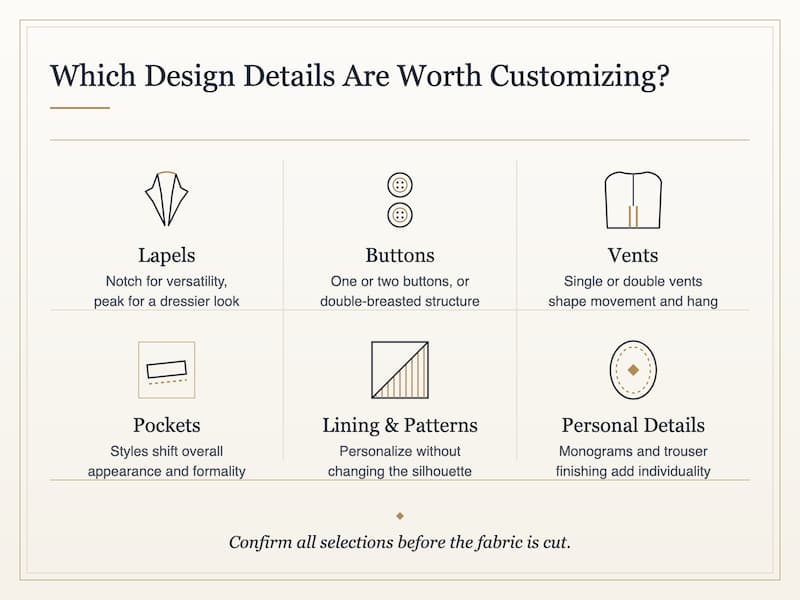
- Lapels: Notch lapels are common on versatile single-breasted suits, while peak lapels create a dressier appearance.
- Buttons: One- and two-button fronts offer different proportions, while double-breasted jackets create a more structured look.
- Vents: Single and double back vents influence movement and how the jacket hangs when standing or sitting.
- Pockets: Different pocket styles can influence the suit’s overall appearance and formality.
- Lining and patterns: Lining colors and fabric patterns allow you to personalize the suit without changing its overall silhouette.
- Personal details: Monograms and trouser finishing details can add individuality to your suit.
If you are unsure which options to choose, ask to see finished examples rather than relying only on small fabric or button samples.
Confirm all selections before the fabric is cut, as changes may be more difficult once the garment is assembled.
How Can You Tell Whether the Suit Fits Properly?
The right fit should appear well-proportioned while standing and be comfortable while moving. During the fitting process, examine the jacket in its buttoned and unbuttoned state, and move by walking, sitting, and raising your arms. Ensure that you have brought along your shoes, for an accurate trouser length.
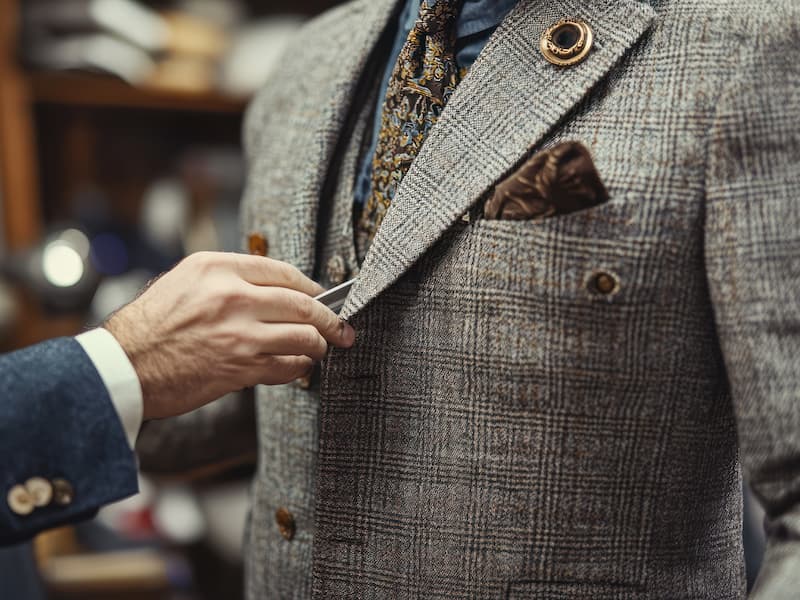
What Should You Inspect at the Fitting?
- Shoulders: Shoulder lines must look clean and without any overhang or tightness.
- Chest and waist: The jacket must fit without much stress on the fastening button.
- Sleeves: They should fit well with your shirt cuffs and must be long enough to give freedom of movement.
- Trouser: Must still be comfortable when you sit down, without any tight pulling.
- Hem: The trouser break should match the shoes and style you have opted for.
Be specific about your concerns: Where the fabric is pulling, or which part of the garment restricts you. Some alterations are easy to do while others will depend on the amount of seam allowance available or the construction of the garment. Find out what can be done during each step.
Do not always consider that the closer fit must mean good tailoring. The fit should complement your body shape without restricting movement.
How Much Time Should You Allow for Tailoring in Bangkok?
Scheduling will differ according to availability of materials, type of suit, need for fitting, and workload of the shop. A straightforward order based on available fabric might be scheduled differently from a full bespoke order with all details included. Don’t assume that the express schedule advertised applies to all orders.
Make sure to agree on the dates of consultations, fittings, and delivery before placing the order. If you are traveling to Bangkok, provide the date of your departure at the first consultation and give yourself some room for changes. It is better to pick up the suit prior to your travel day.
For additional planning guidance, read the Michael Tailors article on how long it takes to get a suit tailored in Bangkok. Treat published timeframes as guidance and confirm the current schedule with the shop.
What Should You Check Before Paying a Deposit?
It is important to give yourself a brief review before starting with the order in order to avoid misunderstandings afterwards. Before making a payment, it is important to be able to answer the following questions:
- What is the purpose of the suit, and what is the deadline for it?
- What garments, fabric, lining, and construction are included?
- What is the total cost, and what upgrades have you chosen?
- How many fittings will be organized, and what alterations are included?
- What deposit, payment, collection, and delivery conditions have been set?
Keep a written copy of the agreed details, especially if you will be leaving Bangkok soon after collection. For help understanding quotations, see the guide to suit tailoring costs in Bangkok. If fabric quality is your main concern, the article on high-quality fabrics in custom suits offers further context.
Conclusion
Buying a tailored suit in Bangkok is easier when you follow a clear order of decisions: choose the suit’s purpose, compare written quotations, understand the fabric and construction, check the fit, and allow enough time for alterations. These steps help you look beyond labels and headline prices to assess what you will actually receive. At Michael Tailors, we encourage customers to discuss their occasion, preferred style, budget, and fitting schedule before placing an order so the final suit suits both their needs and their plans.
FAQs
Is a Tailored Suit Worth Buying in Bangkok?
It can be beneficial if you place importance on fit advice, material selection, and design considerations. Consider the components in the quote and ensure that there is sufficient time allocated for fittings, rather than making a decision solely on the basis of cost.
How Many Fittings Do I Need for a Tailored Suit?
It depends on the tailoring process, the type of outfit that is being created, and any other modifications. You need to ask for the fitting schedule from the boutique before making your purchase.
Which Suit Fabric Is Best for Bangkok’s Weather?
Clothing made of lightweight and breathable materials tend to be more comfortable when the weather is hot. Wool, linen, cotton, and various mixtures thereof are some examples that may apply here.
Can I Order a Wedding Suit During a Short Bangkok Visit?
Maybe, but suitability will depend on the design, fabric options, and scheduling appointments. Be sure to share your traveling dates and deadline for your wedding as early as possible.
What Should I Bring to My First Tailor Appointment?
Bring your budget, event date, and some examples of the styles you prefer. In case you can, bring the shirt and footwear that you will be wearing to the event.

More Articles
Getting a Suit Made in Bangkok on a Short Trip: Real Customer Stories
Suit vs Tuxedo: Key Differences and When to Wear Each One