A suit can look fitted in the mirror and still feel uncomfortable halfway through a working day. Choosing between tailored fit and slim fit means finding the silhouette you like without sacrificing room to breathe, sit and reach. Your proportions, the occasion and the climate all affect that decision, especially when you are ordering a suit for work or travel in Bangkok.
Tailored fit usually offers a shaped silhouette with moderate movement room, while slim fit sits closer through the chest, waist, sleeves and trouser leg. The better choice is the cut that hangs cleanly on your body and stays comfortable throughout the day. Start with the silhouette you prefer, then test it against your proportions and routine.
What is the difference between tailored fit and slim fit?
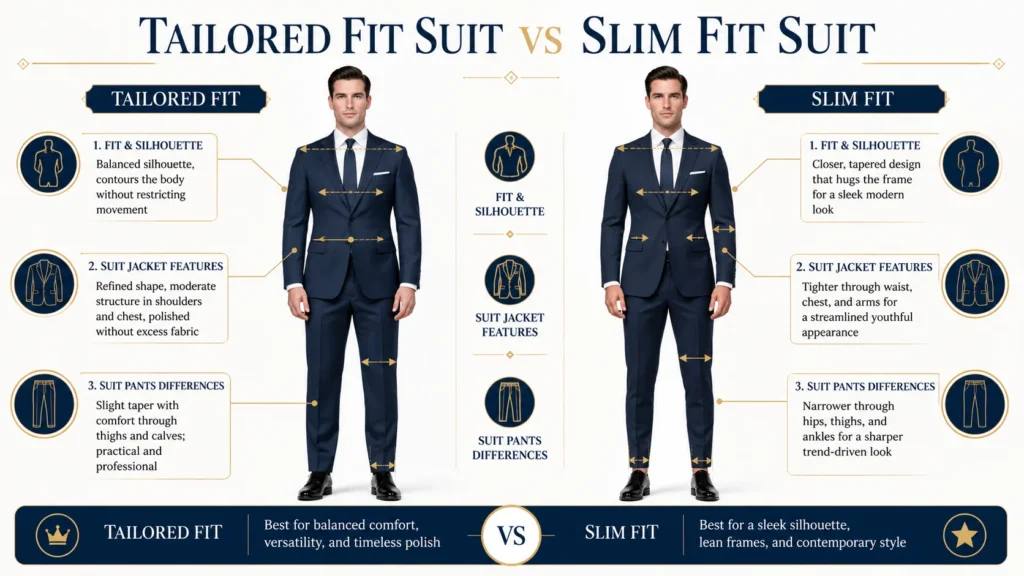
Both styles shape the garment more closely than a traditional regular fit. Their main difference is ease, meaning the space between your body and the clothing, and where that space is retained. One brand’s tailored fit can resemble another brand’s slim fit, making actual measurements and movement more useful than the label alone.
Tailored fit
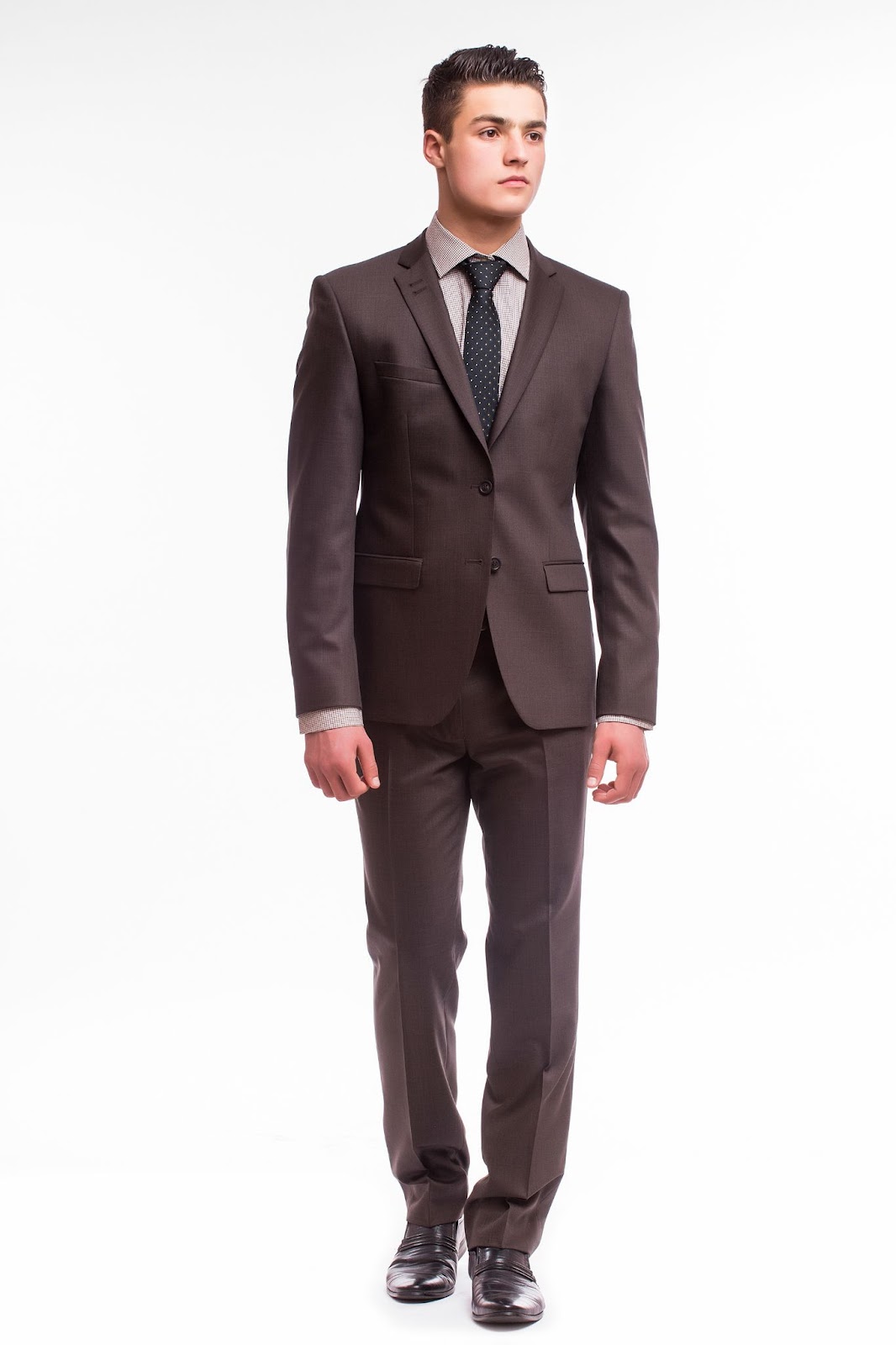
Tailored fit generally sits between a roomy classic cut and a very narrow modern cut. The jacket follows the chest and waist while leaving enough ease for natural movement, with neat sleeves and a fastening that closes without strain. It offers useful tolerance for posture changes, layering and normal fluctuations in body size.
A clean, lightly structured shoulder often works well with this silhouette, but padding is a separate design choice. Tailored fit does not automatically mean soft shoulders, nor does the label mean that the suit was made to your measurements. Ready-to-wear clothing can have a tailored fit, while custom tailoring adjusts the garment’s proportions and balance for the wearer.
Slim fit
Slim fit reduces visual volume through the chest, waist, sleeves and trousers. It creates a closer outline with less surplus fabric, which can look especially clean over a thin shirt. A well-proportioned slim pattern should still accommodate the shoulders and chest rather than rely on sizing down.
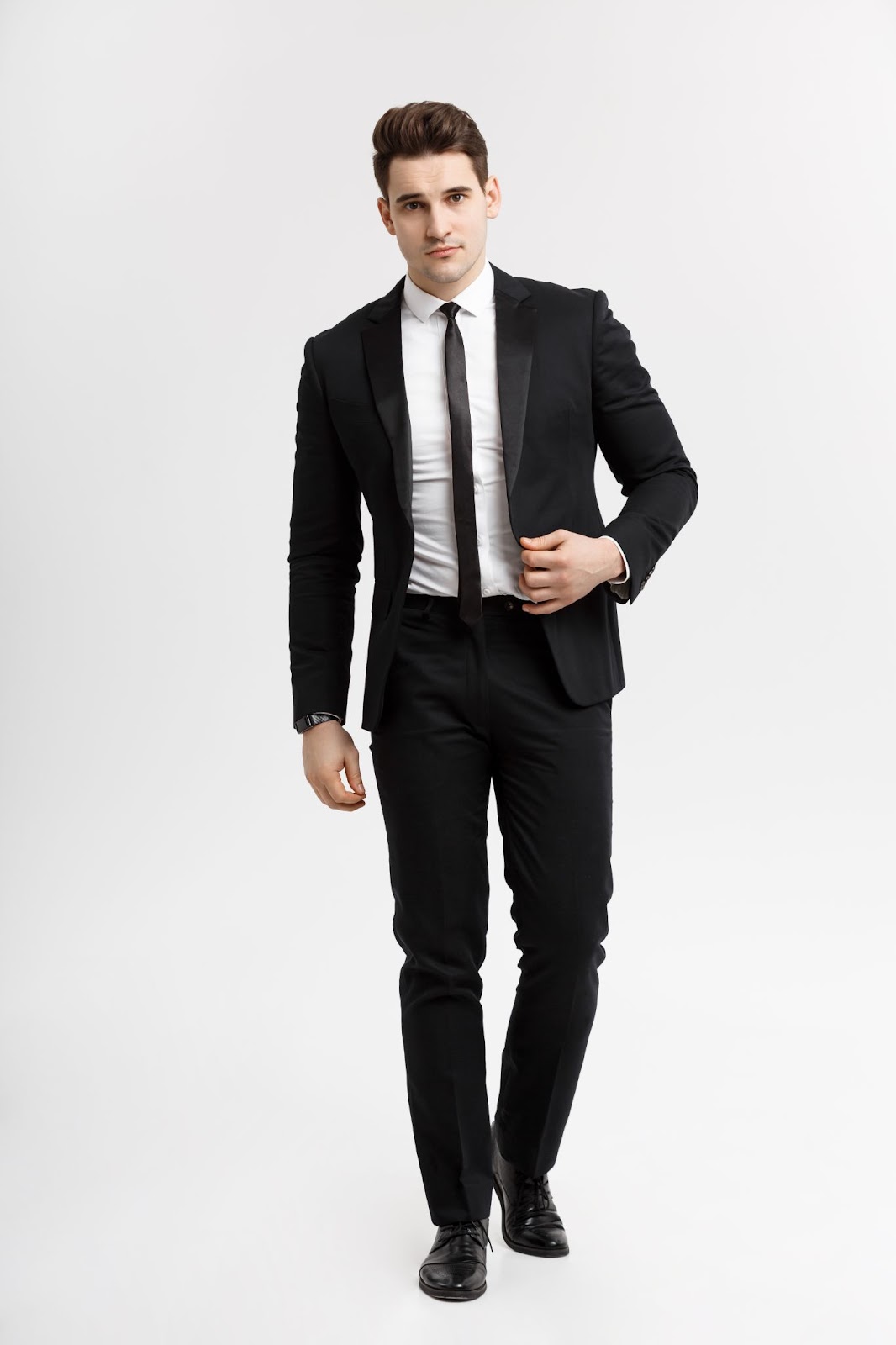
Slim jackets sometimes have higher armholes, shorter hems and narrower lapels, but those details are styling choices rather than defining requirements. A properly placed armhole can support movement, while an armhole that is too narrow will restrict it. Similarly, a slim suit can have either a soft or a more structured shoulder.
Buying a smaller size can create diagonal stress lines, upper-back tightness and pockets that flare open. Collar gaps can also signal a size or pattern problem, although posture and jacket balance need assessment too. These are fitting problems to address rather than features of a successful slim silhouette.
The practical differences
| Feature | Tailored Fit | Slim Fit |
|---|---|---|
| Overall silhouette | Shaped and balanced | Close and strongly tapered |
| Chest | Defined with moderate room | Cut closer to the torso |
| Waist | Tapered without excessive pulling | Narrower and more fitted |
| Sleeves | Clean shape with movement room | Slimmer through the arms |
| Trousers | Tapered with room through the seat and thighs | Narrow through the seat, thigh and ankle |
| Comfort | Suitable for longer wear | May feel restrictive if too tight |
| Layering | More room for shirts, waistcoats or light knitwear | Less additional room |
| Best for | Business, weddings and versatile formalwear | Contemporary and fashion-focused outfits |
| Body types | Adaptable across many builds | Often suits lean or proportionate builds |
| Alterations | Can be refined to individual proportions | Less room for adjustment if too tight |
Use the comparison as a starting point rather than a body-type rule. A precise slim pattern can fit comfortably, while a tailored-fit jacket can still need adjustment to achieve the definition you want.
Which fit works for your body shape and daily routine?
Start with the occasion, then your body and finally the cloth. A daily office suit needs to accommodate repeated sitting and movement, while a tuxedo ordered for one evening can prioritise the occasion’s silhouette, provided it remains comfortable through dinner and dancing. Someone who travels regularly will also need wrinkle recovery and comfort across changing temperatures.
Body shape and proportion
If you have broad shoulders, a fuller chest or developed arms, fit those areas first and let the tailor shape the waist. Tailored fit is often a useful base because it can look trim without compressing the upper body. Narrower shoulders can benefit from moderate structure and controlled waist shaping without making the entire jacket smaller.
For a straighter build, either cut can work. Tailored fit can introduce a subtle V-shape through the waist, while slim fit creates a closer, more defined outline. If you carry weight around the midsection, avoid excessive tapering and favour a jacket that closes smoothly rather than one that pulls around the fastening.
The jacket and trousers do not need identical degrees of slimness. A tailored-fit jacket can work with slightly closer trousers, while a slim jacket can retain a moderate waist and fuller sleeves. Keep the outfit balanced: very narrow trousers can exaggerate a broad upper body, and muscular thighs need room even when the waist is small.
Work, weddings and travel
For business or a first custom wardrobe, tailored fit is a dependable starting point because it accommodates long days and different shirts, shoes and levels of formality. Navy or charcoal cloth, proportionate lapels and a clean shoulder make a versatile combination. If the suit will also be worn in cooler conditions, allow room for a fine knit during the fitting.
For an evening wedding or a fashion-led event, slim fit can look excellent when the proportions suit the wearer. A clean shirt collar, trousers with a light break and shoes that balance the narrower line keep the outfit coherent. Consider the full event, including dinner and dancing, rather than choosing solely for standing photographs.
Travel makes movement and repeated wear especially valuable. A tailored fit with a little ease, breathable cloth and a natural shoulder can be more practical than an ultra-close jacket that creases under tension. For a small formal wardrobe, a firmer cloth and more defined shoulder can still work well when they suit the occasions and leave adequate room to move.
How should you adapt the suit for Bangkok’s climate?
For days spent moving between outdoor heat and air-conditioned rooms, moderate ease is a sensible starting point. If you prefer slim fit, choose the cloth and jacket interior with the same care as the taper. Explain how much time you spend outdoors so the tailor can balance the outline with warm-weather comfort.
Tropical wool is worth considering for business wear because it combines a polished appearance with warm-weather practicality. Linen suits more relaxed events when visible creasing is acceptable, while cotton offers a casual alternative depending on its weave. Fabric weight matters, but weave, lining and internal structure also affect comfort, so the lightest swatch is not automatically the best choice.
A softer or more flexible cloth can feel comfortable in a closer cut, while a firmer cloth may need more ease. Stretch can help flexibility, and wool has natural resilience; assess those properties alongside the amount of movement room. Discuss lining coverage and shoulder structure as part of the same decision, particularly if you expect to walk outdoors or wear the jacket for several hours.
What should you check before approving the fit?
Try the suit with the shirt and shoes you intend to wear, standing in your normal posture. Do not hold your breath or pull your shoulders back to make the jacket appear smoother. Front, side and back photographs help you assess balance, and a second opinion is most useful when it identifies how the fabric hangs rather than simply praising the style.
Shoulders, collar and chest
For a conventional natural shoulder, the seam should finish close to the shoulder’s edge without obvious collapse or unwanted overhang. The collar should rest against your shirt, and the chest should leave room for normal breathing. Shoulders and chest deserve attention first because major changes there can be expensive or impractical.
Button the jacket while standing naturally and look for a smooth waist and lapels. A deep X-shaped pull around the fastening or lapels lifting away from the chest suggests that the fit needs attention. Michael Tailors’ guide to suit jacket anatomy explains how the collar, lapels, armholes and button position contribute to the finished shape.
Sleeves, length and movement
Sleeves should hang cleanly with a small amount of shirt cuff visible, and the back should not bunch excessively. The hem should give balanced seat coverage without making the jacket look overly long. A side photograph can reveal a collapsing chest, pulling across the seat, an uneven hem or a jacket that is too short for your torso. Do not copy a short jacket from a product photograph without considering your torso and trouser proportions.
Gently reach forward, move your arms and lightly cross them to test the upper back and sleeves. Some movement in the cloth is normal, but everyday gestures should not create sharp restriction. Unbutton the jacket before sitting, then assess comfort through the chest and arms and check that the trousers allow sitting, walking and bending without pulling across the seat or thighs.
Wrinkles need interpretation before alteration. Horizontal pulls can indicate tightness, vertical folds can suggest excess cloth and twisting can involve sleeve pitch or posture, but none is a diagnosis on its own. A skilled fitter assesses these signals together before deciding what to change.
Converting slim fit into tailored fit
A tailor can often adjust the waist, sleeve length, trouser taper and sometimes the jacket sides. Letting out requires spare cloth inside the seams, so alterations cannot create room where no allowance remains. A tight chest, cramped armhole, insufficient shoulder width or short jacket may be impossible to correct cleanly.
Do not choose a size by the waist alone: buy a ready-to-wear jacket for its shoulder and chest fit, then refine secondary areas. Custom tailoring offers more control because measurements and posture inform the pattern or its adjustment, including ease, waist position and sleeve hang. A made-to-measure suit normally starts with a base pattern, while traditional bespoke uses an individual pattern, so ask how the garment will actually be produced.
What affects quality, price and ordering time?
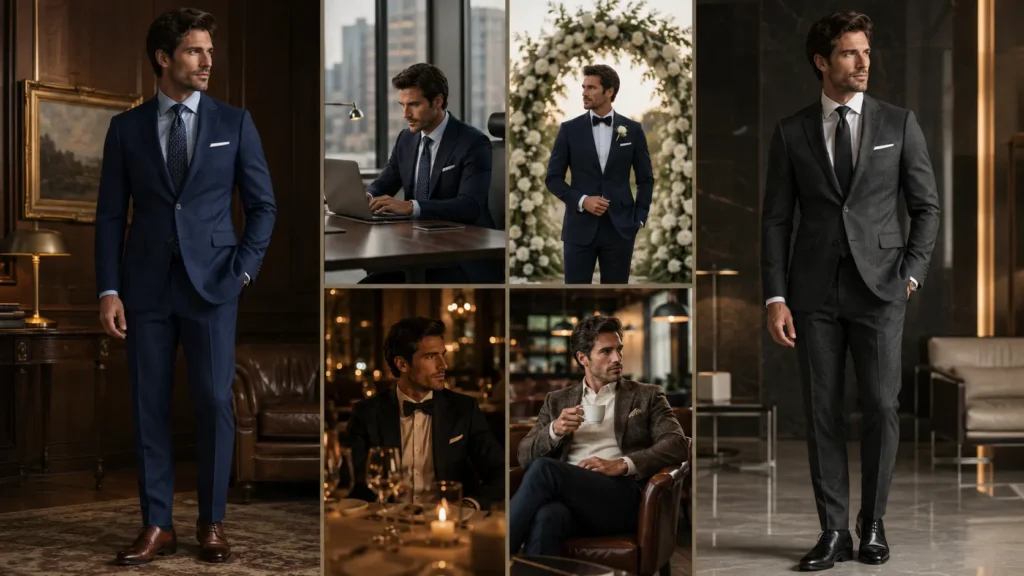
Cloth, pattern work, fittings, finishing and menswear construction affect quality and price more than the silhouette label. Compare those specifications before assuming that either cut represents better value. The budget should support the fit and use you have chosen.
Fused construction uses bonded interlining to support the jacket front, while canvas construction uses an internal supporting layer. Half-canvas and full-canvas describe different extents of that structure, separate from the visible lining. Canvas construction generally adds labour, so ask what the upgrade contributes to the jacket’s shape and feel. Judge it alongside the finished fit rather than treating it as a guarantee of quality.
As a general Bangkok market guide, allow THB 5,000–10,000 for entry-level or promotional options, THB 10,000–25,000 for mid-range suits, THB 25,000–50,000 for premium tailoring and THB 50,000+ for luxury options. These ranges are not fixed Michael Tailors package prices; the final quote depends on cloth, construction, fittings and inclusions. Our guide to suit tailoring prices explains those costs in more detail.
A practical buyer checklist
- For everyday comfort, describe your actual routine. Explain how much time you spend sitting, travelling or outdoors, and which layers you wear. Agree on a silhouette that accommodates those needs before the cloth is cut.
- For a meaningful quality comparison, identify the materials and construction. Ask about fibre composition, fabric weight and weave, lining and whether the jacket is fused, half-canvas or full-canvas. Inspect a finished example rather than relying on the description alone.
- For control over the total cost, request a complete written quote. Confirm the garments, fittings and standard alterations included, along with charges for upgrades, express work, taxes and delivery. Compare equivalent specifications across tailors.
- For a travel deadline, agree on fitting and collection appointments. Give your departure date and leave room for corrections after trying on the finished suit. Ask what support is available if you notice a fit issue after returning home.
A visitor ordering before a flight benefits from visiting early in the trip. Fabric availability, design complexity, workload and fitting adjustments affect the schedule, so arrange a collection fitting with the actual shirt and shoes before departure. Trying the finished suit and allowing correction time is more useful than relying on an overnight promise alone.
Conclusion
At Michael Tailors, we recommend tailored fit when you want one versatile suit, comfortable long wear or room to learn which proportions suit you, and slim fit when you prefer a closer silhouette that still supports normal movement. As your custom tailor in Bangkok, we help you consider your measurements, body shape, cloth and preferred proportions together. The final decision should come from clean shoulders, chest and collar, balanced trousers and a comfortable fitting, rather than the label on the garment.
Frequently Asked Questions
Is tailored fit tighter than regular fit?
Usually, yes: tailored fit has more shaping and less surplus fabric than regular fit. Brands define the labels differently, so compare chest, waist and sleeve measurements when buying across different collections.
Is slim fit the same as skinny fit?
No, slim fit generally creates a close outline, while skinny fit is substantially narrower and less forgiving of movement. When comparing them, test sitting and bending as well as standing fit rather than sizing down to imitate the tighter cut.
Can larger men wear slim-fit suits?
Yes, if the pattern fits the shoulders and chest without being sized down. When a ready-to-wear jacket fits your upper body but its matching trousers are too narrow, ask about separate trouser sizing or a custom pattern that allows independent shaping of the jacket and trousers.
Which fit is more timeless?
A balanced tailored fit is a dependable option across occasions and changing style preferences. A moderate slim fit can also remain useful when the jacket length, lapels and trousers are proportionate rather than exaggerated.

More Articles
Getting a Suit Made in Bangkok on a Short Trip: Real Customer Stories
Suit vs Tuxedo: Key Differences and When to Wear Each One