
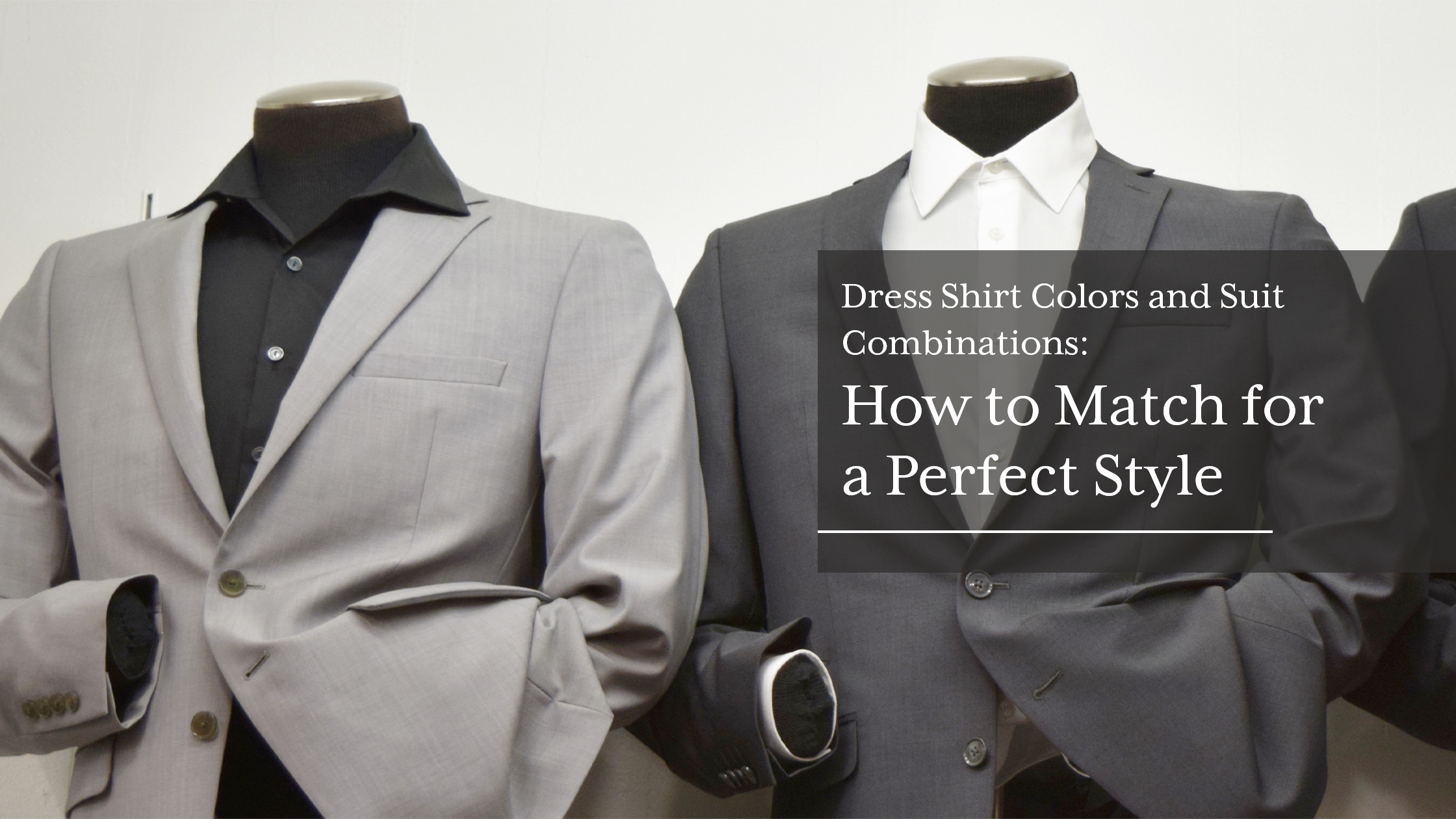
Choosing the right dress shirt colour can completely change how a suit looks.
For most men, the easiest place to start is with white and light blue shirts. They work with almost every core suit colour, including navy, grey, charcoal, black, brown, and beige.
Once those basics are covered, colours such as pale pink, lavender, cream, and subtle stripes give you more variety without making the outfit difficult to coordinate.
The simplest rule is this: if the suit is bold, keep the shirt simple. If the suit is simple, you have more freedom with the shirt.
What Shirt Colours Work With the Most Suits?
| Shirt Colour | Best Suit Colours | Best For | Versatility |
|---|---|---|---|
| White | Navy, grey, charcoal, black, brown, beige | Business, weddings, formal events | Very High |
| Light Blue | Navy, grey, charcoal, brown | Office, business, daytime events | Very High |
| Pale Pink | Navy, grey, charcoal | Weddings, business, social events | High |
| Cream / Ivory | Brown, beige, navy, charcoal | Weddings, dinners, warm-weather events | Medium-High |
| Lavender | Navy, grey, charcoal | Weddings, social occasions | Medium |
| Subtle Stripe | Navy, grey, brown | Business and smart professional wear | High |
For most wardrobes, white should come first, followed by light blue.
After that, add colours based on the suits you already own and the occasions you dress for most often.
What Shirt Colours Go Best With a Navy Suit?
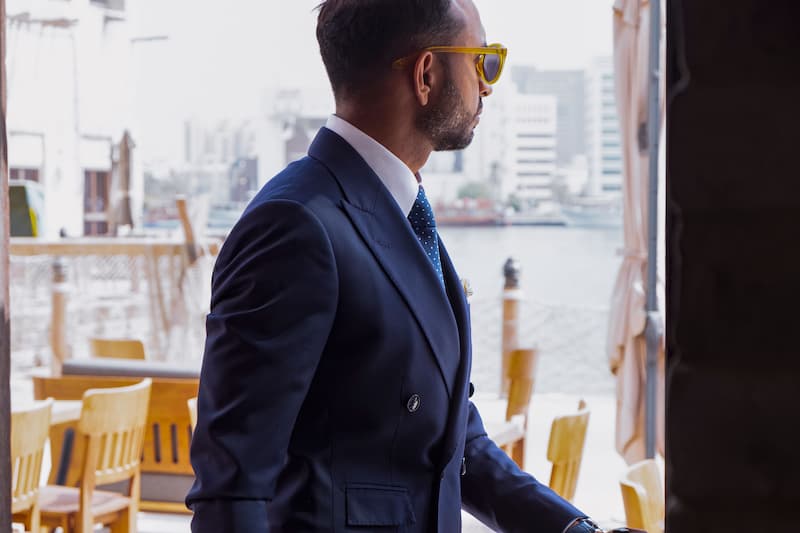
Navy is one of the most versatile suit colours because it works with both neutral and softer shirt colours.
White Shirt + Navy Suit
A white shirt with a navy suit is one of the most reliable combinations in menswear.
The strong contrast creates a clean, professional appearance that works well for business meetings, job interviews, weddings, formal lunches, ceremonies, and professional photography.
Burgundy, navy, forest green, silver, and grey ties all pair naturally with this combination.
Black shoes make the outfit more formal, while dark brown shoes add warmth without making it casual.
Light Blue Shirt + Navy Suit
Light blue creates a softer look than white while keeping the outfit professional.
Because the shirt and suit belong to the same colour family, the combination feels coordinated without becoming too monochromatic.
It works particularly well for office wear, client meetings, networking events, and business travel.
A burgundy or dark green tie creates contrast, while a navy tie keeps the combination understated.
Pale Pink Shirt + Navy Suit
Pale pink adds warmth to the cooler navy suit without overpowering it.
This combination works especially well for weddings, daytime events, dinners, and less conservative professional environments.
Keep the pink soft rather than highly saturated. Navy, burgundy, charcoal, and deep green ties are easy choices.
Light Grey Shirt + Navy Suit
A light grey shirt creates a more understated and contemporary navy-suit combination.
For business, pair it with a navy, maroon, or dark green tie and polished shoes.
For a more relaxed dinner or smart-casual event, remove the tie and switch to loafers. This makes the same combination easy to move from work into the evening.
Striped Blue Shirt + Navy Suit
A blue striped shirt adds pattern while keeping the outfit firmly within classic businesswear.
Fine blue-and-white stripes are generally easier to wear than very wide or high-contrast stripes.
Solid navy, burgundy, deep red, and forest green ties work especially well.
If the shirt already has a visible stripe, avoid using a tie with a stripe of almost the same width. A solid tie or small geometric pattern usually creates better balance.
What Shirt Colours Go Best With a Grey or Charcoal Suit?
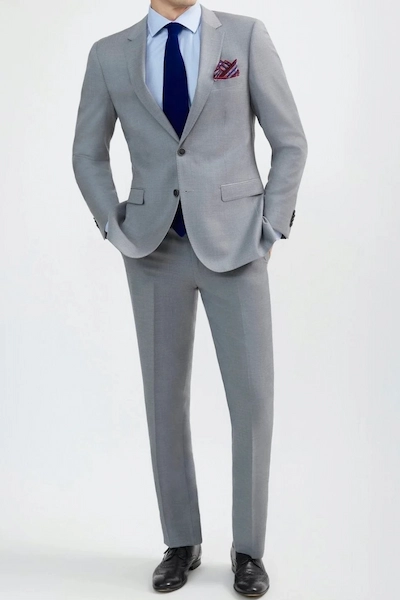
Grey suits are extremely flexible, but the effect changes depending on whether the suit is light grey, medium grey, or charcoal.
White Shirt + Grey Suit
White works with every shade of grey.
With light grey, it creates a fresh combination that works especially well for daytime weddings and warmer weather.
With charcoal, the stronger contrast creates a more formal look suitable for business meetings, interviews, ceremonies, and evening events.
Light Blue Shirt + Grey Suit
A light blue shirt with a grey suit is one of the strongest combinations for everyday professional wear.
The cooler tones complement each other without looking overly matched.
It works well for business meetings, office wear, interviews, formal lunches, daytime weddings, and networking events.
A navy tie keeps the combination classic, while burgundy adds warmer contrast.
Dark brown shoes work especially well with light and medium grey. Black shoes are generally the stronger choice with charcoal or more formal outfits.
Pale Pink Shirt + Charcoal Suit
Pale pink adds warmth to charcoal while still keeping the outfit refined.
This combination works particularly well for business events, weddings, and daytime social occasions.
Choose a soft blush or muted pink rather than a bright shade so the charcoal suit remains the dominant part of the outfit.
Good tie colours include navy, burgundy, charcoal, deep green, and small patterns that combine pink with darker tones.
Different pinks can also work differently against the complexion. Peachier pinks tend to feel warmer, while blush, rose, and slightly blue-based pinks have a cooler appearance.
Lavender Shirt + Grey Suit
Lavender gives grey slightly more personality without making the outfit difficult to coordinate.
Muted lavender works particularly well with medium grey and charcoal.
A navy, charcoal, burgundy, or dark purple tie keeps the combination balanced.
Black Shirt + Charcoal Suit
A black shirt with a charcoal suit creates a stronger, more contemporary evening look.
The colours are close enough to create a sleek appearance while the charcoal still provides some separation from the shirt.
This combination works particularly well for dinners, evening events, date nights, upscale social occasions, and fashion-focused networking events.
A black or dark grey tie keeps the outfit monochromatic. Deep burgundy or dark purple can introduce controlled contrast.
You can also skip the tie for a less formal evening look, provided the shirt collar holds its shape well.
What Shirt Colours Go Best With a Black Suit?
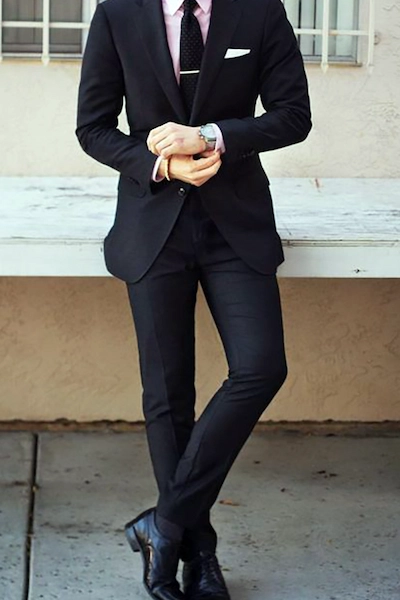
Black suits give you slightly less room to experiment because the contrast is already strong.
White Shirt + Black Suit
White remains the safest and most formal option.
It works particularly well for formal dinners, ceremonies, funerals, and evening events.
Keep the accessories restrained, especially when the occasion is traditional or formal.
Pale Pink Shirt + Black Suit
A pale pink shirt softens the severity of black and introduces colour without becoming overwhelming.
This works particularly well for weddings, dinners, parties, and social events.
The pink should stay soft and muted. Strong hot pink or highly saturated shades are much harder to balance against black.
Light Grey Shirt + Black Suit
Light grey produces a softer contrast than white while keeping the outfit neutral.
It works especially well for modern evening outfits and semi-formal occasions.
Black Shirt + Black Suit
A black shirt creates a monochromatic, fashion-forward look.
This combination is best suited to nightlife, dinners, parties, and social events rather than conservative offices or traditional business settings.
Very bright reds, electric blues, and highly saturated purples are generally harder to balance with a black suit because they compete strongly with it.
What Shirt Colours Go Best With Brown or Beige Suits?
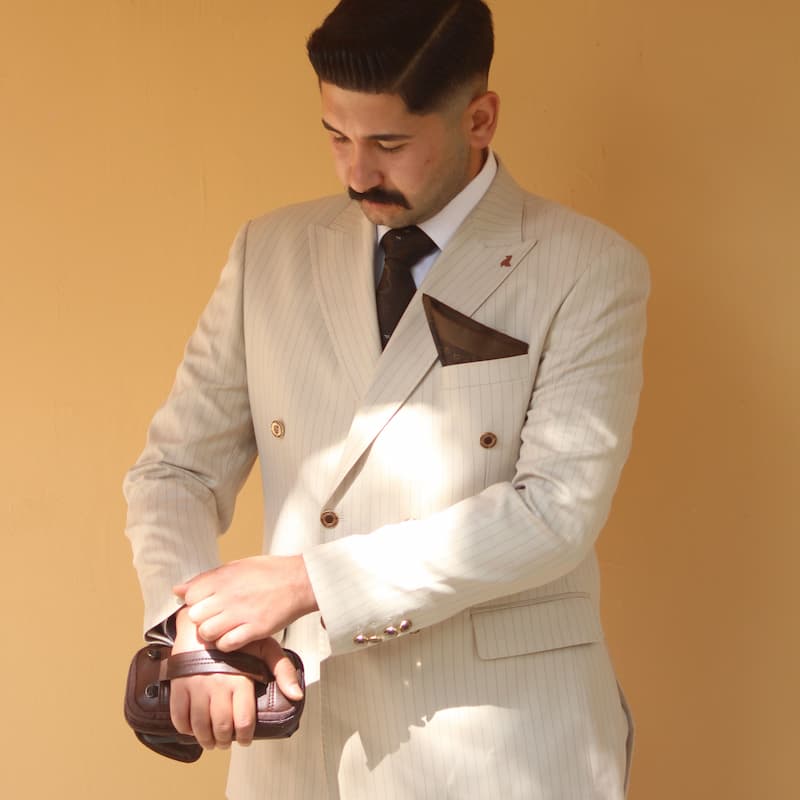
Brown and beige suits have warmer undertones, so softer and warmer shirt colours often work naturally with them.
White Shirt
White remains the easiest option and creates clear contrast without fighting the warmer suit colour.
It works with chocolate brown, medium brown, tan, and beige.
Cream or Ivory Shirt
Cream creates a softer transition than bright white.
This combination works especially well for weddings, destination events, outdoor occasions, and warm-weather tailoring.
Cream is particularly effective with chocolate brown, tan, and beige.
Light Blue Shirt
Light blue creates a cool-to-warm contrast against brown.
It works well for daytime business wear, outdoor events, and smart professional outfits.
Pale Pink Shirt
Soft pink can also work with lighter browns and beige, especially during spring and summer.
The warmer the suit colour, the easier it is to coordinate with softer, less saturated pinks.
What Are Some Easy Shirt and Suit Combinations?
If you want combinations that are difficult to get wrong, these are reliable starting points:
- Navy suit + white shirt
- Navy suit + light blue shirt
- Navy suit + pale pink shirt
- Navy suit + light grey shirt
- Navy suit + striped blue shirt
- Grey suit + white shirt
- Grey suit + light blue shirt
- Charcoal suit + pale pink shirt
- Charcoal suit + black shirt
- Black suit + white shirt
- Black suit + pale pink shirt
- Brown suit + light blue shirt
- Beige suit + cream shirt
For a business wardrobe, navy, grey, charcoal, white, and light blue will give you the widest range of combinations.
How Should You Match a Shirt With a Bold-Coloured Suit?
If the suit is already the strongest colour in the outfit, the shirt should usually be quieter.
For burgundy, forest green, olive, cobalt blue, or deep brown suits, white and pale neutral shirts are generally the safest starting point.
Cream can also work with warmer colours, while pale blue can create contrast without competing.
The idea is not to make every part of the outfit equally noticeable.
Let the suit lead, then use the shirt to support it.
How Do You Match Patterns Between a Shirt and Suit?
Pattern matching becomes much easier when one piece clearly takes the lead.
If the suit already has pinstripes, windowpane, plaid, or checks, a solid shirt is usually the easiest choice.
White and light blue work particularly well because they do not compete with the pattern.
A plain navy, charcoal, or grey suit gives you more freedom to introduce fine stripes, small checks, or subtle geometric patterns in the shirt.
If both pieces are patterned, change the scale.
A wider suit stripe can work with a much finer shirt stripe, while two patterns of almost identical size can look busy.
For most outfits, one patterned garment and one solid garment is still the safest approach.
What Does Contrast Mean When Matching a Shirt and Suit?
Contrast simply means how different the shirt looks from the suit.
A navy suit with a white shirt creates high contrast because the difference between the two colours is obvious.
A navy suit with a light blue shirt creates medium contrast.
A navy suit with a dark blue shirt creates low contrast because the colours are much closer together.
For business and traditional formal wear, medium to high contrast is usually the easiest choice.
It keeps the shirt, tie, and jacket visually separate and gives the outfit a cleaner structure.
Lower-contrast combinations can still work, especially for evening or more contemporary styling, but they usually require more careful coordination.
How Should You Match a Shirt With a Bold-Coloured Suit?
If the suit is already the strongest colour in the outfit, the shirt usually works best when it is more restrained.
Burgundy, forest green, olive, cobalt blue, and other expressive suit colours pair naturally with white and pale neutral shirts.
Cream works particularly well with warmer colours such as brown and olive, while pale blue can create useful contrast against deeper greens and browns.
The suit should normally remain the visual focus. The shirt supports it, and the tie becomes the smaller accent.
How Do You Match Patterns Between a Shirt and Suit?
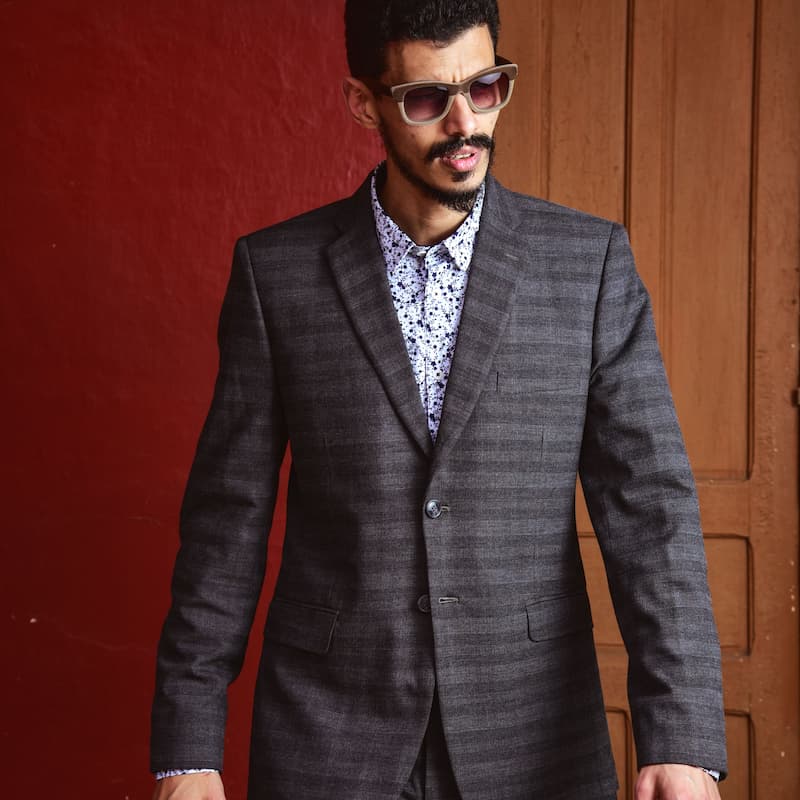
Pattern matching becomes easier when one piece clearly takes the lead.
If the suit already has pinstripes, windowpane, plaid, or checks, a solid white or light blue shirt is usually the safest option.
A plain navy, grey, or charcoal suit gives you more freedom to introduce fine stripes, small checks, or subtle geometric patterns in the shirt.
If both the suit and shirt are patterned, change the scale.
A wide suit stripe can work with a much finer shirt stripe, while two stripes of almost identical width may compete visually.
The same principle applies to the tie. If the suit and shirt already contain visible patterns, a solid or very subtle tie is generally easier to coordinate.
What Does Contrast Mean When Matching a Shirt and Suit?
Contrast describes how different the shirt looks from the suit.
A navy suit with a white shirt creates high contrast because there is a clear difference between the dark jacket and bright shirt.
A navy suit with a light blue shirt creates medium contrast.
A navy suit with a dark blue shirt creates low contrast because the two colours are much closer together.
For business and traditional formal wear, medium to high contrast is usually the easiest approach. It keeps the shirt, jacket, and tie visually separate and creates a cleaner structure.
Lower-contrast combinations can work well for contemporary and evening styling but generally require more careful coordination.
How Do Colour Temperature and Saturation Affect Shirt and Suit Combinations?
Colour temperature refers to whether a colour feels warmer or cooler.
Warm shades include brown, tan, cream, beige, olive, and some pinks.
Cooler colours include navy, grey, pale blue, lavender, and cooler pinks.
Colours from similar temperature families often combine naturally, although mixing warm and cool colours can also create useful contrast.
Saturation refers to how strong or intense the colour is.
A pale pink shirt is much easier to coordinate than hot pink. Light blue is more versatile than electric blue, while muted lavender is easier to wear than bright purple.
For tailored clothing, softer and more controlled colours usually create more combinations.
How Should You Choose a Shirt Colour for Different Occasions?
| Occasion | Suit Colour | Shirt Colour | Overall Style |
|---|---|---|---|
| Job Interview | Navy or charcoal | White, light blue | Conservative and professional |
| Business Meeting | Navy, grey, charcoal | White, light blue, subtle stripe | Polished |
| Networking Event | Navy, grey, charcoal | Light blue, white, pale pink | Professional but approachable |
| Daytime Wedding | Navy, light grey, beige | White, pale blue, pale pink | Light and refined |
| Evening Wedding | Navy, charcoal, black | White, cream, pink, lavender | Dressier |
| Formal Dinner | Black, charcoal, navy | White, black, light grey | Formal |
| Smart Casual Event | Brown, beige, navy | Cream, pale blue, subtle pattern | Relaxed but polished |
For conservative professional situations, white and light blue remain the safest choices.
Weddings allow more flexibility with pale pink, lavender, cream, and softer patterns.
Evening settings can support darker combinations such as a black shirt with charcoal, while smart-casual occasions give you more room to introduce texture and pattern.
Should Your Shirt Colour Match Your Skin Undertone?
Skin undertone can help guide shirt choice, but it should not be treated as a strict rule.
Warm undertones often work naturally with cream, ivory, peachier pinks, warmer blues, and earthier shades.
Cool undertones often work well with crisp white, pale blue, blush pink, rose, lavender, and cooler greys.
Neutral undertones generally have more flexibility.
The shirt sits very close to the face, so overall contrast can matter just as much as undertone.
Whenever possible, compare the actual shirt fabric against your complexion rather than choosing entirely from an online colour chart.
How Should You Choose the Tie After the Shirt?
Choose the suit and shirt first, then use the tie as the smaller accent.
A navy suit with a white shirt and burgundy tie works because the navy provides the base, white creates clear contrast, and burgundy introduces controlled colour.
A grey suit with a light blue shirt and navy tie follows the same principle. The suit stays neutral, the shirt introduces softness, and the darker tie connects the two pieces.
With a pale pink shirt and charcoal suit, navy, burgundy, and dark green ties all work because they provide enough contrast without overpowering the shirt.
If the shirt is patterned, a solid tie is generally the easiest choice.
If the shirt is solid, you have more freedom to introduce a patterned tie.
In most traditional combinations, the tie should also be darker than the shirt because this creates clearer definition through the centre of the outfit.
What Are the Most Common Shirt and Suit Matching Mistakes?
1. Using Too Many Strong Colours
A bright suit, bright shirt, and bright tie all compete for attention.
Choose one main colour statement and let the other pieces support it.
2. Matching the Shirt Too Closely to the Suit
If the shirt and jacket are almost identical in shade, the outfit can lose definition.
Create enough contrast for the shirt to remain clearly visible.
3. Mixing Too Many Patterns
A patterned suit, patterned shirt, patterned tie, and patterned pocket square can become visually busy.
One or two patterned elements are usually enough.
4. Ignoring Colour Temperature
Look at how the colours relate to each other rather than judging every piece separately.
Warm and cool colours can work together, but the combination should feel intentional.
5. Choosing Colours Without Considering the Occasion
A pale pink shirt may work beautifully for a wedding, while white or light blue may be more appropriate for a conservative interview.
6. Looking at Each Piece Separately
A shirt can look good by itself and still fail once placed beside the suit.
Always judge the complete outfit.
How Does Suit Fabric Affect Shirt Colour?
Fabric texture changes how colour appears.
A smooth navy worsted wool suit tends to look darker, cleaner, and more formal.
A textured navy linen or wool blend feels softer and more relaxed.
Grey flannel has more visual depth than smooth grey worsted wool, while beige linen feels less formal than beige worsted wool.
That means the same white, blue, or pink shirt can produce a different overall effect depending on the cloth beside it.
If you are choosing both pieces together, our guide to suit fabrics explains how different materials affect colour, texture, structure, and formality.
How Should You Build Your Shirt and Suit Wardrobe?
A useful wardrobe does not require dozens of shirt colours.
Start with navy, charcoal, or medium grey suits because they give you the widest range of shirt combinations.
White and light blue shirts should form the foundation.
After those are covered, pale pink, light grey, and subtle stripes add variety without becoming difficult to coordinate.
Cream and lavender become useful once the basics are covered, while brown, beige, olive, and more expressive suit colours give you additional options later.
If you are deciding which suit colours will be most useful, our guide to the best suit colours explains how the main colours differ by occasion, season, and versatility.
How Do You Choose Shirt and Suit Colours in Person?
Colours can change noticeably depending on the lighting.
A combination may look different under natural daylight, office lighting, warm indoor lighting, and evening lighting.
Fabric texture also changes how much light a colour reflects.
Whenever possible, compare the shirt and suit swatches together.
Hold the shirt fabric near your face and look at the combination under natural light. Then introduce the tie colour and assess the outfit as a whole.
This gives you a much better idea of how the finished combination will look than trying to match colours from separate online photographs.
Conclusion
The most reliable dress shirt and suit combinations start with versatile colours and clear contrast.
White and light blue shirts work with almost every classic suit. Pale pink, light grey, lavender, cream, black, and restrained patterns then give you more ways to personalise the outfit.
Navy works particularly well with white, light blue, pale pink, light grey, and striped blue shirts.
Grey and charcoal work naturally with white, light blue, pale pink, lavender, and, for evening wear, black.
Black suits pair well with white, pale pink, light grey, and black shirts, while brown and beige suits work especially well with white, cream, light blue, and softer pinks.
Choose the suit first, then select a shirt that creates the right level of contrast and formality. Finish with a tie and shoes that support the combination rather than compete with it.
At Michael Tailors, clients can compare suit and shirt fabrics together based on the occasion, complexion, climate, and existing wardrobe. Working with a tailor in Bangkok also allows the colours, collar, sleeves, and suit proportions to be considered as one complete outfit.
Frequently Asked Questions
What Shirt Colour Goes With Almost Every Suit?
White is the most versatile option. It works with navy, grey, charcoal, black, brown, beige, and most other classic suit colours.
What Shirt Colour Is Best With a Navy Suit?
White, light blue, pale pink, light grey, and subtle blue stripes are all reliable choices.
What Shirt Colour Should You Wear With a Grey Suit?
White and light blue are the safest options. Pale pink and lavender also work well, while a black shirt can work with charcoal for evening occasions.
What Shirt Colour Goes With a Charcoal Suit?
White and light blue are the easiest choices. Pale pink works particularly well when you want to add warmth, while black creates a stronger evening look.
Can You Wear a Pink Shirt With a Black Suit?
Yes. A pale or muted pink shirt can soften the strong appearance of a black suit and works particularly well for weddings, dinners, and social events.
Can You Wear a Black Shirt With a Suit?
Yes. A black shirt works especially well with charcoal or black suits for dinners, parties, date nights, and evening events. It is generally less suitable for conservative business settings.
Should Your Shirt Be Lighter Than Your Suit?
For most traditional business and formal outfits, yes. A lighter shirt creates clearer contrast and keeps the jacket, shirt, and tie visually separated.
Can You Wear a Patterned Shirt With a Patterned Suit?
Yes, but the patterns should have clearly different scales. If both the shirt and suit contain visible patterns, keep the tie simple.
Should Your Tie Be Darker Than Your Shirt?
Usually, yes. A darker tie creates definition and helps connect the lighter shirt with the suit.
What Shirt Colour Is Best for a Wedding?
White, pale blue, pale pink, cream, and lavender can all work depending on the suit colour, venue, time of day, and level of formality.

More Articles
Getting a Suit Made in Bangkok on a Short Trip: Real Customer Stories
Suit vs Tuxedo: Key Differences and When to Wear Each One