
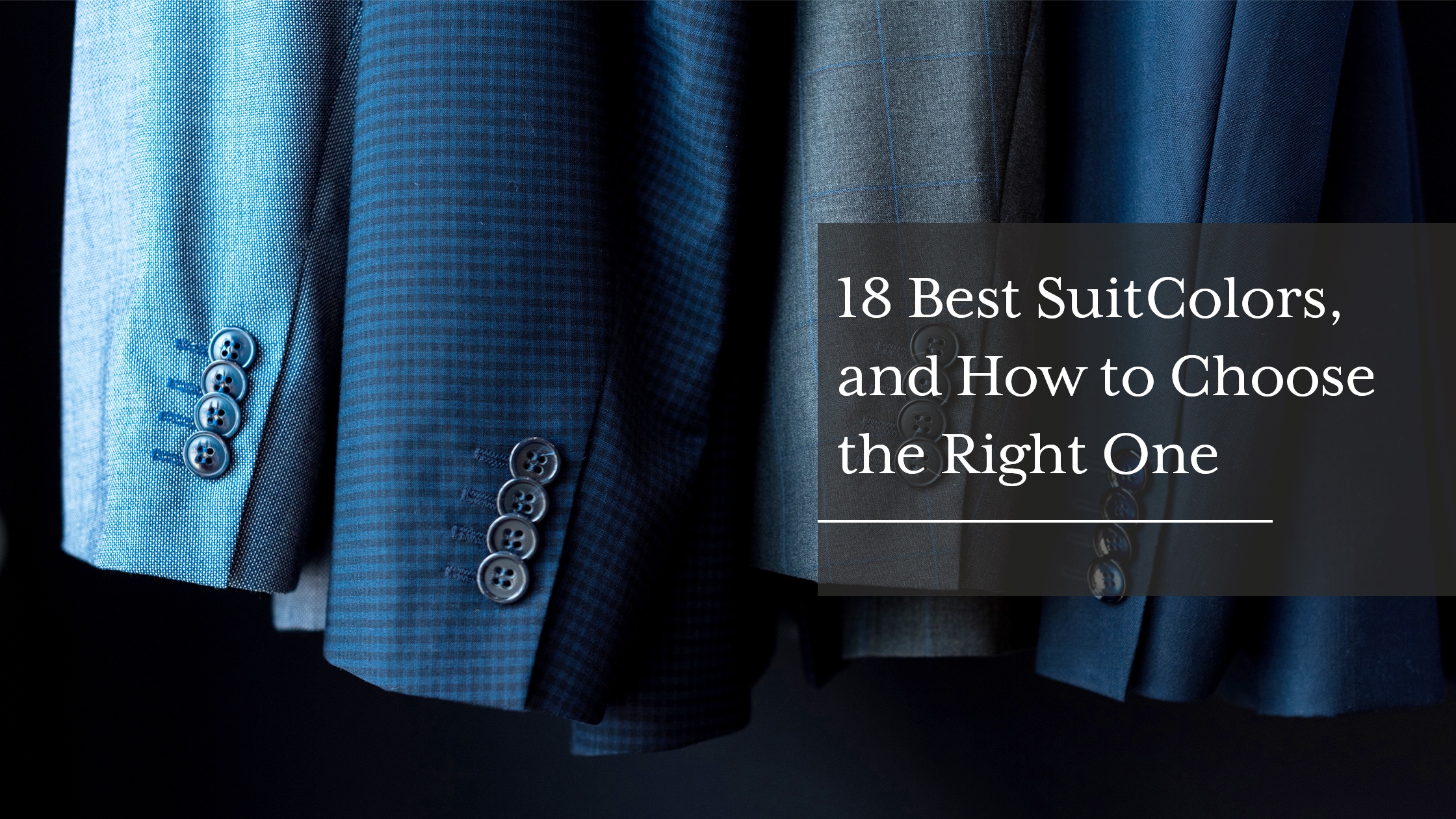
Choosing the right suit colour is about more than picking a shade you like. Colour affects how formal a suit feels, how often you can wear it, what shirts and shoes work with it, and whether it suits the occasion you are dressing for.
For most men, the best suit colours are navy, charcoal grey, and medium grey. These are the easiest colours to wear across business meetings, job interviews, weddings, dinners, and other formal or semi-formal occasions.
If you already have the essentials covered, colours such as brown, olive, forest green, burgundy, beige, and slate blue can add more personality while still being practical.
The right choice also depends on the occasion, season, climate, fabric, and how the colour looks against your complexion.
This guide compares 18 suit colours and explains which ones work best for business, weddings, warm weather, evening events, and more expressive tailoring.
What Are the Best Suit Colours for Men?
If you are looking for one suit that can cover the most occasions, navy is usually the best place to start.
Charcoal grey follows closely for men who need something more formal or business-focused, while medium grey provides another versatile option that moves easily between professional and social settings.
Here is a quick comparison:
If You Own Only One Suit
Choose navy.
It is formal enough for most business situations while still looking natural at weddings, dinners, and other social events.
If You Own Two Suits
A strong combination is:
- Navy
- Charcoal grey
Together, these colours cover most professional and formal occasions without feeling repetitive.
If You Own Three Suits
Add medium grey.
You then have a versatile dark suit, a more serious business option, and a slightly lighter suit for daytime events and general wear.
Once those foundations are covered, you can start choosing colours based more on your personal style, climate, and the occasions you attend most often.
Which 18 Suit Colours Are Worth Considering?
Not every suit colour serves the same purpose. Some are wardrobe staples, while others make more sense once you already own the essentials.
1. Navy Blue: The Most Versatile Choice

Navy is one of the safest and most useful suit colours a man can own.
It works well for:
- Business meetings
- Job interviews
- Weddings
- Formal dinners
- Client meetings
- Smart social events
- Travel
Unlike black, navy does not look overly severe during the daytime. It also pairs easily with white, pale blue, and soft pink shirts, as well as a wide range of ties.
Both brown and black shoes work, which makes navy particularly easy to integrate into an existing wardrobe.
For a first tailored suit, navy is usually the strongest starting point.
2. Charcoal Grey: Best for Serious Business

Charcoal grey is slightly more formal and reserved than navy.
It is particularly suitable for:
- Corporate environments
- Job interviews
- Important meetings
- Formal ceremonies
- Evening business functions
A charcoal suit works especially well with a white or pale blue shirt and black shoes.
Dark brown shoes can also work with some shades of charcoal, but black remains the safest choice when maximum formality is required.
For someone who already owns navy, charcoal is an excellent second suit.
3. Medium Grey: The Versatile Middle Ground
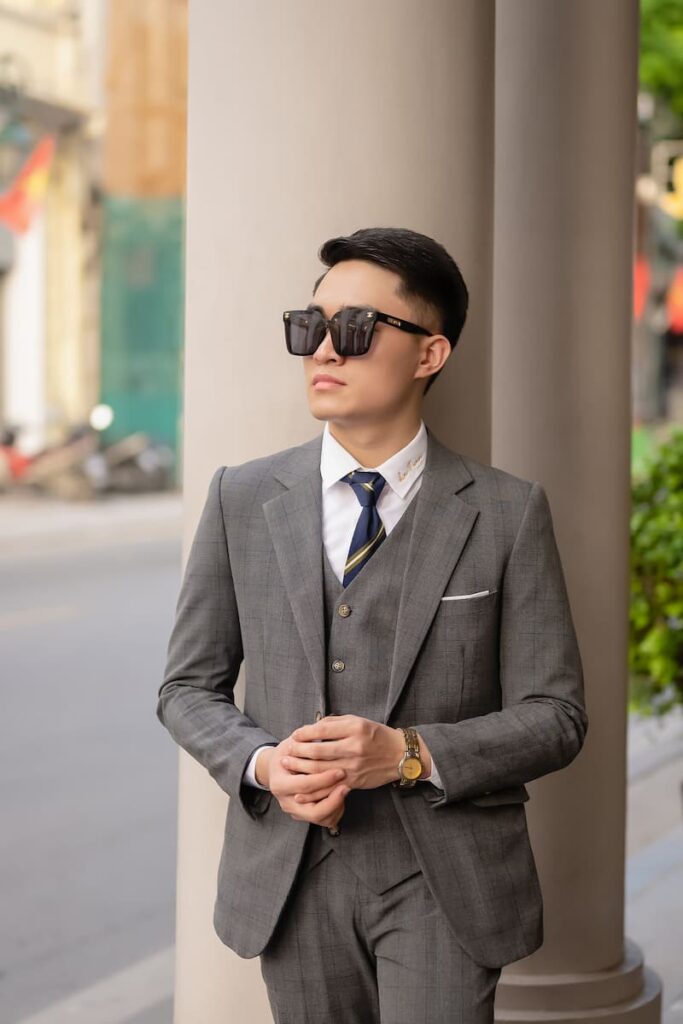
Medium grey sits between dark charcoal and light grey, giving it a useful balance of formality and flexibility.
It works for:
- Office wear
- Weddings
- Business events
- Daytime functions
- Dinners
Medium grey combines easily with white, pale blue, and soft pink shirts.
Brown shoes create a slightly more relaxed appearance, while black shoes make the outfit more formal.
For someone building a small suit wardrobe, medium grey is one of the easiest colours to add after navy and charcoal.
4. Black: Formal but Less Versatile
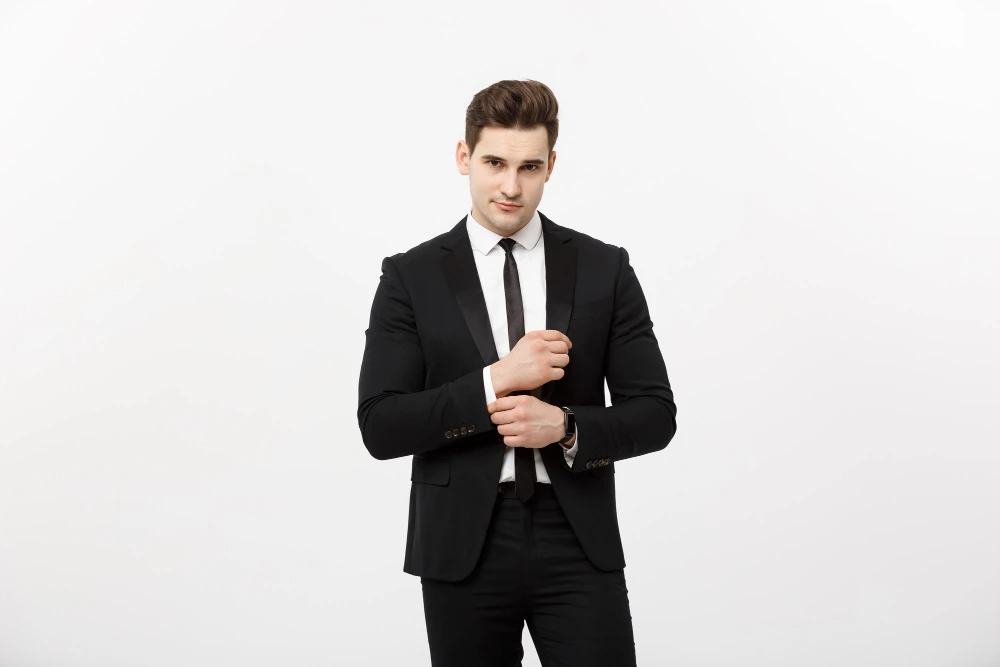
A black suit creates a clean, sharp appearance but is less versatile than navy or grey for everyday menswear.
It works best for:
- Funerals
- Formal evening events
- Certain ceremonies
- Minimalist formal looks
Black can look severe in bright daylight, which is why navy and charcoal usually work better for everyday business.
It is also important to distinguish between a black suit and black tie. A true black-tie dress code normally calls for a tuxedo or dinner suit rather than a standard black business suit.
If you are buying your first or only suit, navy or charcoal will generally give you more opportunities to wear it.
5. Midnight Blue: Refined for Evening Wear

Midnight blue is deeper than traditional navy and can appear almost black under evening lighting.
It is an excellent choice for:
- Formal dinners
- Evening weddings
- Cocktail events
- Receptions
- Refined evening tailoring
Pair midnight blue with a white shirt and black shoes for a clean, elegant appearance.
For occasions approaching black-tie formality, the garment itself matters as much as the colour. A midnight-blue dinner suit can be a sophisticated alternative to traditional black.
6. Light Grey: Best for Daytime and Warm Weather
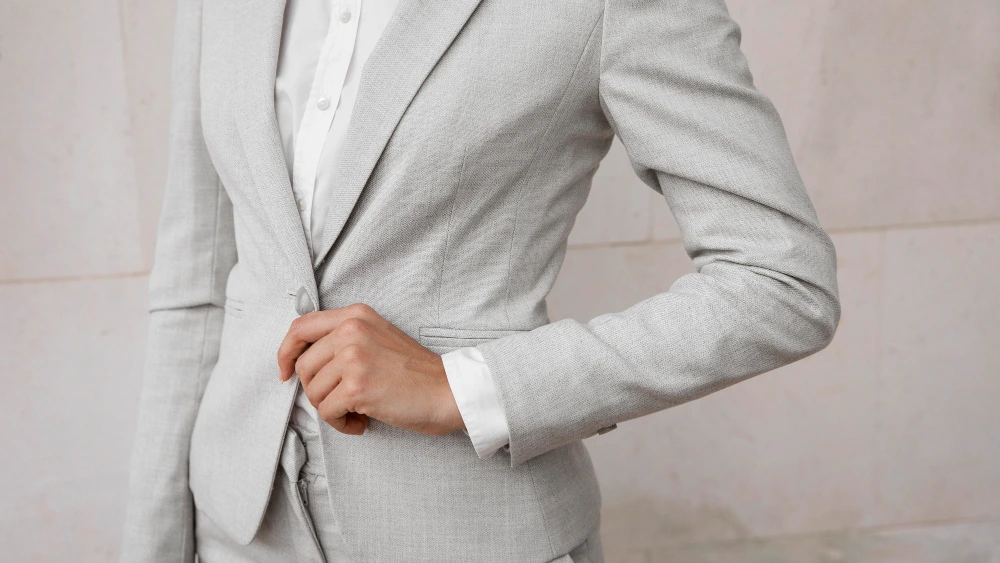
Light grey gives tailoring a softer and more relaxed appearance.
It works particularly well for:
- Daytime weddings
- Outdoor celebrations
- Summer business events
- Garden parties
- Warm-weather travel
Light grey works naturally with white, pale blue, pink, and other soft-coloured shirts.
Brown shoes generally suit it better than black because they maintain the lighter overall appearance.
Because light grey reads more casually than charcoal, it is usually more appropriate for daytime events than conservative corporate environments.
7. Mid-Blue: More Relaxed Than Navy

Mid-blue provides more colour than navy without becoming overly bold.
It works particularly well for:
- Weddings
- Daytime events
- Creative offices
- Social occasions
- Smart-casual tailoring
Pair it with a white shirt and medium or dark brown shoes for an easy combination.
In general, the brighter the blue becomes, the less formal the suit feels.
8. Brown: A Versatile Alternative Neutral
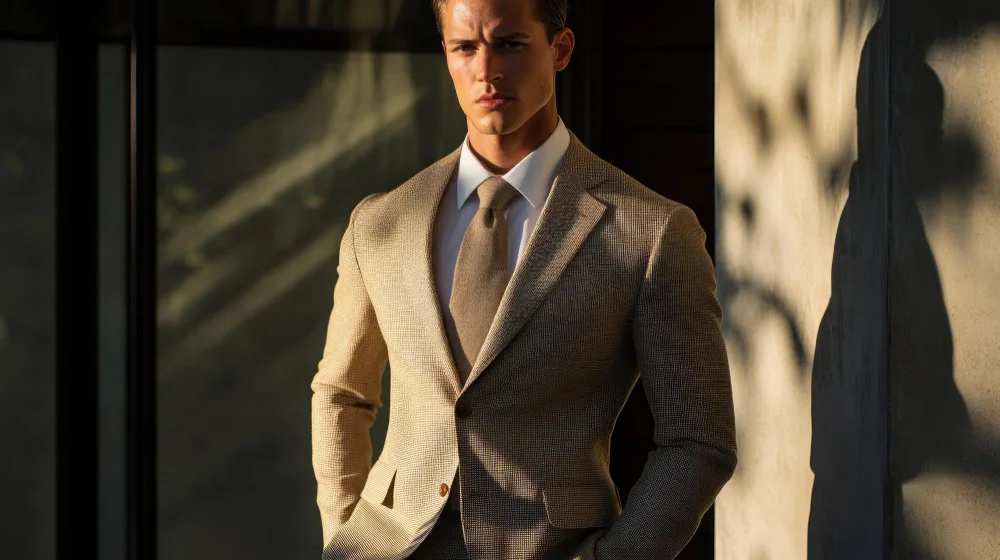
Brown is a useful alternative for men who already own traditional navy and grey suits.
Darker browns can look sophisticated, while lighter brown shades feel more relaxed.
Brown works particularly well for:
- Weddings
- Smart-casual business
- Dinners
- Social occasions
- Creative professions
White, cream, pale blue, and light pink shirts all work well with brown tailoring.
Brown, dark brown, and oxblood shoes are the easiest footwear choices.
9. Chocolate Brown: Rich and Contemporary

Chocolate brown deserves separate consideration because its depth gives it a different character from lighter brown.
A dark chocolate suit can function almost like another neutral.
It works well for:
- Evening dinners
- Weddings
- Autumn and winter events
- Creative business settings
- Men looking for an alternative to navy or charcoal
Chocolate brown pairs particularly well with cream, white, pale blue, and muted green.
10. Tan and Khaki: Relaxed Warm-Weather Tailoring
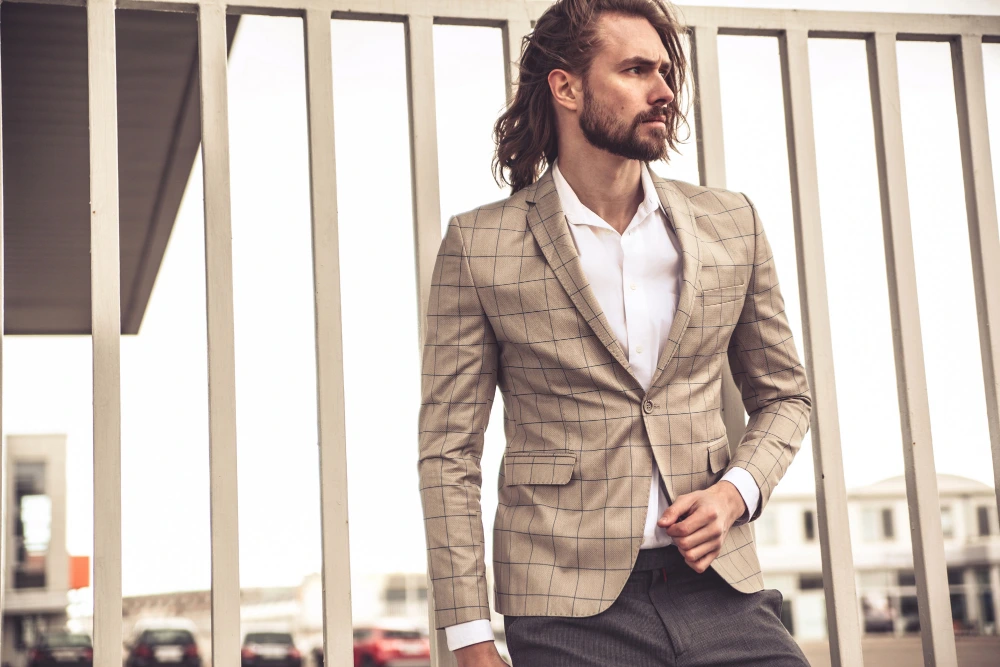
Tan and khaki suits work best when the occasion is relatively relaxed and the weather is warm.
They suit:
- Outdoor weddings
- Destination weddings
- Daytime celebrations
- Resort settings
- Smart-casual events
White and pale blue shirts are easy choices, while brown or tan footwear maintains the lighter feel of the outfit.
These colours are usually less appropriate for conservative corporate environments.
11. Beige: Elegant for Summer and Destination Weddings
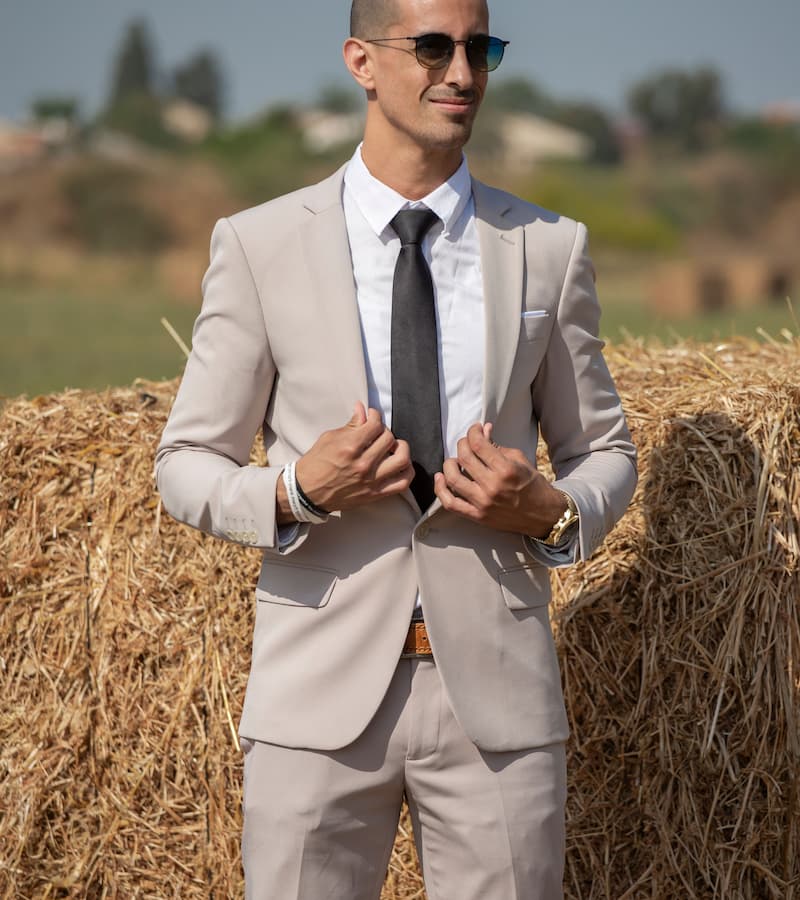
Beige is one of the easiest light colours to wear in a warm climate.
It works particularly well for:
- Beach weddings
- Garden weddings
- Daytime celebrations
- Resort events
- Warm-weather tailoring
A beige linen, linen-blend, or lightweight wool suit can look polished without appearing overly formal.
White, cream, and pale blue shirts pair naturally with beige, while brown or tan footwear completes the lighter look.
12. White and Ivory: Statement Summer Tailoring

White and ivory suits create a much more distinctive appearance and are usually best chosen for a specific event rather than everyday wear.
They can work for:
- Destination weddings
- Beach events
- Summer parties
- Fashion-led occasions
If you are attending someone else’s wedding, always consider the dress code before choosing white or ivory.
These shades also show marks, dirt, and creasing more easily than darker colours.
For most men, beige or light grey will be a more versatile light-coloured option.
13. Forest Green: Deep and Sophisticated
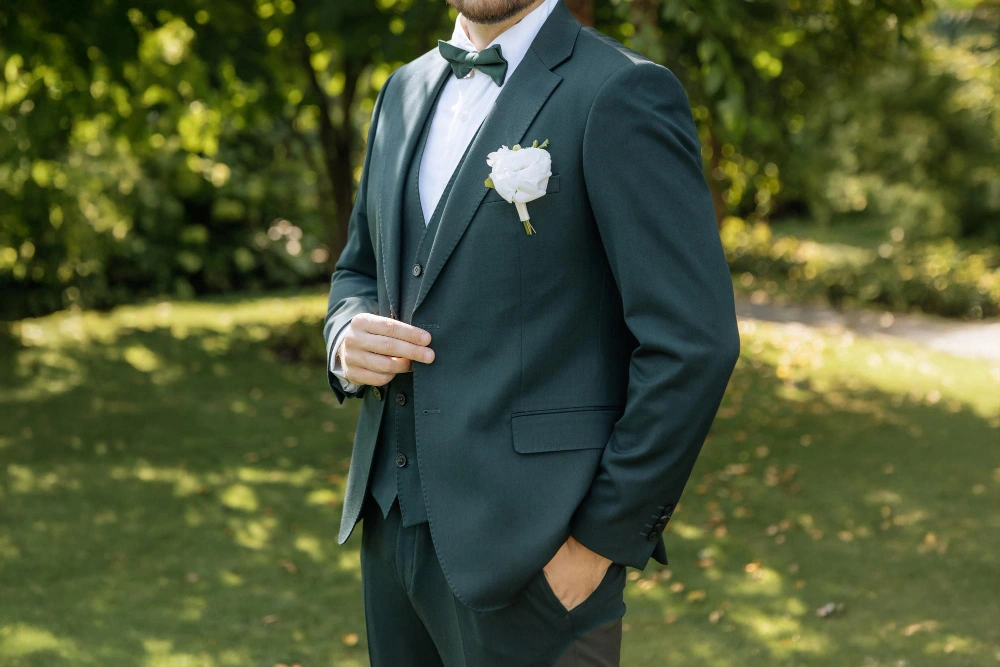
Forest green gives you the depth of a dark suit with more personality than navy or charcoal.
It works particularly well for:
- Evening weddings
- Autumn and winter weddings
- Dinner events
- Creative occasions
- Formal social events
Forest green pairs naturally with white, cream, and pale blue shirts.
Brown leather shoes usually complement the warmth of the colour particularly well.
14. Olive Green: Relaxed and Contemporary
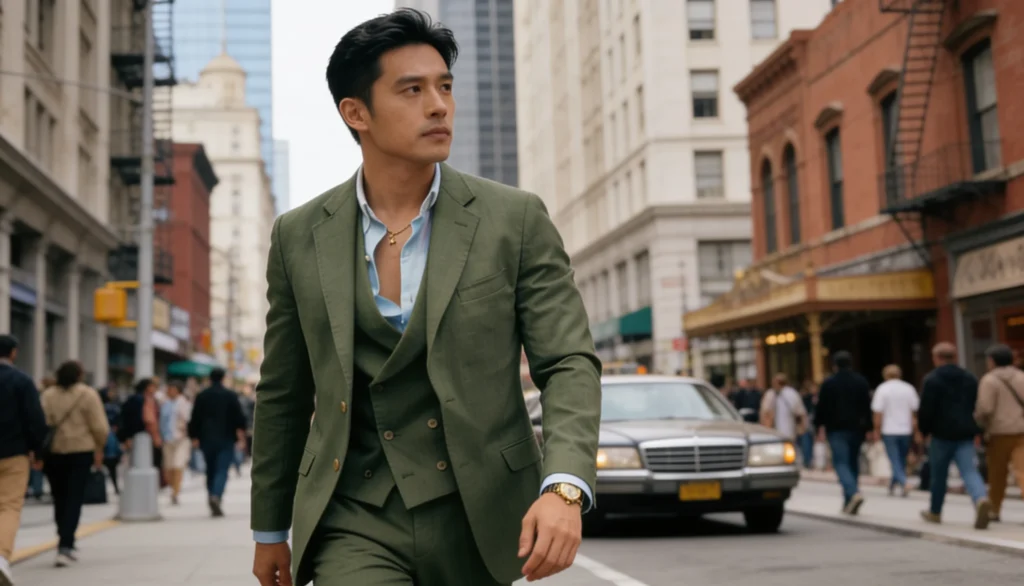
Olive is more muted and earthy than forest green.
It works particularly well for:
- Outdoor weddings
- Daytime celebrations
- Smart-casual tailoring
- Creative workplaces
- Autumn events
Olive pairs naturally with cream, white, pale blue, and earthy accessories.
Brown leather footwear is usually the easiest match.
15. Sage Green: Soft for Weddings and Daytime Events
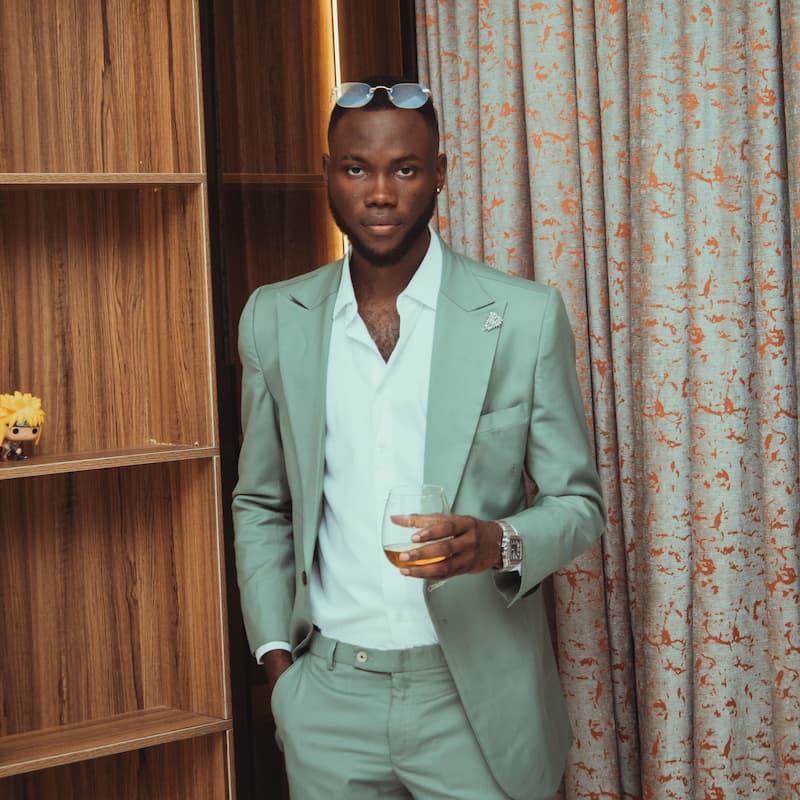
Sage is lighter and softer than olive or forest green.
It is particularly suitable for:
- Spring weddings
- Garden ceremonies
- Destination weddings
- Daytime celebrations
- Relaxed formalwear
Sage works well with white, cream, beige, and light brown.
It is less suitable for traditional corporate environments but can look very refined when the venue and dress code allow something less conventional.
16. Slate Blue: Understated and Modern
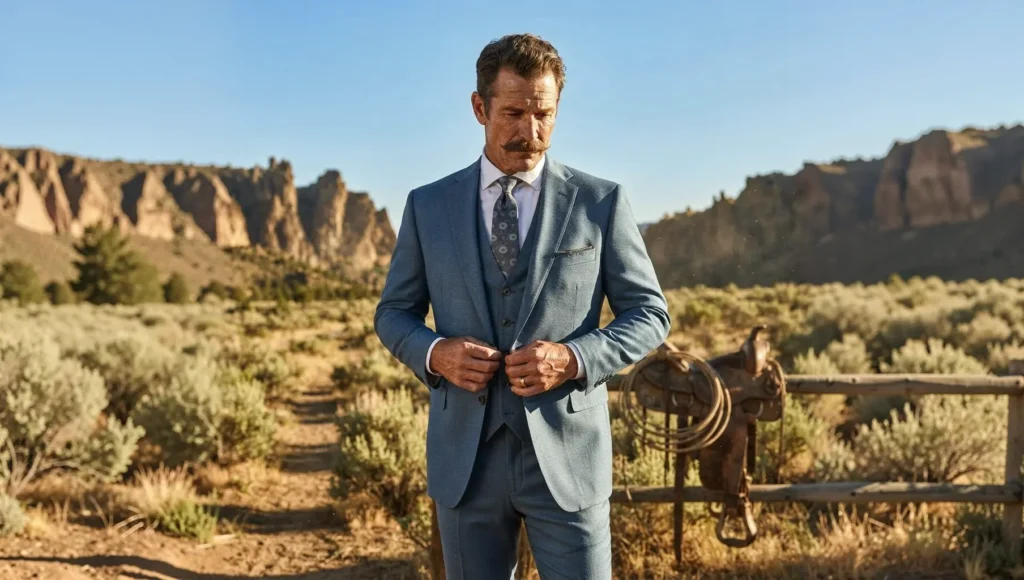
Slate blue combines elements of blue and grey.
The result is quieter than a bright blue suit while still being slightly more distinctive than standard grey.
It works well for:
- Modern offices
- Weddings
- Daytime events
- Semi-formal occasions
- Creative industries
White, pale blue, and soft pink shirts all pair naturally with slate blue.
17. Burgundy and Maroon: Rich Evening Colours

Burgundy and maroon bring considerably more personality to tailoring.
They work best for:
- Evening events
- Weddings
- Parties
- Dinner occasions
- Autumn and winter celebrations
A darker burgundy wool suit can look sophisticated when paired with a simple white or cream shirt.
Keep the rest of the outfit restrained so the colour remains the focal point.
18. Lavender: Fashion-Forward Daytime Tailoring
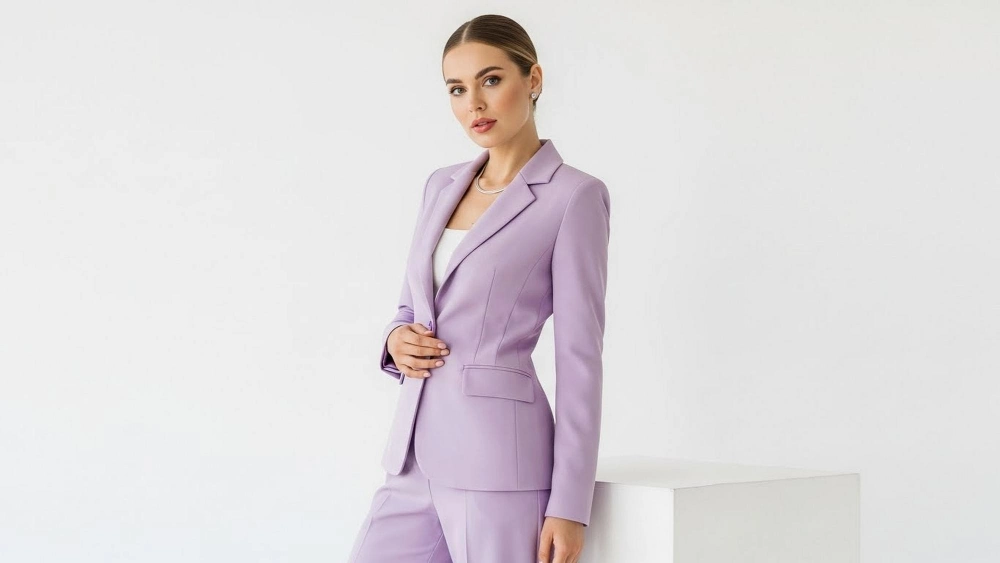
Lavender is one of the most expressive colours on this list.
It works best for:
- Spring celebrations
- Daytime weddings
- Fashion-led events
- Creative occasions
Because the suit already makes a strong visual statement, neutral shirts and accessories generally work best.
Lavender is not an essential wardrobe colour, but it can be an interesting option if you already own navy, grey, and other versatile suits.
How Do You Choose a Suit Colour for the Occasion?
The best suit colour is the one that fits the level of formality and setting of the event.
| Occasion | Best Suit Colours | Why |
|---|---|---|
| First Suit | Navy, charcoal | Maximum versatility |
| Job Interview | Navy, charcoal, medium grey | Professional and understated |
| Business Meeting | Navy, charcoal, medium grey | Appropriate for most industries |
| Daytime Wedding | Navy, medium grey, light grey, beige | Polished without feeling too heavy |
| Outdoor Wedding | Beige, tan, light grey, olive, sage | Works naturally with outdoor settings |
| Evening Wedding | Navy, midnight blue, charcoal, forest green | Deeper colours suit evening lighting |
| Formal Dinner | Midnight blue, charcoal, dark navy | Refined and formal |
| Creative Event | Brown, olive, burgundy, slate blue | Adds personality without looking excessive |
| Funeral | Charcoal, black, very dark navy | Respectful and understated |
| Warm-Weather Event | Light grey, beige, tan, soft blue | Lighter visual weight |
Job Interviews
For most interviews, choose navy, charcoal grey, or medium grey.
Navy feels professional but approachable.
Charcoal creates a more serious and conservative impression.
Medium grey provides a softer option that still looks polished.
For an interview, the suit should support your appearance rather than become the first thing the interviewer notices.
Weddings
Wedding suit colour depends heavily on the venue, time of day, season, and dress code.
Navy and medium grey remain reliable choices for most weddings.
For daytime or outdoor weddings, consider light grey, beige, tan, sage, olive, or mid-blue.
For evening weddings, deeper colours such as midnight blue, charcoal, forest green, and burgundy usually feel more appropriate.
Business
For traditional business settings, navy, charcoal grey, and medium grey remain the safest choices.
Creative workplaces provide more flexibility, where brown, slate blue, olive, or other muted colours may work naturally.
Which Suit Colours Work Best for Each Season?
Season affects how natural a colour feels, although fabric weight and local climate are just as important.
| Season / Climate | Best Suit Colours | Best Fabrics | Best For |
|---|---|---|---|
| Spring | Light grey, sage, mid-blue, beige | Lightweight wool, linen blends | Daytime events, weddings, smart casual |
| Summer | Beige, tan, light grey, soft blue | Linen, tropical wool, linen blends | Outdoor events, destination weddings, warm-weather tailoring |
| Autumn | Brown, olive, burgundy, forest green | Wool, flannel, textured blends | Weddings, dinners, seasonal events |
| Winter | Charcoal, navy, chocolate brown, midnight blue | Wool, flannel, heavier worsted wool | Business, formal events, evening wear |
| Tropical / Year-Round | Navy, medium grey, charcoal, beige | Tropical wool, lightweight wool, linen blends | Bangkok and other warm climates |
These are useful guidelines rather than strict seasonal rules.
A navy suit can be worn throughout the year. The difference often comes from choosing a lighter or heavier fabric rather than changing the colour completely.
What Suit Colours Work Best in Bangkok’s Climate?
Bangkok’s heat, humidity, and strong daylight make both colour and fabric important.
For year-round versatility, lightweight navy, medium grey, and charcoal remain excellent choices.
For daytime and outdoor events, lighter shades such as beige, tan, light grey, soft blue, and sage can feel more natural.
For evening occasions, navy, midnight blue, charcoal, forest green, and burgundy work particularly well.
Fabric is just as important as colour in warm weather. If you are choosing cloth for a suit in Thailand, Michael Tailors’ guide to suit fabrics explains how options such as wool, linen, cotton, and other materials affect comfort and appearance.
Strong sunlight can also make a colour appear noticeably brighter than it does indoors. Whenever possible, look at the actual fabric in both daylight and indoor lighting before making a final decision.
How Does Fabric Change the Way a Suit Colour Looks?
The same colour can look completely different depending on the fabric.
A navy worsted wool suit and a navy linen suit may technically share the same colour family, but they communicate very different levels of formality.
| Fabric | How the Colour Appears | Best For |
|---|---|---|
| Worsted Wool | Clean, smooth and consistent | Business, weddings, formal wear |
| Tropical Wool | Clean but lightweight | Warm climates and year-round tailoring |
| Flannel | Softer, deeper and more textured | Cooler weather and relaxed tailoring |
| Linen | Textured and relaxed | Summer and destination weddings |
| Linen Blend | Relaxed but more structured than pure linen | Warm-weather tailoring |
| Velvet | Deep and highly saturated | Evening jackets and statement formalwear |
This becomes particularly important with less traditional colours.
Brown flannel creates a rich autumn appearance, while brown linen feels much lighter and more suited to warm-weather dressing.
Likewise, burgundy wool can make an elegant suit, while burgundy velvet creates a much stronger evening statement.
Which Suit Colours Work Best With Different Skin Undertones?
Skin undertone can be a useful starting point when choosing a suit colour, but it should not be treated as a strict rule.
If you have warm undertones, colours such as brown, beige, tan, olive, forest green, and burgundy often work well because they complement warmer golden, peach, or olive tones in the skin.
For cool undertones, charcoal, navy, midnight blue, slate blue, and burgundy are usually reliable choices. These shades tend to sit naturally against cooler or slightly pinker complexions.
If your undertone is neutral, you generally have more flexibility. Navy, grey, brown, olive, beige, and burgundy can all work, so the decision often comes down more to the occasion and your personal preference.
What Does Contrast Mean?
Contrast refers to how much difference there is between your skin tone, hair colour, and other facial features.
A high-contrast complexion means there is a noticeable difference between these features. For example, someone with light skin and very dark hair would usually have higher contrast. Deeper suit colours such as navy, charcoal, midnight blue, or dark green can often complement this naturally.
A low-contrast complexion means the skin, hair, and facial features are closer in depth or tone. For example, someone with fair skin and light hair may have lower contrast. Softer colours such as medium grey, beige, soft blue, or olive can create a more balanced look without overpowering the face.
Neither high nor low contrast is better. The idea is simply to choose a suit that works with the natural level of contrast already present in your appearance.
The most important thing is to consider the whole outfit rather than the suit colour alone. Shirt colour, fabric texture, lighting, and overall contrast can all change how a suit looks against your complexion.
Whenever possible, compare actual fabric swatches near your face in both natural and indoor lighting instead of choosing entirely from an online colour chart.
How Should You Match Suit Colours With Shirts and Shoes?
The suit needs to work with the rest of your wardrobe.
These combinations provide reliable starting points:
| Suit Colour | Easy Shirt Colours | Recommended Shoes |
|---|---|---|
| Navy | White, pale blue, pink | Brown or black |
| Charcoal | White, pale blue | Black or dark brown |
| Medium Grey | White, blue, pink | Brown or black |
| Light Grey | White, blue, pastel shades | Brown |
| Brown | White, cream, pale blue | Brown or oxblood |
| Beige | White, cream, pale blue | Tan or brown |
| Olive | White, cream, pale blue | Brown |
| Forest Green | White, cream | Dark brown or black |
| Burgundy | White, cream, pale blue | Dark brown or black |
| Midnight Blue | White | Black |
These combinations are not strict rules. They simply give you an easy foundation before experimenting with stronger colours or patterns.
What About Pinstripe and Windowpane Suits?
Pinstripe and windowpane often appear in suit-colour guides, but they are patterns rather than colours.
Choose the base suit colour first, then decide whether a pattern suits your wardrobe and the occasion.
Pinstripe
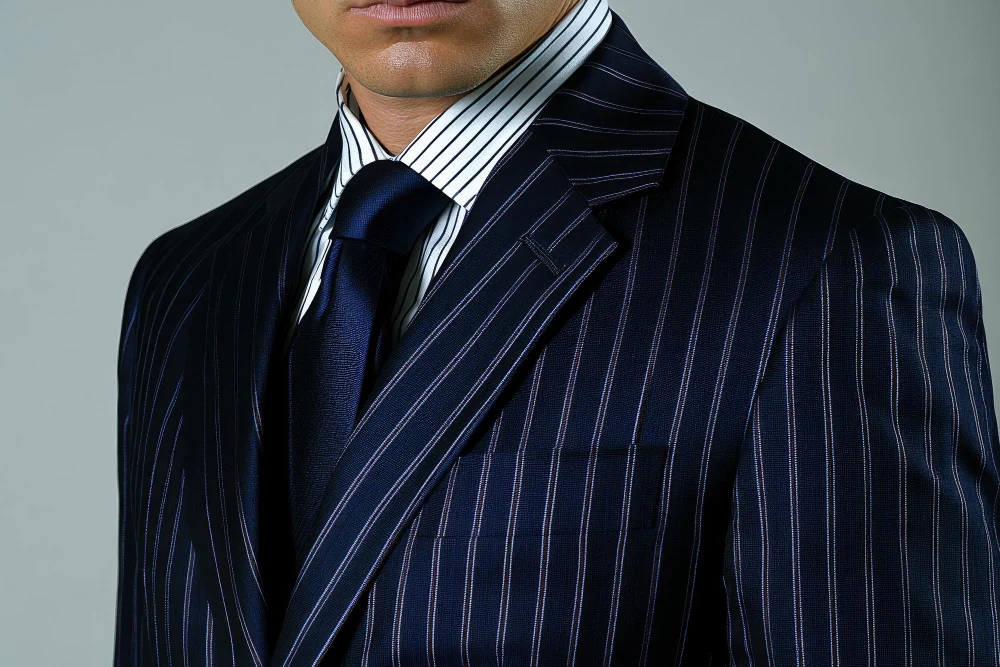
Pinstripes are most commonly seen on navy, charcoal, and grey suits.
They traditionally create a more business-oriented appearance and work particularly well for professional environments.
Windowpane

Windowpane suits use larger intersecting lines to create a checked pattern.
Because the pattern is more visible, it feels more expressive than a plain suit.
Windowpane works well for weddings, social occasions, creative offices, and men who already own several plain suits.
If you are comparing different constructions as well as colours and patterns, Michael Tailors’ guide to suit types explains how two-piece, three-piece, single-breasted, double-breasted, and occasion-based suits differ.
What About Velvet and Jewel-Tone Suits?
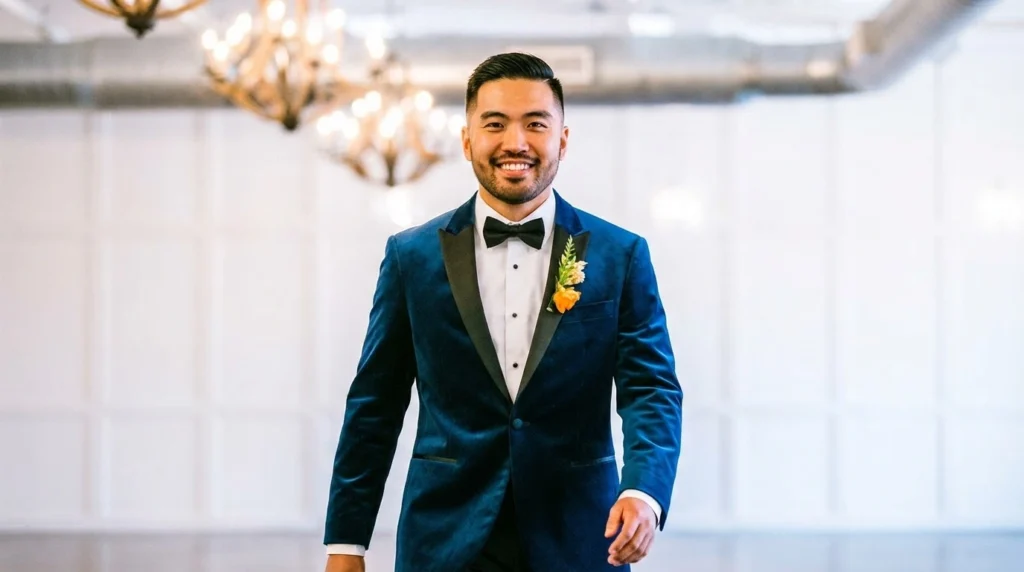
Velvet is a fabric rather than a suit colour.
Its texture absorbs and reflects light differently from standard wool, making colours such as burgundy, midnight blue, forest green, and black appear especially deep.
Velvet is generally better suited to dinner jackets and statement eveningwear than everyday business suits.
For a true black-tie event, the dress code also matters. A tuxedo or dinner suit is more appropriate than simply choosing a regular black suit. Michael Tailors’ tuxedo collection shows examples of formal evening styles in black, navy, and other colours.
What Colour Should Your First Suit Be?
If you only plan to buy one suit, choose navy.
Navy works across more situations than almost any other colour.
You can wear it to:
- Interviews
- Business meetings
- Weddings
- Dinners
- Formal events
- Semi-formal occasions
Charcoal is another excellent first choice, particularly if your wardrobe is mainly intended for serious professional use.
Medium grey makes a strong third suit.
Black is usually less useful as a first suit because the occasions where it performs best are more specific.
How Do You Choose the Best Suit Colour for Your Wardrobe?
Before choosing, ask yourself four questions.
Where Will You Wear the Suit Most Often?
A suit intended primarily for corporate meetings needs different versatility from one purchased for a destination wedding.
If you need one suit to cover many situations, navy or charcoal is usually the safest decision.
What Suit Colours Do You Already Own?
If you already own two navy suits, another navy may not add much to your wardrobe.
This is where medium grey, brown, olive, or another alternative colour can provide more variety.
Which Shirts and Shoes Do You Already Wear?
A suit becomes much more useful when it works with clothing you already own.
If most of your shoes are brown, navy, medium grey, beige, olive, and brown suits are particularly easy to integrate.
How Does the Actual Fabric Look on You?
Colour names can only tell you so much.
Two fabrics described as “navy” may look noticeably different once you see them in natural light.
Fabric texture, weave, sheen, and weight can all influence how the colour appears.
This is one advantage of choosing a custom suit in person. You can compare fabrics against your complexion, existing wardrobe, and the environment where you expect to wear the finished suit.
So Which Suit Colour Should You Choose?
For most men, the easiest way to build a practical suit wardrobe is to start with versatility and add personality later.
A simple order is:
First suit: Navy
Second suit: Charcoal grey
Third suit: Medium grey
After that, choose based on your lifestyle.
Brown and olive can introduce more relaxed alternatives to traditional neutrals. Light grey, beige, tan, sage, and mid-blue work particularly well for daytime and warm-weather occasions. Forest green, burgundy, chocolate brown, and midnight blue give evening tailoring more character.
There is no need to choose the boldest colour simply because it is fashionable. A good suit colour should work with your wardrobe, suit the occasions you actually attend, and still feel right several years from now.
At Michael Tailors, you can compare actual cloth colours, fabrics, and textures before making a decision. If you are visiting a tailor in Bangkok, seeing the fabric against your complexion and under different lighting can make choosing the right suit colour much easier.
Frequently Asked Questions
What is the best suit colour for men?
Navy is generally the best all-round suit colour because it works for business, weddings, interviews, dinners, and many formal or semi-formal occasions.
What colour should my first suit be?
Navy is usually the strongest first choice. Charcoal grey is another good option, particularly if you need the suit mainly for business or professional occasions.
What are the three most versatile suit colours?
Navy, charcoal grey, and medium grey provide the strongest foundation for most suit wardrobes.
Is a black suit appropriate for business?
It can work in some environments, but navy and charcoal are generally easier to wear for everyday business. Black tends to feel more formal and severe.
What suit colour is best for a wedding?
Navy and medium grey work for most weddings. Light grey, beige, tan, sage, and mid-blue work particularly well for daytime or outdoor events, while midnight blue, charcoal, forest green, and burgundy suit evening occasions.
What suit colours work best in hot weather?
Light grey, beige, tan, and softer blues look natural in warm-weather settings. However, lightweight fabric is more important for physical comfort than colour alone.
Can I wear brown shoes with a navy suit?
Yes. Navy suits pair well with medium and dark brown shoes. Black shoes create a more formal appearance.
Is brown a good suit colour?
Yes. Darker brown can work as an alternative neutral, particularly for weddings, smart-casual business, dinners, and less conservative professional environments.
Are green suits still appropriate?
Yes. Forest green, olive, and sage can all work when the occasion allows something less traditional. Darker greens suit evening and formal social occasions, while olive and sage work particularly well for outdoor and daytime events.
Should my suit colour match my skin tone?
Your suit should complement your overall complexion, but undertone is only one factor. Shirt colour, contrast, fabric texture, and lighting also affect the result, so comparing real fabric swatches is better than relying entirely on fixed colour rules.

More Articles
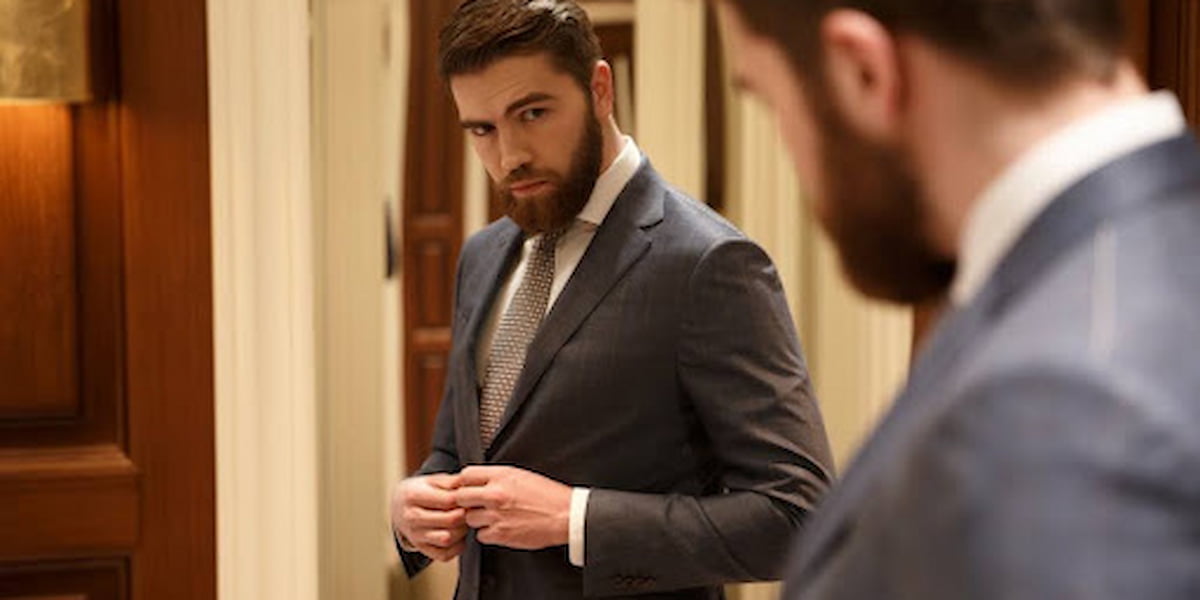
Getting a Suit Made in Bangkok on a Short Trip: Real Customer Stories
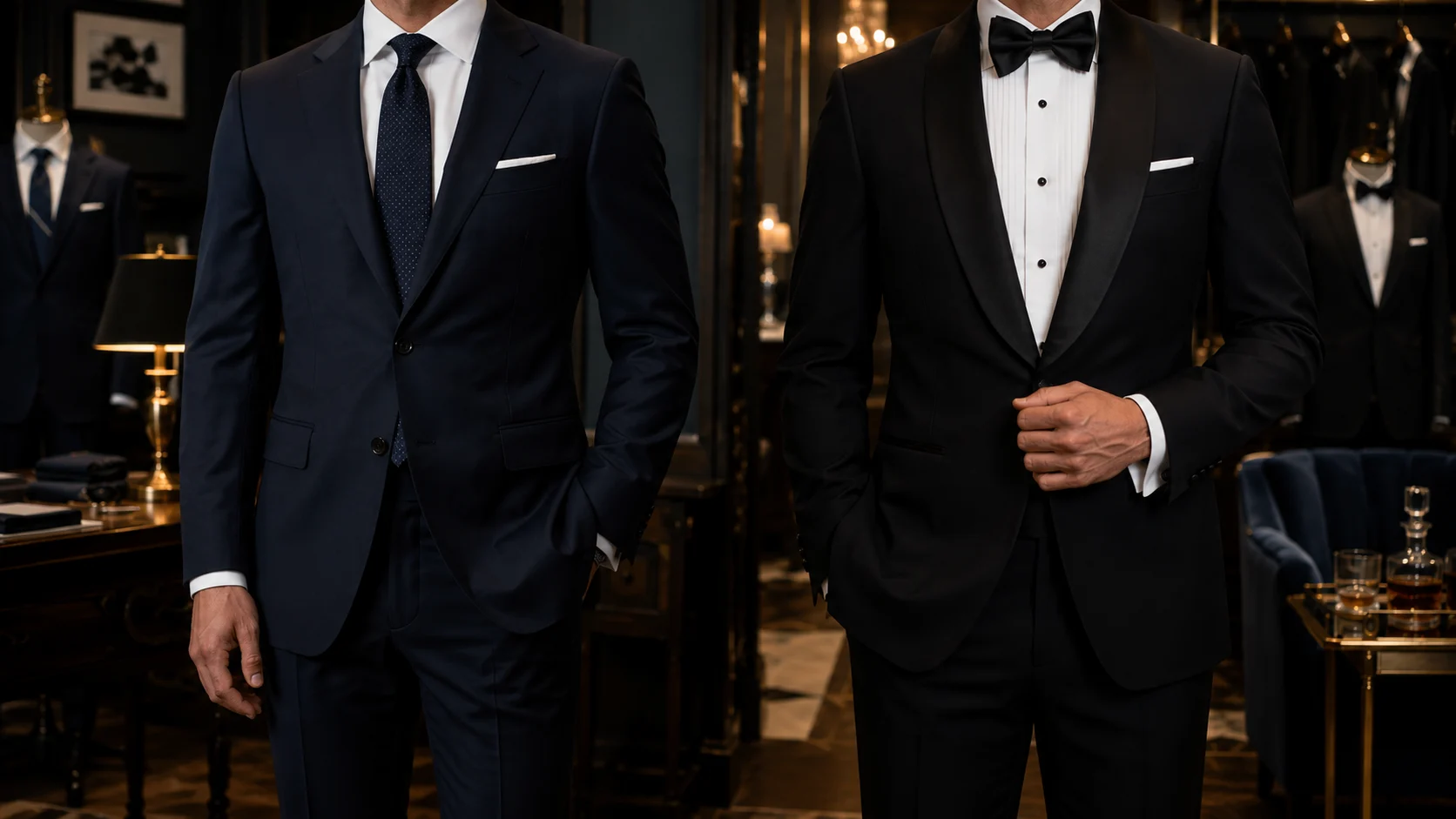
Suit vs Tuxedo: Key Differences and When to Wear Each One