
A Bangkok tailor shop can make a suit fit beautifully, but even excellent tailoring can arrive wrinkled if it is packed under too much pressure or handled incorrectly during travel. Travelling with a suit is therefore less about finding a magical wrinkle-proof fold and more about controlling pressure, moisture, and movement.
A jacket crushed beneath shoes for six hours can crease regardless of its quality. Give the same suit enough room, a clean fold, and time to recover, and it can arrive ready to wear after only light steaming.
If you are learning how to travel with a suit, the most important decisions are whether to carry or pack it, how to protect the jacket’s structure, and what to do immediately after arrival.
This guide covers garment bags, suitcase packing, the inside-out shoulder fold, luggage pressure, fabric choice, and a practical hotel recovery routine.
Should a Suit Go in a Garment Bag or Suitcase?
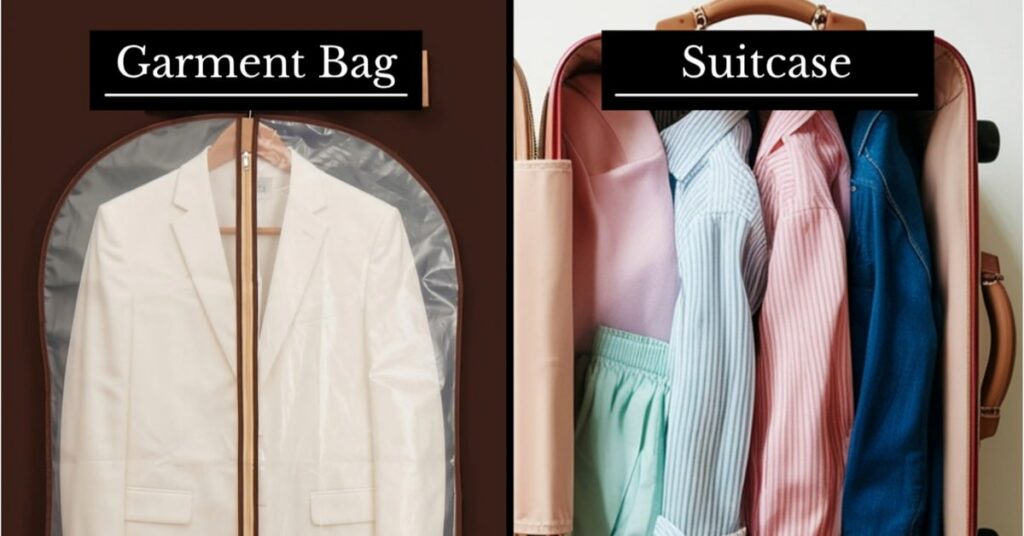
Use a breathable garment bag when your airline, train, or vehicle gives you a safe place to hang the suit. This is particularly useful for delicate fabrics, structured jackets, or trips where the suit is your main outfit.
Keep the garment bag closed and avoid placing a heavy coat, backpack, or laptop bag on top.
Pack the suit in a suitcase when hanging space is uncertain or when you need better protection from rain, crowded aisles, and handling. A medium or large suitcase usually gives a jacket more room than forcing it into a very small case.
For one suit and several days of clothing, a hybrid approach can also work well: carry the jacket in a garment bag when practical and pack the trousers with the rest of your wardrobe. The jacket usually requires more care to restore, so it deserves priority.
| Travel Situation | Better Option | Why |
|---|---|---|
| Short car or train journey with hanging space | Garment bag | Keeps the jacket open and reduces compression |
| Flight with reliable wardrobe space | Garment bag | Minimises folding |
| Flight with uncertain overhead space | Suitcase | Offers more predictable protection |
| Rainy or crowded journey | Suitcase | Better protection from moisture and contact |
| Highly structured or delicate jacket | Garment bag | Reduces pressure on shoulders and lapels |
How Should You Prepare a Suit Before Packing?
Empty every pocket before packing. Coins, keys, wallets, and business cards can create pressure marks or distort the fabric during travel.
Brush away lint and allow the suit to air if you wore it earlier in the day. For woven wool garments, Woolmark recommends using suitable shaped or padded hangers and allowing wool time to rest so its natural resilience can help the fibres recover.
Fasten the jacket lightly so the front panels remain aligned, but do not pull it tight. Fold the trousers along their existing crease rather than creating a second one.
Avoid attempting to remove internal padding or construction simply to save space. A tailored jacket is designed to hold a particular shape, and protecting that structure matters more than gaining a few centimetres inside the suitcase.
How Do You Fold a Suit Jacket for Air Travel?
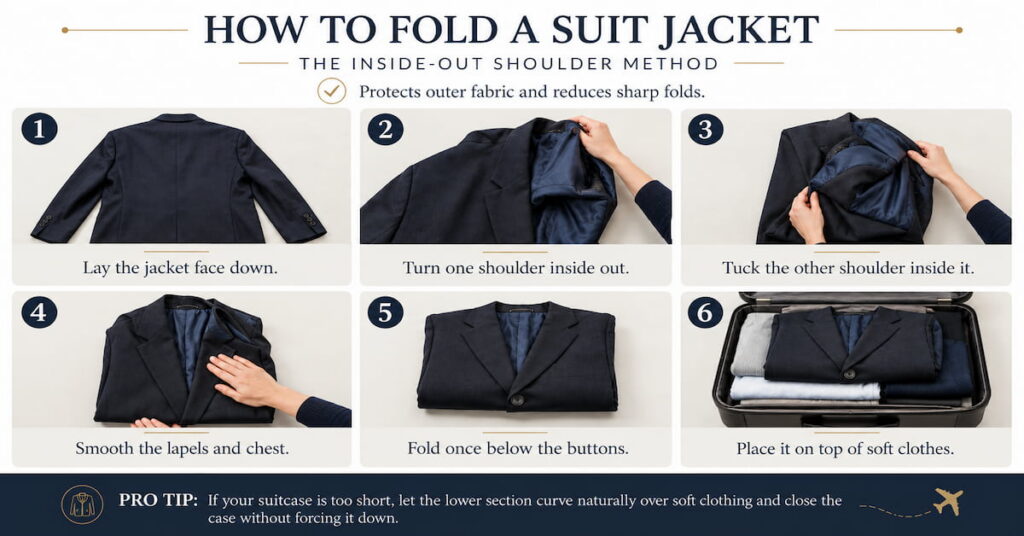
The inside-out shoulder fold is one of the most practical ways to pack a suit jacket because it protects much of the outer fabric while reducing sharp folds through the shoulders and lapels.
- Lay the jacket face down on a clean, flat surface.
- Turn one shoulder gently inside out without sharply bending the padding.
- Slide the other shoulder into the inverted shoulder so the two front panels face one another.
- Align the lapels and smooth the chest gently with your palm.
- Fold the jacket once horizontally below the button area.
- Place it above soft clothing rather than beneath shoes, toiletries, or other heavy items.
The goal is to create a broad, rounded fold rather than a tight crease.
If your suitcase is too short, avoid repeatedly folding the jacket into a smaller shape. Let the lower section curve naturally over softer clothing where possible and close the case without forcing it down.
How Should You Pack Suit Trousers?
Hold the trousers by the cuffs and align them along the existing pressed crease. Lay them flat with the waistband near one side of the suitcase and allow the legs to extend outside temporarily.
Place shirts or lightweight knitwear over the middle section, then fold the trouser legs back across this soft layer. The clothing underneath acts as a cushion and helps prevent a sharp horizontal fold.
Avoid tightly rolling tailored trousers. Rolling may save space with casual clothing, but it can distort the trouser crease and create unnecessary pressure around the waistband.
For a three-piece suit, place the vest flat between shirts or other soft garments rather than forcing it into a narrow side compartment.
How Can You Protect a Suit from Luggage Pressure?
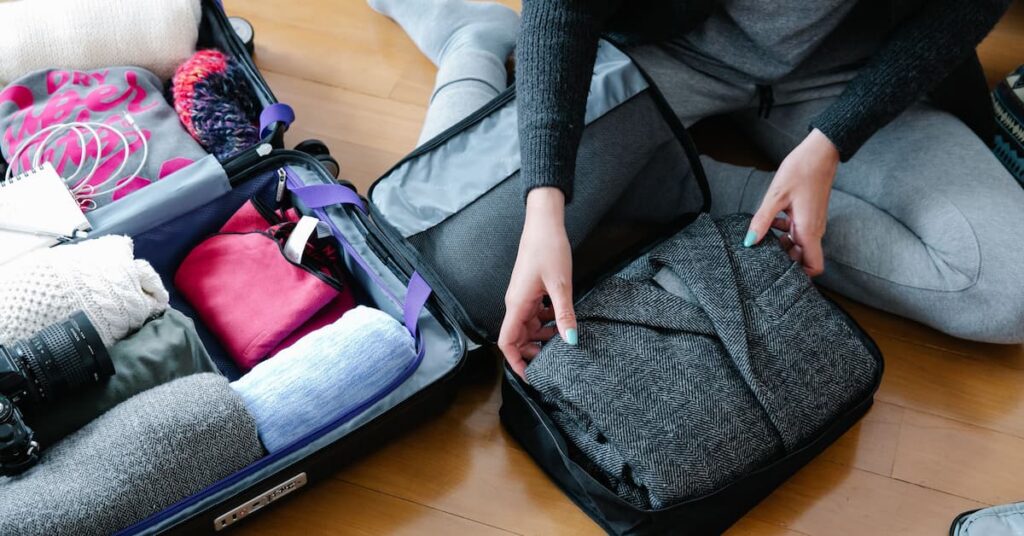
Think of your suitcase as a pressure map rather than an empty box.
Heavy objects should sit where they are least likely to shift onto the tailoring. In a rolling suitcase, shoes and other dense items generally belong closer to the wheel end.
A practical packing order is:
- Shoes in separate shoe bags, positioned against the case walls.
- Sealed toiletries away from the suit.
- Underwear and casual clothing in lightly filled packing cubes.
- Shirts and other soft garments through the middle.
- Trousers over the softer clothing.
- The folded jacket close to the top.
Do not compress a packing cube against the jacket simply to fit more into the case. If the suitcase requires significant pressure to close, removing an item is usually safer than crushing the tailoring.
Tissue paper between folded layers can help reduce friction. A clean cotton cover or breathable garment sleeve can also provide separation.
Avoid leaving a suit sealed inside a plastic dry-cleaning bag for extended periods. For longer storage or travel, breathable protection is preferable.
How Should You Use a Garment Bag While Travelling?
A garment bag works best when the jacket hangs from a broad, supportive hanger that follows the shoulders.
Keep trousers secured on the hanger bar or appropriate clips without creating a new pinch line. Avoid filling the bottom of the garment bag with shoes, toiletries, or several shirts because excess weight can pull on the jacket.
When flying, you can politely ask whether hanging space is available, but do not plan your entire packing strategy around it. Aircraft storage arrangements vary.
If the garment bag must go in an overhead compartment, place it above harder luggage rather than underneath it.
For car travel, hang the suit where it can move freely and keep it away from direct heat. Avoid leaving tailored clothing inside a hot parked vehicle for extended periods.
What Should You Do with Your Suit After Arrival?
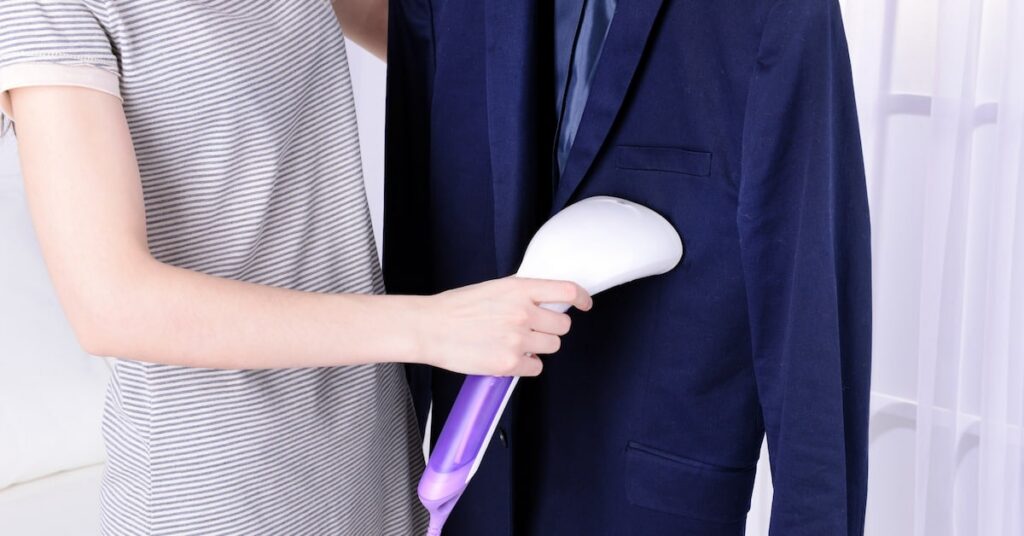
Unpack the suit as soon as practical.
A simple recovery sequence is:
- Remove the suit from the suitcase or garment bag.
- Hang the jacket and trousers separately on broad hangers.
- Give minor creases time to relax naturally.
- Use gentle steam only where needed.
- Let the fabric dry and cool completely before wearing.
For wool suits, Woolmark notes that woven garments can be refreshed after unpacking by hanging them in a steamy bathroom, as humidity can help release wrinkles.
If you have a handheld steamer:
- Check the garment’s care label first.
- Test cautiously on an inconspicuous area if necessary.
- Keep the steamer moving.
- Avoid saturating the cloth.
- Take extra care around buttons, lapels, canvas, and delicate trims.
Putting on a damp suit can quickly introduce new creases, so allow enough recovery time before dressing.
For more detailed care instructions, see Michael Tailors’ guide to removing wrinkles from a suit.
Which Suit Fabrics Travel Best?
Fabric can make a noticeable difference when you need to pack a suit without wrinkles.
| Fabric | Travel Performance | Wrinkle Recovery | Best For |
|---|---|---|---|
| Wool | Very good | Good | Business trips and frequent travel |
| High-twist wool | Excellent | Very good | Frequent flyers and warmer climates |
| Linen | Fair | Low | Relaxed warm-weather trips |
| Cotton | Fair | Moderate to low | Casual or less formal travel |
| Silk blends | Delicate | Varies | Occasional formal travel with careful handling |
Wool is one of the most practical choices because its natural resilience helps it recover after compression. Michael Tailors’ suit fabric guide also highlights wool’s natural elasticity and ability to recover from wrinkling.
Linen wrinkles much more readily. Its creasing is part of the fabric’s character, making it better suited to relaxed warm-weather occasions where a perfectly smooth finish is not essential.
Cotton can develop more visible fold lines after long periods of compression, while silk and silk blends generally require gentler treatment and extra caution around heat and moisture.
Frequent travellers may prefer midweight wool, high-twist wool, or suitable wool blends rather than extremely delicate fabrics. A good travel suit fabric should combine recovery, breathability, comfort, and enough structure for the intended trip.
Colour matters too when one suit must cover several occasions. Navy, charcoal, and other versatile shades are easier to combine with multiple shirts and ties. For more options, see the guide to choosing suit colours for different occasions.
What Is the Best Emergency Hotel Routine for a Wrinkled Suit?
If you have only a short time before a meeting or event, deal with the suit in order of urgency rather than trying several aggressive methods at once.
| Problem | First Action | Avoid |
|---|---|---|
| Light overall wrinkles | Hang and use gentle humidity | Immediate high heat |
| Creased sleeves | Light steaming while hanging | Pressing hard into the fabric |
| Trouser knee creases | Steam or carefully press if permitted | Creating a second trouser crease |
| Flattened lapels | Professional pressing if severe | Direct hot ironing |
| Twisted lining | Professional pressing | Repeated steaming and pulling |
Start by hanging the jacket and trousers properly.
If you do not have a steamer, place them in the bathroom while a warm shower creates gentle humidity, keeping the clothes completely away from direct water.
If ironing is necessary, check the care label first. Avoid excessive heat or leaving an iron stationary on the fabric.
Do not put a hot iron directly onto the face of a tailored jacket. Jacket fronts may contain canvas, padding, and other internal construction that require more careful pressing than an ordinary shirt.
If a crease remains severe, the lapels have flattened, or the jacket lining appears twisted, professional pressing is usually safer than repeatedly applying heat.
What Would a Bangkok Tailor Shop Recommend for a Short Business Trip?
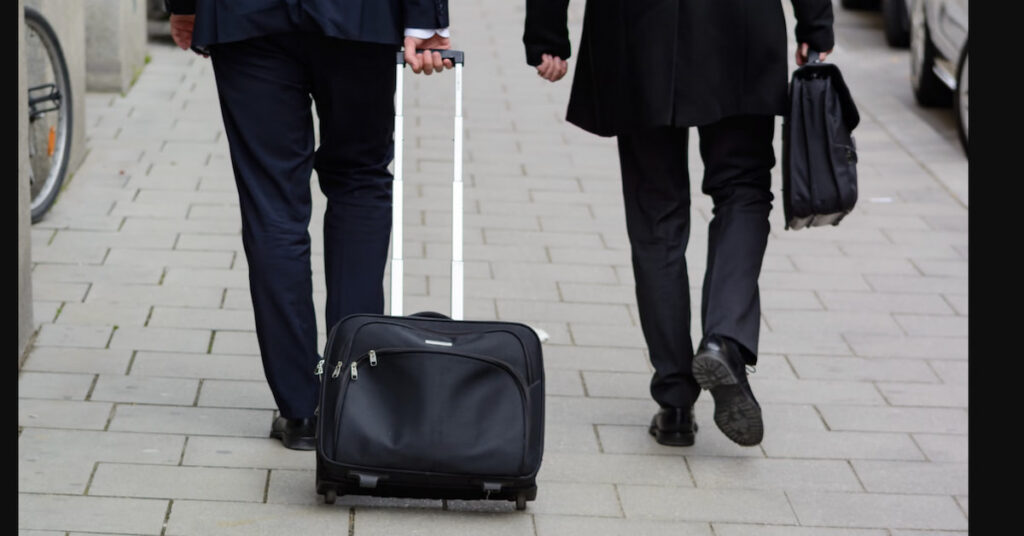
For a short conference or business trip, lay out the complete wardrobe before closing the suitcase.
A simple one-suit combination might include:
- One navy or charcoal suit
- Two shirts
- One or two ties
- One pair of dress shoes
- A casual travel outfit
- Minimal accessories
Put the jacket through the shoulder-fold process and keep it near the top of the suitcase. Fold the trousers along their existing crease and use shirts as a soft middle layer.
Place ties flat between shirts or inside a dedicated tie case rather than next to shoe buckles or other hard objects. Pack small items such as collar stays separately so they cannot press into the suit.
Most importantly, do not overpack.
Two lightweight shirts and one spare pair of trousers are easier to manage than an overfilled suitcase that keeps the jacket compressed throughout the journey. The goal is not maximum luggage capacity; it is enough room for a smooth, unforced fold.
What Should Be on Your Suit Travel Checklist?
Before leaving, check that you have:
- A broad or shaped hanger
- A breathable garment bag if needed
- A suit brush or lint roller
- A small garment steamer if practical
- Shoe bags
- A sealed toiletry pouch
- Tissue paper or a clean cotton covering if used
- Enough suitcase space to avoid heavy compression
- Destination weather checked before choosing the suit fabric
- Time after arrival for the suit to hang and recover
Conclusion
When we advise clients at Michael Tailors on travelling with tailoring, our priority is to protect the jacket’s structure, minimise unnecessary pressure, and give the fabric enough time to recover after arrival. No packing method can guarantee a completely crease-free suit, but choosing an appropriate fabric, using a garment bag when practical, folding carefully when it is not, and unpacking promptly can make a substantial difference. For frequent travellers looking for tailoring designed around business trips, formal occasions, and everyday comfort, an experienced bangkok tailor shop can help create a suit with the fit, fabric, and versatility needed for regular travel.
FAQ
Should a Suit Go in a Garment Bag or Suitcase?
Use a garment bag when you have reliable hanging space and want to minimise folding. A suitcase is often more practical when flying with uncertain storage, travelling through crowded areas, or protecting the suit from weather. Whichever method you choose, avoid placing heavy luggage on top of the jacket.
How Do You Fold a Suit Jacket for Air Travel?
Turn one shoulder gently inside out, place the opposite shoulder inside it, align the lapels, and fold the jacket once horizontally. Keep the fold broad rather than sharp and place the jacket above softer clothing in the suitcase.
Can You Put a Suit in a Carry-On?
Yes. A suit can travel well in a carry-on when the case is large enough to avoid tight compression. Keep shoes and toiletries away from the jacket, use clothing as cushioning, and position the jacket close to the top.
How Soon Should You Unpack a Suit After Travelling?
Unpack it as soon as practical after reaching your destination. Hang the jacket and trousers separately so the fabric can relax and minor creases have time to release before you need to wear them.
Is a Garment Steamer Safe for a Suit?
A garment steamer can be suitable for many suits, particularly wool, but always follow the care label. Keep the steam moving, avoid soaking the material, and use extra caution around delicate fabrics and structured parts of the jacket.
Is a Garment Bag Better Than Folding a Suit?
Neither method is automatically better for every journey. A garment bag reduces folding when reliable hanging space is available, while careful suitcase packing can offer better protection during flights or crowded travel. The best method depends on the fabric, jacket construction, available luggage space, and transport conditions.

More Articles
Getting a Suit Made in Bangkok on a Short Trip: Real Customer Stories

Suit vs Tuxedo: Key Differences and When to Wear Each One