
A suit jacket may look simple from the outside, but its fit and appearance depend on dozens of individual details working together.
The lapels influence the proportions of the chest. The shoulders establish the jacket’s overall shape. The button stance affects how long the torso appears. Inside the jacket, canvas and lining help determine how the garment drapes, moves and holds its structure over time.
Understanding these parts is useful whether you are ordering a bespoke suit, buying ready-to-wear or discussing alterations with a tailor.
This guide breaks down the main parts of a suit jacket, what each component does and why those details matter when it comes to fit, comfort and style.
What Are the Main Parts of a Suit Jacket?
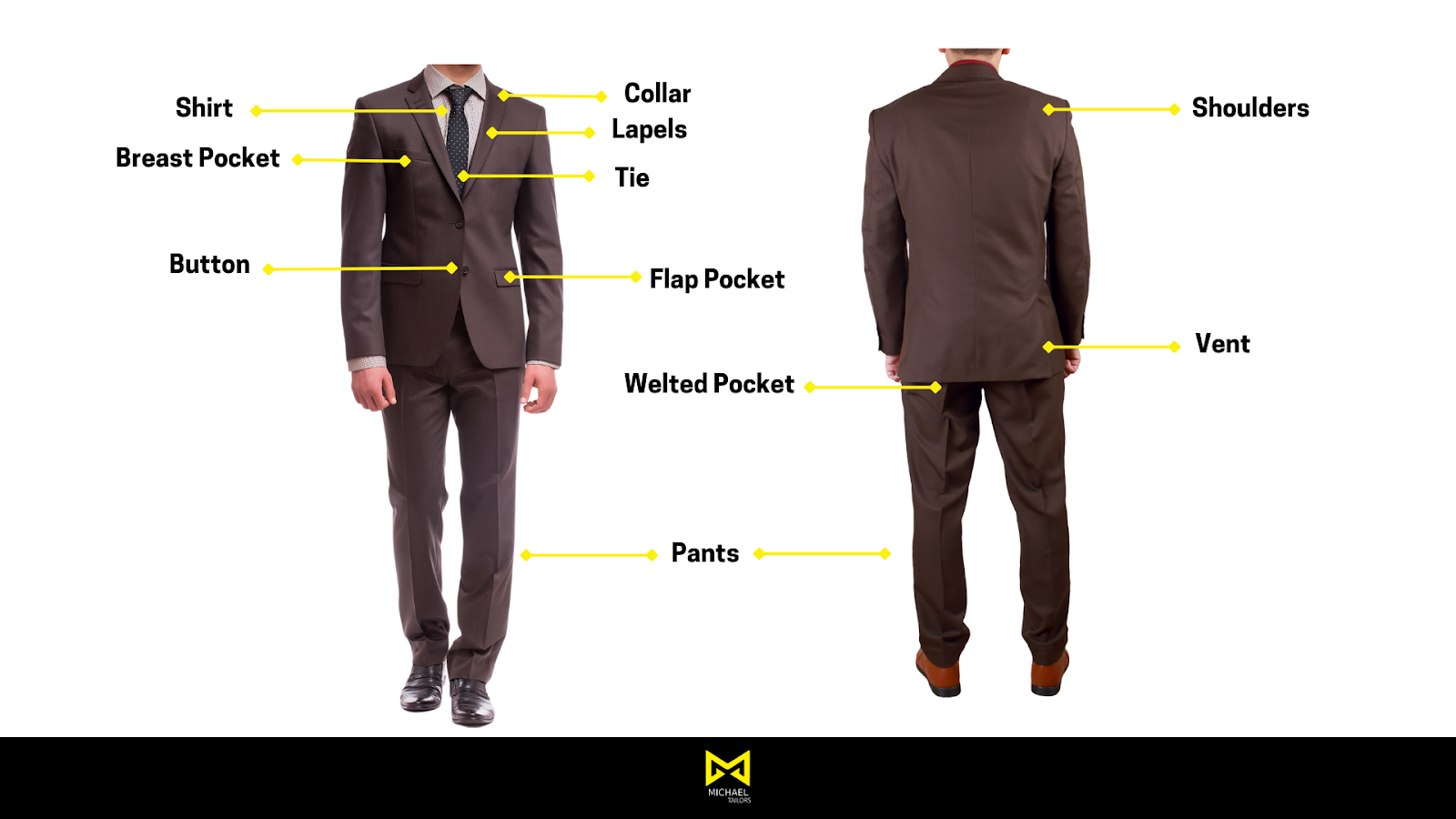
The main parts of a suit jacket include the:
- Collar
- Lapels
- Gorge
- Shoulders
- Chest
- Chest darts
- Jacket quarters
- Buttons and button stance
- Armholes
- Sleeves
- Sleeve head
- Sleeve buttons
- Breast and side pockets
- Vents
- Canvas
- Padding
- Lining
Some of these components are immediately visible, while others sit inside the jacket and provide the structure that allows the outer fabric to fall properly.
Each one has a different purpose, and changing even a small detail can affect the overall balance of the jacket.
What Makes Up the Front of a Suit Jacket?
The front of the jacket does much more than hold the buttons and pockets. Its cut determines how closely the jacket follows the chest and waist, where the eye is naturally drawn and how the upper body relates visually to the legs.
Chest
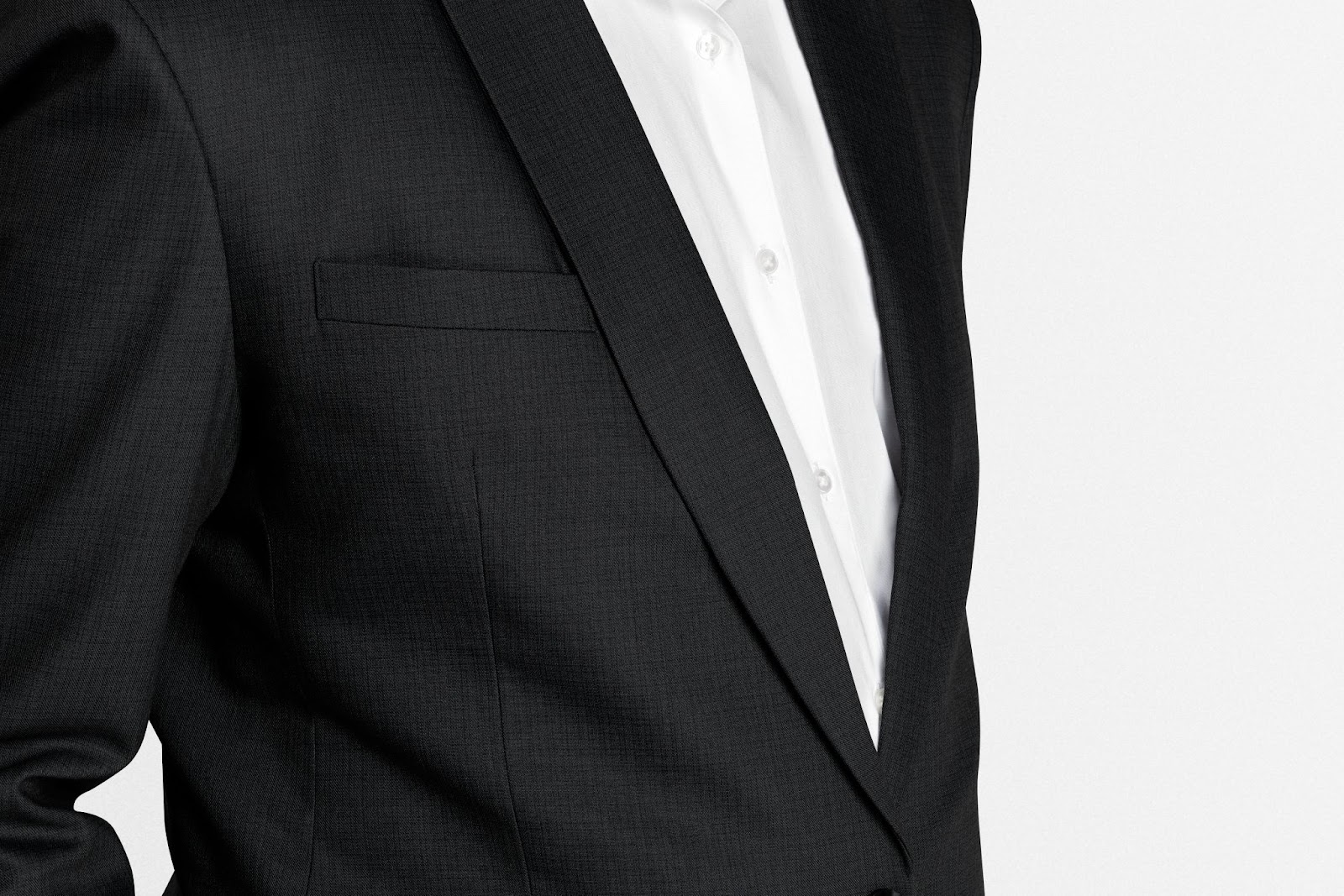
The chest is one of the main areas responsible for the shape of a tailored jacket.
It should follow the body without sitting excessively tight against it. Too much fabric can make the front appear loose, while insufficient room may create pulling around the buttons or cause the lapels to lift away from the chest.
The construction underneath the outer fabric also plays an important role here. Canvas, padding and careful shaping allow the chest to maintain its form without appearing rigid.
Chest Darts
Chest darts are vertical seams that usually run downward from around the chest toward the jacket pockets.
Their purpose is to remove excess fabric and shape a flat piece of cloth around the three-dimensional form of the body.
A tailor can use the positioning and depth of these darts to create more definition through the chest and waist without simply making the entire jacket tighter.
Jacket Quarters
The quarters are the lower front sections of the jacket below the fastening button.
Their shape determines how much the front of the jacket opens toward the bottom.
More open quarters expose more of the trousers and can create a lighter, more elongated appearance through the lower torso. Straighter or more closed quarters tend to create a more traditional and structured silhouette.
Neither is inherently better. The right choice depends on the jacket style and the proportions the tailor is trying to create.
What Is Button Stance and Why Does It Matter?
Button stance refers to the vertical position of the main fastening button on a suit jacket.
Its position influences the proportions of the entire jacket.
A higher button stance creates a shorter visible lapel line and can make the upper body appear more compact. A lower button stance creates a longer lapel line and can visually lengthen the torso.
The buttoning point should also relate naturally to the wearer’s waist rather than being determined solely by fashion.
This is one reason bespoke tailoring considers the client’s individual proportions rather than simply applying the same jacket pattern to everyone.
Single-Breasted vs Double-Breasted Jackets
A single-breasted jacket normally has one column of buttons and is the most versatile construction for business, formal and everyday suits.
A double-breasted jacket uses overlapping front panels with two visible columns of buttons. This creates a stronger visual presence through the chest and usually produces a more structured appearance.
The number, placement and configuration of buttons can all change the overall character of the jacket.
What Are Suit Jacket Lapels?

Lapels are the folded sections of fabric running from the collar toward the jacket’s fastening point.
Because they form a strong visual line across the chest, lapels have a major influence on both style and proportion.
The three main lapel styles are notch, peak and shawl.
Notch Lapel
A notch lapel has a visible indentation where the lapel meets the collar.
It is the most common and versatile option and works particularly well for business suits, everyday suits, blazers and smart-casual tailoring.
Its understated design makes it suitable for a wide range of occasions.
Peak Lapel
Peak lapels point upward toward the shoulders.
The upward angle creates a stronger line across the chest and tends to give the jacket a more assertive appearance.
Peak lapels are commonly seen on double-breasted suits, formal suits, tuxedos and statement business suits.
They can also be used on single-breasted jackets when a more distinctive look is desired.
Shawl Lapel
A shawl lapel forms one continuous curved line around the collar rather than having a notch or peak.
It is most strongly associated with dinner jackets, tuxedos and black-tie clothing.
Its smooth shape creates a cleaner and more formal appearance than the angular construction of notch or peak lapels.
What Is the Gorge on a Suit Jacket?
The gorge is the point where the jacket collar meets the lapel.
Its height affects where the eye is drawn on the upper body.
A higher gorge raises the visual focal point of the jacket, while a lower gorge produces a more traditional, relaxed line.
Gorge position also works together with lapel width, shoulder structure and button stance. Because these details influence one another, changing one element without considering the rest can make the jacket look unbalanced.
Rather than choosing gorge height solely according to trends, a tailor should consider the complete proportions of the wearer and the jacket.
How Wide Should Suit Lapels Be?

There is no single lapel width that works for every man or every suit.
Lapel width should be considered alongside shoulder width, chest size, jacket length, tie width, collar proportions and the overall style of the suit.
A very narrow lapel can look disproportionate on a broad chest, while an extremely wide one may dominate a smaller frame.
Extremely narrow lapels can make a jacket feel more trend-driven, while more balanced widths tend to be easier to wear over time. Whatever the style, overall balance should take priority over following a particular trend.
A well-proportioned lapel should look intentional as part of the complete jacket.
What Is Lapel Roll?
Lapel roll describes the curved transition where the lapel folds away from the jacket front.
On a well-constructed jacket, the lapel should not simply look pressed flat against the chest. It should have a natural three-dimensional roll.
Canvas construction helps create and maintain this shape.
The lapel roll is one of those details that may not immediately stand out to someone buying a suit, but it contributes significantly to the way a tailored jacket looks when worn.
What Does the Suit Jacket Collar Do?
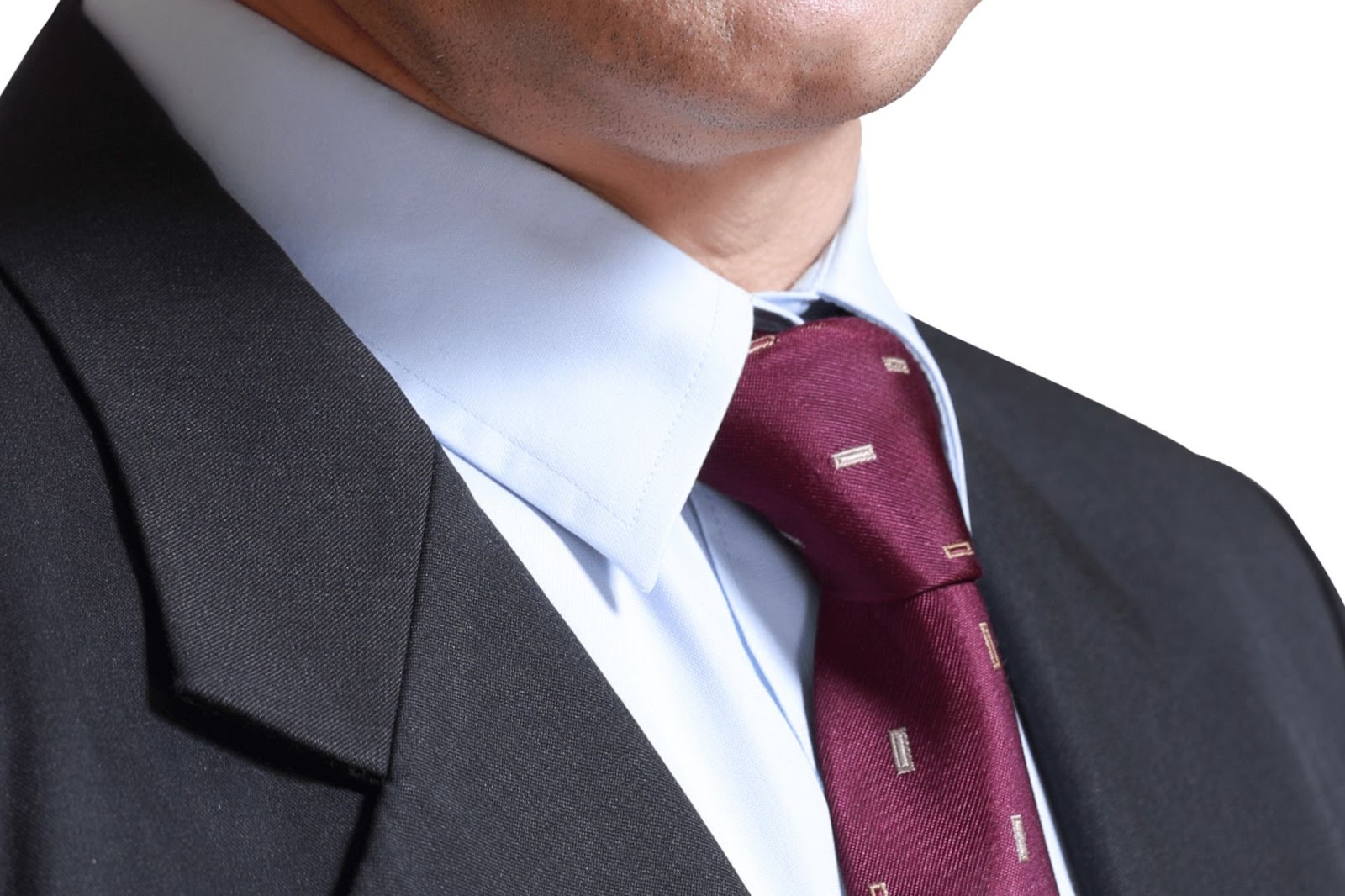
The jacket collar surrounds the back of the neck and connects directly to the lapels.
A properly fitted collar should sit neatly against the shirt collar without a significant gap.
If the jacket pulls away from the shirt at the back of the neck, this is commonly known as collar gap. Several factors can cause it, including the shape of the wearer’s posture, shoulder construction and the original jacket pattern.
The collar therefore provides a useful indication of whether the upper portion of the jacket is fitting correctly.
How Should Suit Jacket Shoulders Fit?
The shoulders are among the most important parts of a jacket to get right.
Ideally, the shoulder line should sit naturally around the wearer’s own shoulders without obvious overhang, collapsing or pulling.
Unlike taking in the waist or making some sleeve adjustments, major shoulder alterations can involve reconstructing a significant portion of the jacket.
This is why shoulder fit should be prioritized when assessing an existing suit.

What Are Natural Shoulders?
Natural shoulders use minimal padding and closely follow the wearer’s natural shoulder line.
They create a softer silhouette and are commonly associated with relaxed Italian tailoring, particularly Neapolitan styles.
Natural shoulders work especially well when the goal is an understated jacket with less visible structure.
What Are Structured Shoulders?
Structured shoulders use additional padding and internal support to create a stronger, more defined shoulder line.
They are often associated with traditional British business tailoring and more formal jacket styles.
Structure can also be used strategically to balance certain body proportions, such as sloping shoulders.
The decision between natural and structured shoulders should therefore consider both personal preference and physique.
What Is an Armhole on a Suit Jacket?
The armhole, sometimes referred to in tailoring as the armscye, is the opening where the sleeve connects to the jacket body.
Its shape and position have a significant effect on movement.
A carefully fitted higher armhole can allow the arm to move more independently from the jacket body. If an armhole is excessively low or poorly proportioned, raising the arms may cause much more of the jacket to move with them.
The goal is not simply to make an armhole as high as possible.
It needs enough room for comfort while remaining closely fitted enough to maintain mobility and a clean silhouette.
What Is the Sleeve Head?
The sleeve head is the upper section of the sleeve where it meets the shoulder.
Its construction affects how the sleeve falls from the shoulder and how structured that transition appears.
Depending on the tailoring style, the sleeve head may be clean and lightly structured, strongly defined, soft and natural, or slightly gathered in certain traditional Italian constructions.
It should work with the shoulder style rather than appearing as a separate element.
What Is Sleeve Pitch?
Sleeve pitch refers to the angle at which the sleeve hangs from the jacket.
People naturally hold their arms at slightly different angles. Some arms hang almost straight, while others naturally rotate slightly forward.
If the sleeve pitch does not match the wearer’s natural posture, twisting or wrinkles may appear along the sleeve even when the sleeve length itself is correct.
This is one of the details a tailor can evaluate during a fitting.
How Long Should Suit Jacket Sleeves Be?
Jacket sleeves should be long enough to cover the wrist while still allowing a small amount of shirt cuff to remain visible.
There is no need to treat one exact measurement as a universal rule because shirt cuff exposure can vary slightly according to the wearer’s proportions and preferences.
As a general reference, around ¼ to ½ inch of shirt cuff creates a balanced appearance.
More important than following an exact number is consistency. The shirt and jacket sleeves should work together rather than making either garment appear noticeably too long or short.
What Are Surgeon’s Cuffs?
Surgeon’s cuffs are functional buttonholes on the sleeves of a suit jacket, allowing the cuff buttons to be opened.
Traditionally, they were associated with bespoke and higher-end tailoring, although they can now be found on many different jackets.
They remain an attractive tailoring detail, but there is one practical consideration.
Once functional buttonholes have been cut into the sleeve, making major sleeve-length alterations from the cuff becomes more difficult because changing the length can leave the buttons too close to the sleeve edge.
For anyone buying ready-to-wear and expecting alterations, this is worth considering before functional buttonholes are added.
What Are Kissing and Waterfall Buttons?
Sleeve buttons can also be arranged in different ways.
Kissing buttons sit closely against one another so their edges touch.
Waterfall buttons overlap slightly.
These are primarily styling details rather than indicators of how well the jacket fits.
What Types of Pockets Can a Suit Jacket Have?
Suit jacket pockets affect both appearance and formality.
A typical jacket has one breast pocket and two lower side pockets, although the exact construction can vary.
Breast Pocket
The breast pocket normally sits on the upper left side of the jacket.
Its most familiar purpose is holding a pocket square, although the shape and angle of the pocket itself can also contribute to the jacket’s styling.
Flap Pockets
Flap pockets are one of the most versatile options.
A strip of fabric covers the pocket opening, creating a clean but practical design suitable for most business and everyday suits.
Jetted Pockets
Jetted pockets have narrow fabric edges around the opening without an external flap.
Their cleaner appearance makes them particularly suitable for formal tailoring and dinner jackets.
Patch Pockets
Patch pockets are made from pieces of fabric attached directly to the outside of the jacket.
Because their construction is more visible and less structured, they create a more relaxed appearance.
They are commonly used on casual suits, sports jackets, blazers and lightweight tailoring.
Ticket Pocket
A ticket pocket is a smaller additional pocket positioned above one of the main side pockets.
Originally designed for carrying train tickets and other small items, it is now largely a traditional tailoring detail.
It works particularly well on suits with a British influence.
What About Inside Pockets?
Most suit jackets also include one or more internal pockets, commonly used for smaller items such as a wallet or cards. Their number and placement vary according to the jacket design and construction.
What Are Suit Jacket Vents?
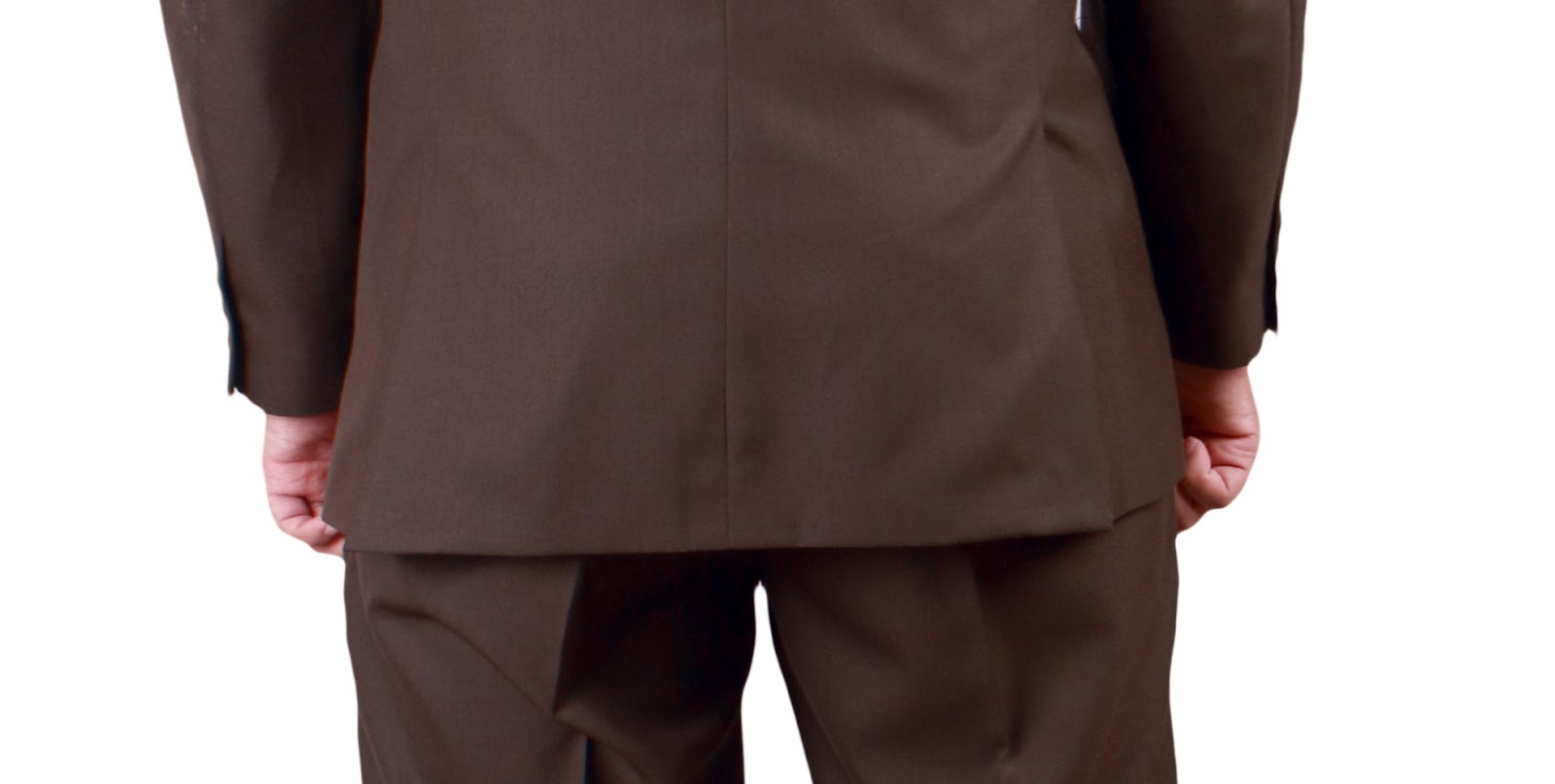
Vents are openings at the lower back of a jacket.
They allow the jacket to move more naturally when walking, sitting or placing your hands in your trouser pockets.
There are three main configurations.
Single Vent
A single vent runs up the center of the jacket back.
It is traditionally associated with American tailoring and provides practical freedom of movement.
One drawback is that the back of the jacket may open more noticeably when the wearer places their hands in their pockets.
Double Vents
Double vents sit on either side of the jacket back.
They offer excellent mobility while helping the center section of the jacket remain relatively clean.
They are widely used in British and European tailoring and are one of the most versatile choices for modern suits.
Ventless Jacket
A ventless jacket has no opening at the back.
This produces an uninterrupted silhouette, but it also reduces movement and can cause the jacket to pull upward more noticeably when sitting.
Ventless construction is most often seen on certain formal and evening jackets.
What Is Inside a Suit Jacket?
Some of the most important parts of a suit jacket are hidden beneath the outer fabric. Canvas, padding and lining all contribute to the jacket’s shape, structure, comfort and durability.
Each of these internal elements plays a different role in how the jacket looks and feels when worn.
What Is Canvas Construction in a Suit?
Canvas is an internal layer positioned between the outer fabric and lining of the jacket.
It provides support through the chest and helps the jacket maintain its shape.
Traditionally, tailoring canvas may contain materials such as horsehair, wool or cotton.
Rather than simply holding the outer fabric in place, a properly constructed canvas gives the front of the jacket structure while still allowing it to move with the wearer.
There are three main construction approaches.
What Is a Full-Canvas Suit?
In a full-canvas jacket, canvas extends through most of the front of the garment.
Because it is stitched rather than completely glued to the outer fabric, the layers have greater independence.
Over time, the canvas can gradually settle with the body, helping the jacket develop a natural shape.
Full-canvas construction requires more work and therefore normally appears in higher-end tailoring.
What Is a Half-Canvas Suit?
A half-canvas jacket uses traditional canvas construction primarily across the chest and lapel area.
Below this point, the jacket uses a different construction method.
Half canvas offers many of the shape and drape benefits of traditional tailoring while reducing the amount of handwork required.
For that reason, it often provides a useful middle ground between full-canvas and fully fused jackets.
What Is a Fused Suit?
In a fused jacket, an adhesive interlining is bonded to the outer fabric.
This is faster and less expensive to manufacture.
Modern fused construction can vary considerably in quality, so the term itself does not automatically mean that a jacket is poorly made.
However, fused jackets generally behave differently from traditional canvas construction and may not develop the same natural three-dimensional shape through the chest and lapels.
What Does Shoulder Padding Do?
Shoulder padding supports the jacket’s internal structure and helps maintain the intended shoulder shape. The amount used depends on the silhouette being created, from a softer natural shoulder to a more defined structured line.
What Does the Lining of a Suit Jacket Do?
The lining covers some or all of the inside of the jacket.
It helps the garment slide over a shirt more easily, protects internal construction and creates a clean interior finish.
The three common options are fully lined, half-lined and unlined.
For suits intended to be worn regularly in Bangkok or other warm climates, lining and fabric choices should be considered together rather than independently.
How Do Suit Jacket Details Affect Your Proportions?
Tailoring can change how the body is visually perceived without changing the body itself.
This is why bespoke tailoring looks at the entire silhouette instead of choosing each jacket feature separately.
These should not be treated as rigid rules.
Two people with similar measurements may still look better in different jacket configurations because posture, shoulder slope, chest shape and personal style also influence the final result.
If you are deciding which combination of lapels, shoulders, pockets, quarters and other details best suits your physique, explore our Suit Anatomy guide for a more visual look at the different style options.
How Can You Tell if a Suit Jacket Fits Properly?
Understanding jacket anatomy becomes particularly useful when evaluating fit.
Instead of judging the entire jacket at once, examine several key areas.
1. Check the Collar
The jacket collar should follow the shirt collar without a large visible gap.
2. Check the Shoulders
The shoulder line should appear clean and natural without obvious overhang, dents or excessive tension.
3. Check the Chest
The jacket should have enough room to sit cleanly across the chest without appearing loose.
4. Fasten the Jacket
When the main button is closed, the fabric should not show strong X-shaped pulling around the fastening point.
5. Look at the Lapels
The lapels should generally lie cleanly against the chest rather than lifting away.
6. Check the Sleeves
Sleeves should hang cleanly and follow the natural position of the arms without strong twisting.
7. Check the Jacket Length
Jacket length should visually balance the wearer’s torso and legs.
8. Look at the Vents
When standing naturally, the vents should remain relatively clean rather than pulling noticeably open.
Fit should always be assessed as a whole. A jacket can meet one traditional measurement rule while still looking unbalanced on the wearer.
For a broader look at how the jacket, trousers, shirt and other elements should work together, read our How Should a Suit Fit? guide.
Which Parts of a Suit Jacket Can Be Altered?
Not every suit jacket problem is equally easy to correct.
Some alterations are relatively straightforward, while others involve rebuilding major parts of the garment.
Adjustments That Are Often More Practical
Depending on the jacket construction, these may include:
- Taking in or letting out the waist
- Minor adjustments through the jacket body
- Adjusting sleeve length
- Refining sleeve width
- Small collar corrections
The amount that can be changed depends on the seam allowance and original construction.
Alterations That Are Usually More Complicated
These can include:
- Changing shoulder width
- Major armhole alterations
- Changing jacket length
- Moving the button stance
- Altering the gorge significantly
- Reconstructing heavily structured shoulders
This is one reason the shoulders, jacket length and overall balance should be prioritized when buying a ready-to-wear jacket.
Smaller areas can sometimes be refined later. The fundamental architecture of the jacket is much more difficult to change.
Why Does Suit Jacket Anatomy Matter When Ordering Bespoke?
With bespoke tailoring, these details become choices rather than fixed features.
Instead of selecting a jacket solely by size, the tailor can consider your natural shoulder line, posture, chest and waist proportions, arm position, preferred level of structure, intended use of the suit, climate and personal style.
The lapel, shoulder, button stance, jacket length and internal construction can then be developed as parts of one complete design.
At Michael Tailors, the aim is not simply to add as many traditional tailoring details as possible. Each element should serve the fit, appearance and purpose of the finished suit.
Understanding the terminology also makes the tailoring process easier because you can discuss individual preferences more clearly during your consultation and fittings.
Frequently Asked Questions
What Are the Most Important Parts of a Suit Jacket?
The main components include the collar, lapels, shoulders, chest, buttons, pockets, sleeves, vents, lining and internal canvas. Details such as the gorge, button stance, armholes and jacket quarters also have an important effect on proportion and fit.
What Is the Most Important Part of Suit Jacket Fit?
No single component determines the entire fit, but the shoulders are particularly important because major shoulder alterations are complex. The collar, chest, jacket length and overall balance should also be checked carefully.
What Is the Difference Between Notch, Peak and Shawl Lapels?
A notch lapel has an indentation where the collar and lapel meet and is the most versatile option. A peak lapel points upward and creates a stronger, more formal appearance. A shawl lapel has a continuous curved edge and is most commonly used on tuxedos and dinner jackets.
Is Full Canvas Better Than Half Canvas?
Full canvas provides traditional construction throughout more of the jacket front and allows excellent long-term shaping and drape. Half canvas concentrates this construction around the chest and lapels and can offer many of the same benefits at a lower cost. The better option depends on budget, purpose and the quality of the overall construction.
Which Parts of a Suit Jacket Are Difficult to Alter?
Shoulders, armholes, jacket length, button stance and gorge position are generally much more difficult to change than smaller adjustments around the waist or sleeves. Getting the fundamental jacket proportions right from the beginning is therefore important.
Why Is Understanding Suit Jacket Anatomy Useful?
A well-made suit jacket is the result of many individual components working together. Lapels frame the chest, shoulders establish the silhouette, armholes and sleeves influence movement, while canvas, lining and other internal elements help the jacket maintain its structure and shape.
Understanding these details makes it easier to recognise why one jacket may fit, move and flatter you better than another. It also helps you make more informed choices when discussing lapels, shoulders, pockets, construction and other details with your tailor.
For a suit designed around your measurements, proportions and personal preferences, work with a bespoke tailor in Bangkok who can consider each of these elements as part of the complete garment.

More Articles
Getting a Suit Made in Bangkok on a Short Trip: Real Customer Stories

Suit vs Tuxedo: Key Differences and When to Wear Each One