Business casual and business professional describe different levels of formality. The right choice depends on the workplace, industry, and event. Business professional usually calls for a coordinated suit, dress shirt, and formal shoes. Business casual allows more flexibility, often with tailored trousers, a separate blazer, and an open-collar shirt.
When the dress code is unclear, check the employer’s guidance or ask the event host. For interviews, client presentations, and meetings in conservative industries, a more formal outfit is usually the safer choice. Dress codes can vary even within the same company, so this guide from us, the best tailor in bangkok, is a starting point rather than a universal rule.
Introduction to Business Suits
A business suit is a formal outfit typically worn in professional settings, consisting of tailored pants and a matching jacket. From the classic business suit to the refined business professional suit, the importance of a well-fitted ensemble cannot be overstated. It enhances your appearance and influences how others perceive your professionalism and authority. According to a study by the Journal of Experimental Social Psychology, 55% of first impressions are influenced by attire.
Understanding Business Casual and Business Professional Attire
What Is a Business Casual Suit?

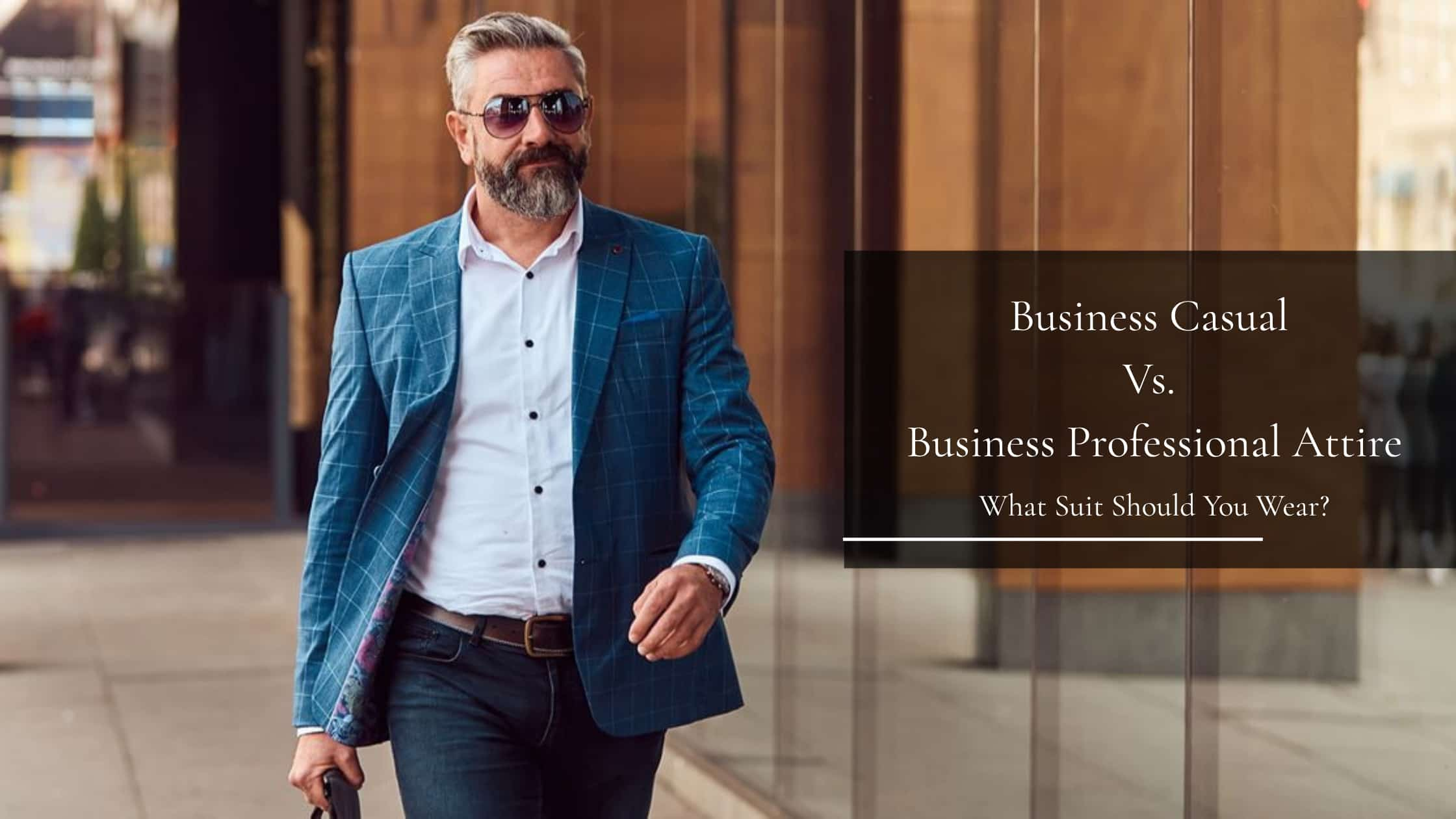
A business casual suit relaxes traditional formalities while maintaining professionalism. It combines tailored elements with a laid-back styling approach. Common features include:
- Colors: Neutral shades like navy, beige, and light grey
- Fabrics: Lighter materials such as cotton or linen
- Style: Blazers paired with chinos or tailored trousers, often without a tie
This style is popular in modern offices that adopt business casual to encourage comfort while preserving a polished look. It serves as a versatile option for social or semi-professional events and is an excellent choice if you prefer a relaxed corporate suit.
What Is a Business Professional Suit?

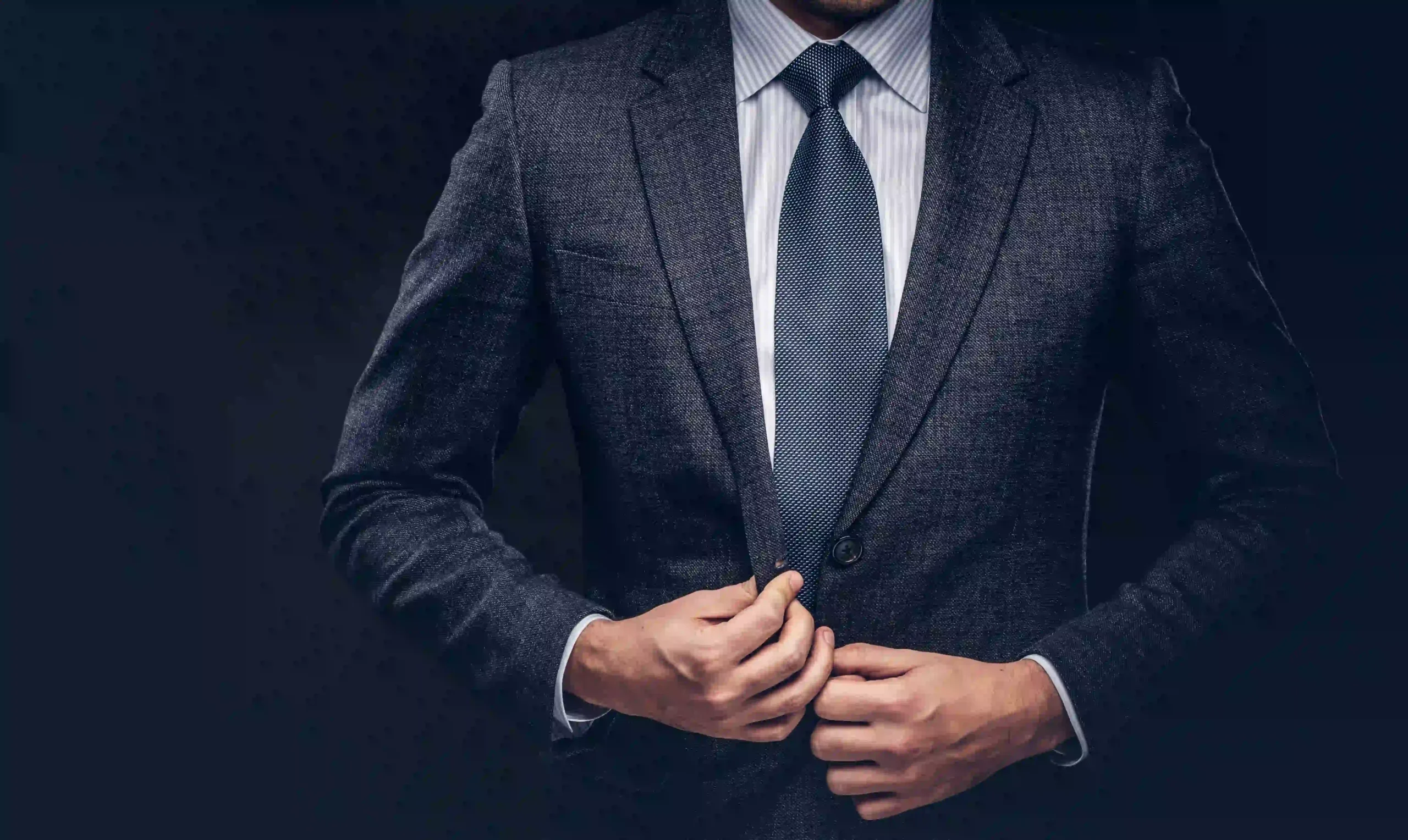
A business professional suit represents the pinnacle of workplace formality. It is often referred to as business formal attire and is designed for high-stakes environments. Key characteristics include:
- Colors: Classic options such as navy, black, or charcoal.
- Fabrics: High-quality materials like wool or wool blends.
- Style: Matching two- or three-piece suits, typically accompanied by a tie and polished shoes.
This style, also known as business professional attire, is reserved for interviews, high-level meetings, and corporate events, emphasizing professionalism and status. A business professional suit leaves no room for ambiguity, showcasing your intent and focus with every detail—from a perfectly knotted tie to the coordination of accessories in a corporate suit.
What Is the Difference Between Business Casual and Business Professional?
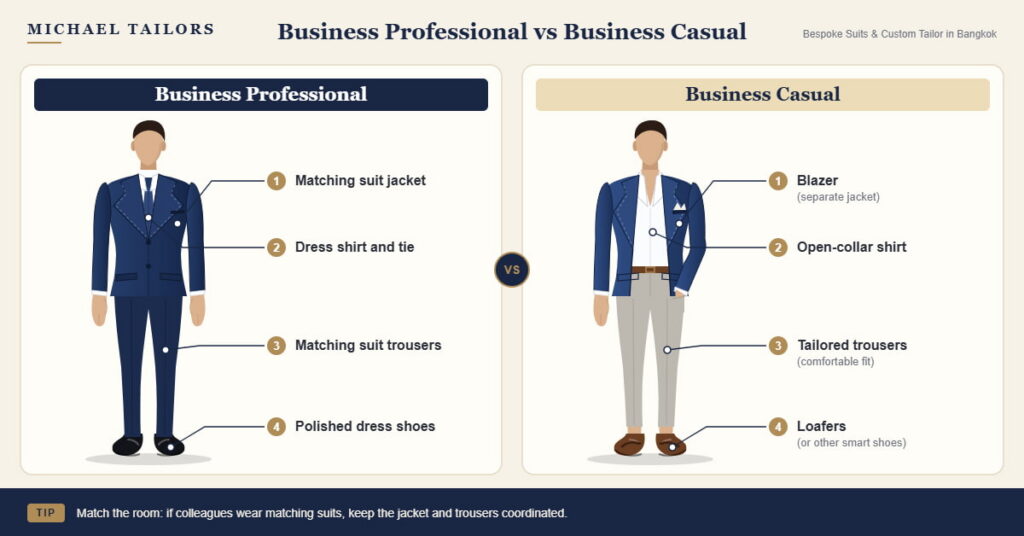
The main difference is formality. Business professional typically features a matching suit and conservative accessories. Business casual allows separate pieces and a more relaxed combination of colors, fabrics, and accessories while keeping the overall look polished.
| Outfit element | Business professional | Business casual |
|---|---|---|
| Jacket | Matching suit jacket in navy, charcoal, or another restrained color | Blazer or separate jacket; a suit jacket can also work |
| Trousers | Matching suit trousers | Chinos, tailored trousers, or suit trousers with a separate jacket |
| Shirt | Long-sleeve dress shirt, usually tucked in | Dress shirt, Oxford shirt, or suitable knit polo |
| Tie | Common in conservative workplaces and formal meetings | Usually optional |
| Shoes | Polished leather dress shoes | Loafers or other neat leather shoes |
| Overall look | Formal, structured, and coordinated | Relaxed, polished, and office-ready |
A suit doesn’t necessarily make that your attire business professional. For instance, a pastel-coloured suit with a checkered shirt and casual shoes will probably be less formal than a dark-colored suit with a solid white shirt and more formal accessories.
Furthermore, business casual does not mean wearing comfortable clothes. Fit and material quality still matter, despite a looser dress code.
When Should You Wear Business Professional?
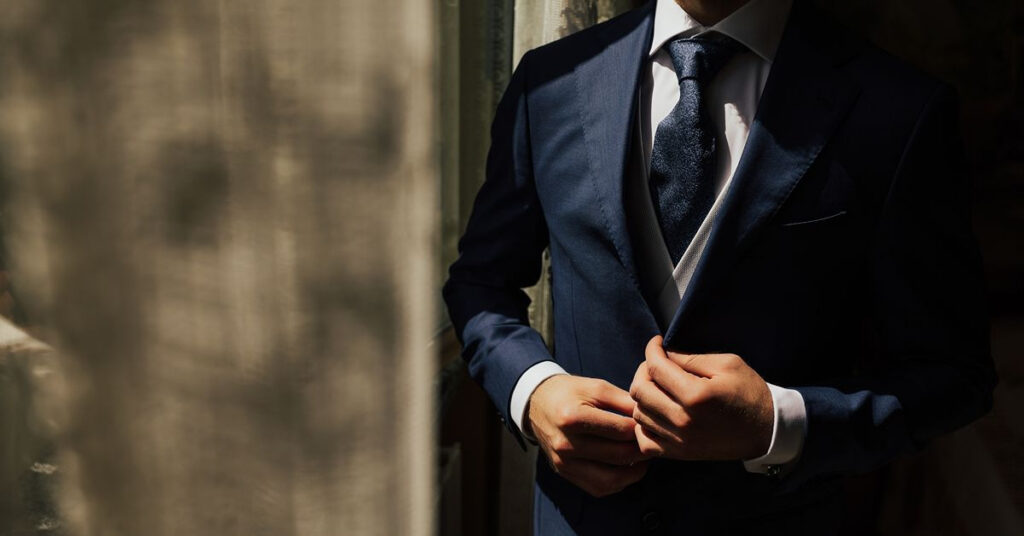
Business professional attire is recommended in cases where the invitation or employer requires you to, or in situations where you need to make a conservative first impression. Examples of such cases include business interviews in financial services or legal services, formal presentations, meetings with clients, and high-level business events.
A suitable business professional suit comprises a navy or charcoal suit, a nice dress shirt, polished leather shoes, and a tie in some instances. It is convenient to choose a white or light blue shirt to match, while a nice patterned tie will complement your suit nicely.
The importance of fit exceeds that of expensive materials in such clothes. Your jacket should rest properly on your shoulders without stretching across them when closed, and your trousers should fit nicely at the waist and over your shoes without stretching.
When Should You Wear Business Casual Attire?

It is appropriate to wear business casual attire in companies which have a relaxed dress code, during internal meetings, during business lunches, and sometimes during networking events. The proper attire consists of tailored pants or chinos, a shirt with a collar, a blazer, and good shoes. It is not mandatory to wear a tie unless it is necessary for the company or occasion.
If you are working in a warm place like Bangkok, you can opt for light fabrics. Rather than wearing the entire suit, a separate blazer with tailored pants should be preferred. Choose an outfit that is going to maintain its form and blend with the office environment.
But before you get casual, make sure that you observe your surroundings. The company may have business casual attire as part of their daily uniform, but wear suits when meeting clients. In case of a new work setting, all you need to do is ask the organiser what other people wear.
Guidance from university career services makes a similar point: what one organization considers business casual may count as business professional somewhere else.
How Can a Suit Look More Casual While Maintaining its Professional Look?
Begin with your suit and modify individual aspects one by one. Dropping the tie is usually the easiest way to go about it. In a relaxed environment, you may wear an individual blazer, open-collar shirt, and polished loafers to make a more casual outfit without being informal.
Color and patterns play an important role too. Navy blue and charcoal are always good choices, whereas lighter tones and textured suits can convey more of an informal look. Wearing a simple check or patterned blazer can work well for a casual office environment, especially if you have a plain shirt underneath.
The fit still plays a crucial role. Your jacket should fall neatly around the shoulders, while the trousers should be comfortable enough not to restrict your movements. To learn more, visit our blog on how a suit should fit.
A useful test is to consider what colleagues and clients will wear. If the room is mostly filled with matching suits, keep the jacket and trousers coordinated. If separate jackets, open collars, and chinos are common, a blazer with tailored trousers may be a better fit.
What Should You Consider When Buying Business Suits?
Choose your business suits depending on the events that you would like them to serve, the office dress code, and frequency of use. Navy blue or black two-piece is an ideal starting point. It is appropriate for formal business environments and can also be used as separates when coordinated appropriately.
Before purchasing or commissioning a tailored business suit, consider shoulder fit, jacket length, sleeve length, trouser rise, and comfort when seated. Material is also important, especially in the warm weather of Bangkok.
For more advice on fabric, fit, and tailoring, check out our blog on what to consider when buying a suit in Bangkok.
What Should You Check Before Leaving for a Business Meeting?
Taking a minute to ensure that your clothes are put together correctly can assist in avoiding many dress code errors.
Business Professional: Dress in a matching suit and dress shirt, along with dress shoes and a tie where appropriate.
Business Casual: Go with pants or chinos and a collared shirt, and maybe throw on a blazer as well.
When unsure: Look at the invite or ask the host, but go more formal for a first important meeting.
Before you leave: make sure the jacket button fits without any difficulty, and that the pants and shoes are comfortable and clean.
These simple checks help keep an outfit appropriate without making the decision more complicated than necessary.
Conclusion
At Michael Tailors, we help clients choose suit fabrics, proportions, and fits for business meetings, formal events, and everyday office wear. The right suit should suit the occasion and remain comfortable throughout the day, particularly in Bangkok’s warm climate. For anyone looking for the best suit tailor in Bangkok, a versatile suit with a well-considered fit can provide a practical foundation for both business professional and business casual outfits.
FAQ
Can a suit be worn for business casual?
Yes. A suit can work for business casual when the jacket and trousers are worn as separates, provided the colors and fabrics coordinate. Removing the tie and wearing an open-collar shirt can also make the outfit feel less formal.
Is a tie necessary for business professional attire?
A tie is common in conservative workplaces, formal meetings, and certain industries. Expectations vary by organization and event, so check the dress code when possible.
Are chinos acceptable for business casual?
Yes. Chinos can be suitable when they fit well and are clean and in good condition. Pair them with a collared shirt, an optional blazer, and neat shoes.
What is a suitable suit color for business meetings?
Navy and charcoal are versatile choices for many professional settings. Both pair well with white and light-blue shirts and work with understated accessories.
What should be considered when choosing a suit for Bangkok’s climate?
Fabric weight, breathability, fit, and comfort throughout the day are important considerations. Lightweight fabrics may be more comfortable in warm weather, while a separate blazer and tailored trousers offer flexibility in less formal settings.

More Articles
Getting a Suit Made in Bangkok on a Short Trip: Real Customer Stories
Suit vs Tuxedo: Key Differences and When to Wear Each One