
A clean shirt tuck can make the difference between a polished silhouette and fabric that bunches around the waist. According to Mordor Intelligence, shirts represented 19.46% of the menswear market in 2025, while Fortune Business Insights valued the global menswear market at USD 676.6 billion in 2025.
But learning how to tuck in a shirt properly is not simply about pushing more fabric into your trousers. The right method depends on your shirt, trouser fit, occasion, and how much excess fabric you need to control.
For a properly fitted dress shirt, a basic full tuck should usually be enough. If fabric gathers around the waist, a military tuck can create a cleaner line. If the shirt repeatedly works its way out during the day, the real issue may be shirt length, waist taper, trouser rise, or upper-body fit rather than your technique.
This guide explains the most useful tucking methods, when to use each one, and what to check when your shirt refuses to stay tucked.
Which Shirt-Tucking Method Should You Use?
Four methods cover most formal and casual situations:
For most men wearing a well-fitted dress shirt, start with the basic tuck. Use a military tuck when you need to control a moderate amount of extra fabric. The French tuck serves a different purpose: it is a styling choice rather than a method for keeping a formal shirt securely in place.
How Do You Do a Basic Shirt Tuck?
The basic tuck, sometimes called a full tuck or dress tuck, is the foundation of the other methods. It is usually the best choice with tailored trousers, suits, business attire, and formalwear.
If you are learning how to tuck in a dress shirt, start here.
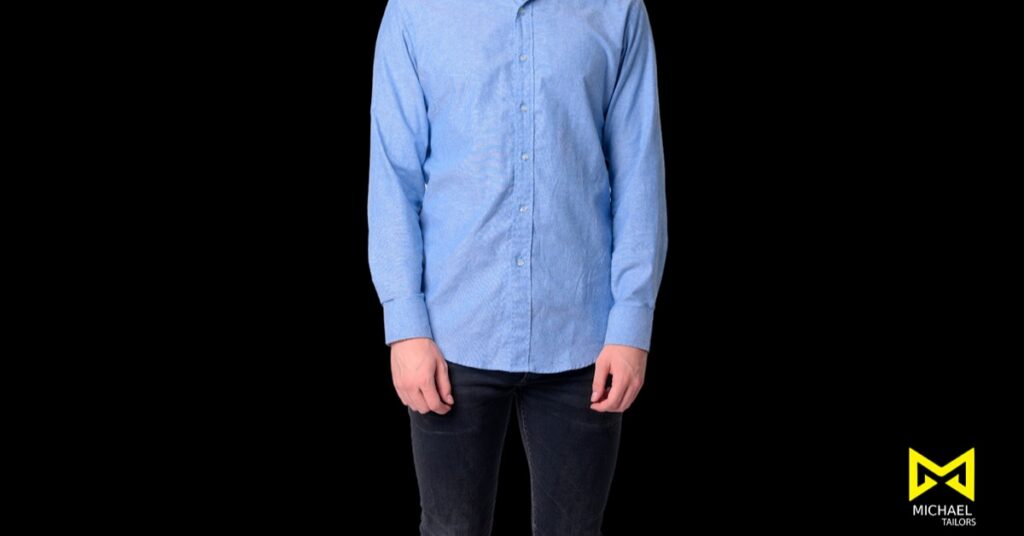
- Check the shirt length. A dress shirt needs enough front and back length to remain below the waistband while you sit, bend, and move.
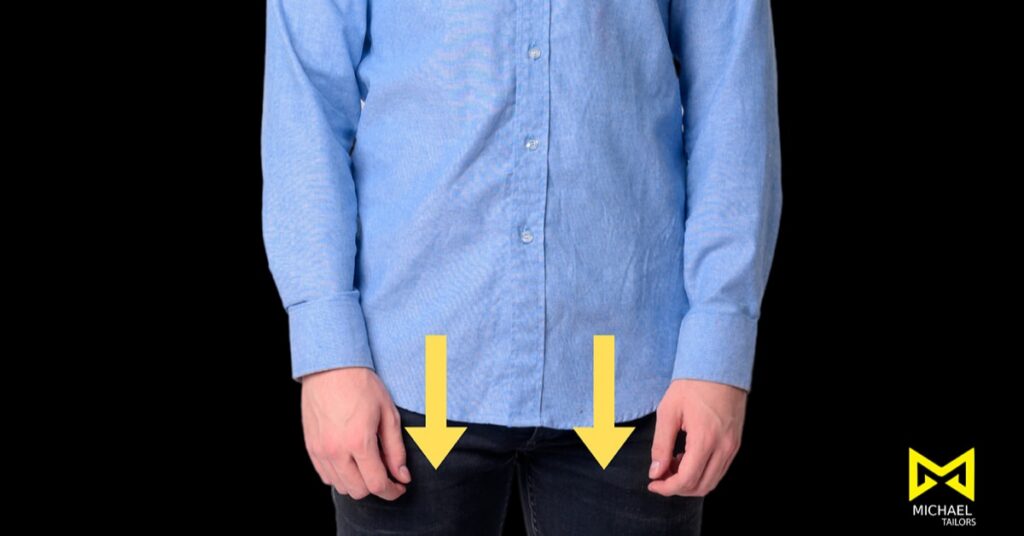
- Smooth the shirt downward. Pull the fabric straight at the front, back, and sides so it lies naturally against your torso.
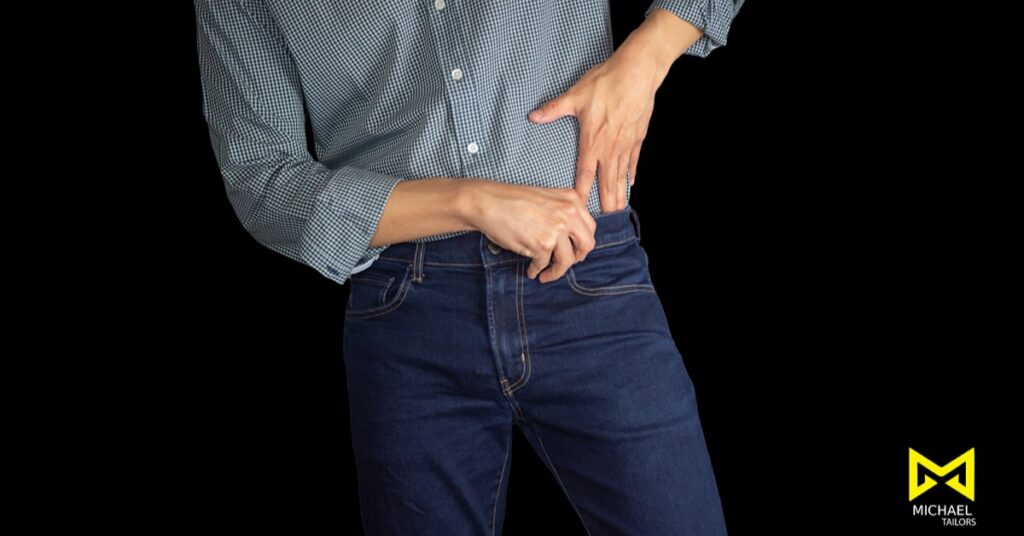
- Tuck evenly around the waistband. Work the shirt into your trousers all the way around rather than tucking only the visible front section. Keep the fabric flat instead of creating unnecessary folds.
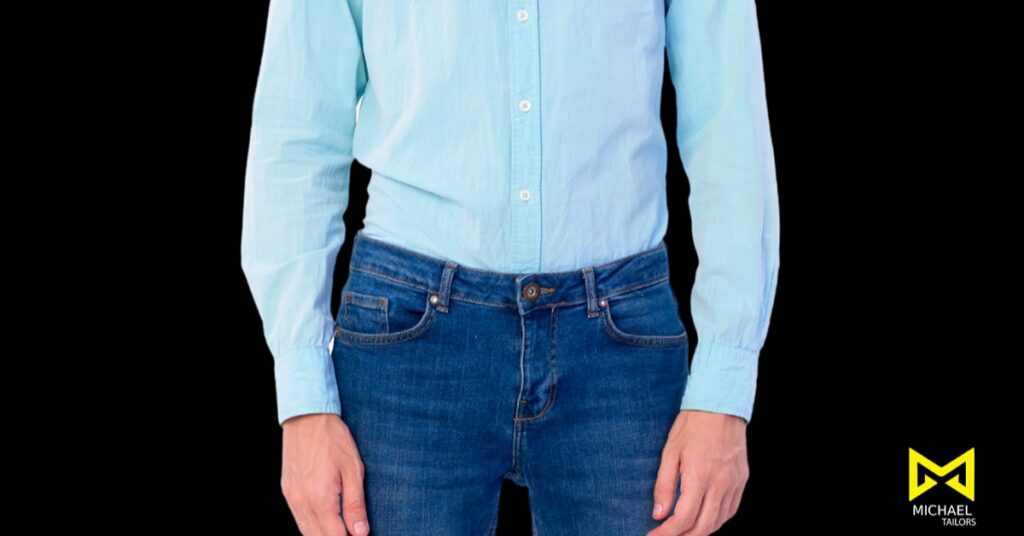
- Fasten your trousers. Zip and button them once the shirt is sitting evenly. Add a belt if it suits the outfit, but do not rely on an excessively tight belt to compensate for poor fit.
- Check the result in a mirror. The shirt placket should remain straight, and the fabric should not balloon heavily above the waistband.
Raise your arms once and sit down before deciding the tuck is finished. If the shirt immediately pulls out, the problem is probably related to fit or length rather than how carefully you tucked it.
Video tutorial: How to Tuck In Your Shirt the Right Way
Video credit: GQ via YouTube.
How Do You Do a Military Tuck Step by Step?
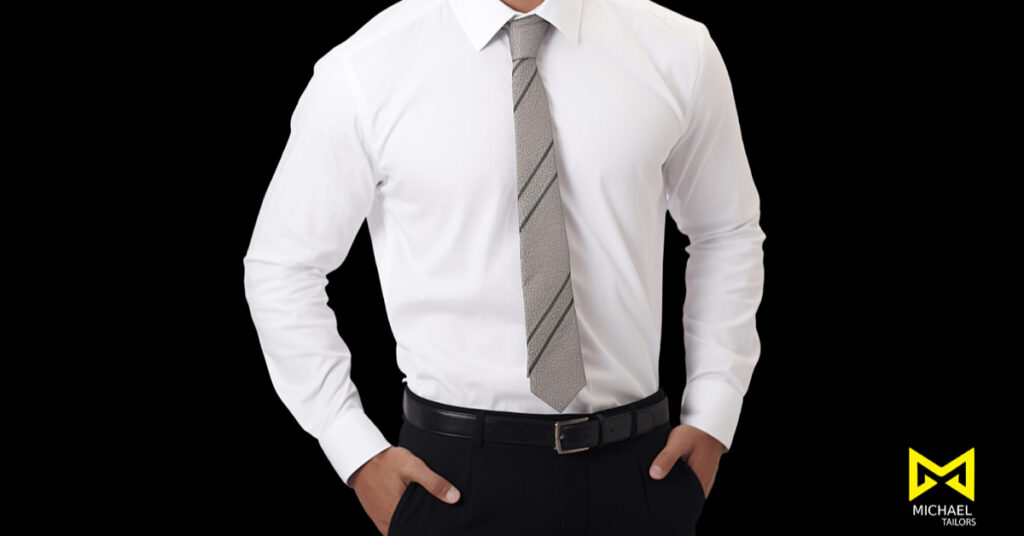
A military tuck shirt technique is useful when a shirt fits reasonably well through the shoulders and chest but leaves excess fabric around the waist.
Instead of allowing that material to gather above your trousers, the military tuck folds it discreetly at the side seams.
- Put on and button the shirt. Pull it straight down before beginning.
- Smooth the front and back. Remove obvious bunching so you can see where the excess fabric sits.
- Pinch the extra fabric at each side seam. Take approximately the same amount on each side to keep the shirt balanced.
- Fold the excess backward. Create a flat pleat pointing toward the back of your body. Keep the folds close to the side seams so they remain discreet.
- Tuck the shirt into your trousers. Hold the pleats in place as the fabric goes inside the waistband.
- Fasten your trousers. The waistband helps keep both folds secured.
- Check the front, sides, and back. Sit and stand once to make sure the tuck remains comfortable and the pleats do not twist.
Keep the folds modest. If you need to gather a large amount of fabric at each side to make the shirt appear fitted, the tuck is concealing a sizing issue rather than solving it.
A tailor can instead reduce excess through the side seams or adjust the shirt’s shaping for a cleaner long-term result.
Video tutorial: Military tuck demonstrated step by step
Video credit: Nando Sirianni via YouTube.
What Is an Underwear Tuck?
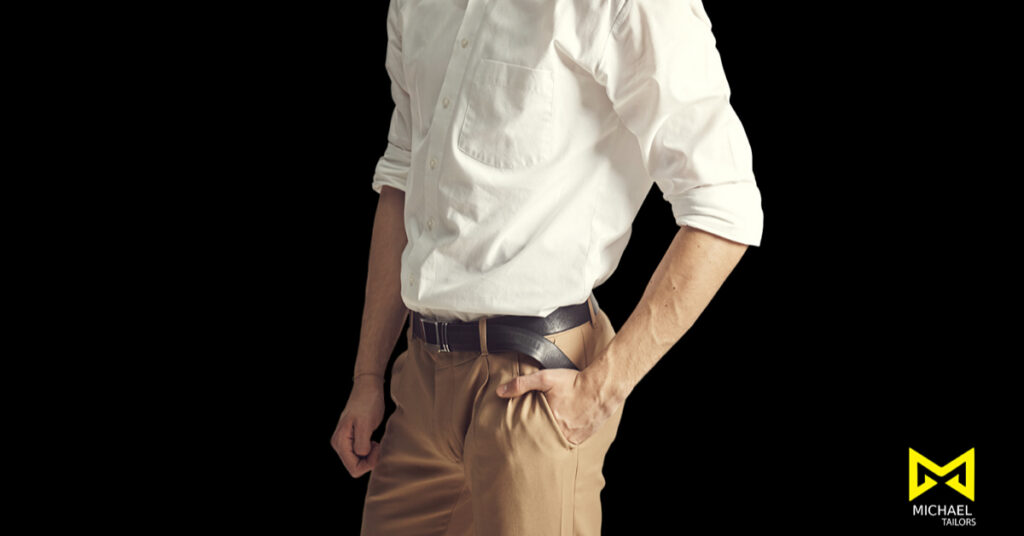
The underwear tuck is often misunderstood because the name sounds as though the dress shirt itself goes into the underwear.
It does not.
The technique is designed to secure an undershirt beneath a dress shirt. When an undershirt moves around underneath the outer layer, friction can encourage both garments to shift upward during sitting, reaching, and walking.
To separate the two layers:
- Put on your undershirt and smooth it downward.
- Tuck the undershirt into your underwear so the elastic waistband holds it comfortably in place.
- Put on your dress shirt over the secured undershirt.
- Tuck the dress shirt into your trousers using a basic or military tuck.
- Check comfort around the waist. Nothing should feel overly tight or restrictive.
This approach can be useful during long working days, weddings, presentations, or other occasions where frequent re-tucking would be inconvenient.
Video tutorial: The underwear tuck in practice
Video credit: Tommy John via YouTube.
What Is the Difference Between a French Tuck and a Half Tuck?
The terms French tuck and half tuck are often used interchangeably, but they are not always exactly the same.
- French tuck or front tuck: The front portion of the shirt is tucked into the trousers while the sides and back remain loose.
- Half tuck: A broader term for deliberately tucking only part of the shirt, such as one front side or a small central section.
The French tuck is therefore a more recognisable technique, while “half tuck” can describe several intentionally incomplete styles.
French tucks work particularly well with:
- Casual button-down shirts
- Oxford shirts
- Polo shirts
- T-shirts
- Relaxed or oversized shirts
They are generally less appropriate with a traditional long dress shirt worn beneath a business suit. Long curved shirt tails are designed to sit inside the trousers, so leaving most of them outside can make formal clothing look unfinished rather than intentionally relaxed.
When Should You Tuck in a Shirt?
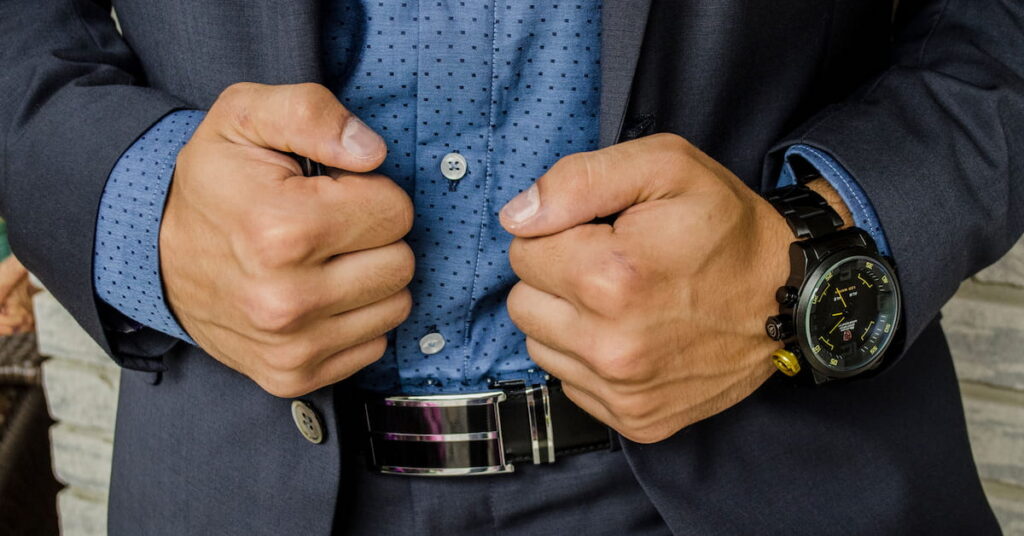
Two factors usually tell you whether a shirt should be tucked: the hem design and the formality of the outfit.
A traditional dress shirt often has longer front and back tails because that extra fabric helps keep it anchored inside the trousers. Shorter casual shirts with straighter hems are more commonly designed to be worn untucked.
As a practical rule, tuck your shirt when wearing:
- A business suit or tuxedo
- Tailored trousers with a dress shirt
- Formal or wedding attire
- A blazer with a traditional dress shirt
- A waistcoat or three-piece suit
- Clothing required by a formal dress code
The hem alone should not be treated as an absolute rule. Shirt length, fabric, cut, trousers, and the overall outfit still matter.
How Should You Wear Oxford Shirts, Polos, Flannel, and Chambray?
These shirts sit between strictly formal and casual dressing, so context matters more.
Oxford shirts: A longer Oxford tucked into tailored trousers can create a polished smart-casual look. A shorter version can work untucked with jeans or chinos.
Polos: Tucking a polo into tailored trousers creates a more structured appearance, while wearing it untucked feels more relaxed.
Flannel and chambray shirts: Casual versions with shorter or straighter hems are often more natural untucked. A particularly long version can still be tucked if the rest of the outfit calls for it.
Rather than following one rule for every shirt, consider the hem, shirt length, trouser style, and occasion together.
Why Does My Shirt Keep Coming Untucked?
If your shirt repeatedly escapes from your trousers, changing your tucking method may not solve the real problem.
A secure tuck depends largely on shirt length, waist shaping, lower-shirt width, upper-body movement, trouser rise, and waistband fit.
Shirt Length
A shirt needs enough fabric below the waistband to remain anchored as your body moves. If the tails barely reach inside your trousers, normal movements can gradually pull them upward.
Try raising both arms while standing in front of a mirror. If the hem immediately travels above the waistband, length is likely contributing to the problem.
The shape of the hem matters too. Our guide to shirt hem types explains how different cuts influence whether a shirt works better tucked or untucked.
Waist Taper
Ready-to-wear shirts are made for standardised proportions. A shirt may therefore fit your shoulders correctly while leaving considerable extra material around the waist.
A military tuck can control moderate excess. If large folds are required, adjusting the side seams or adding appropriate shaping will generally produce a cleaner result.
For a closer look at how different cuts behave, see our comparison of tailored fit vs slim fit.
Bottom Width
The lower part of the shirt needs sufficient room to move over your hips. If it becomes too narrow toward the hem, sitting can push the entire garment upward instead of allowing it to move naturally.
This is one reason a shirt can appear fitted while standing yet constantly untuck once you start moving.
Upper-Body Fit
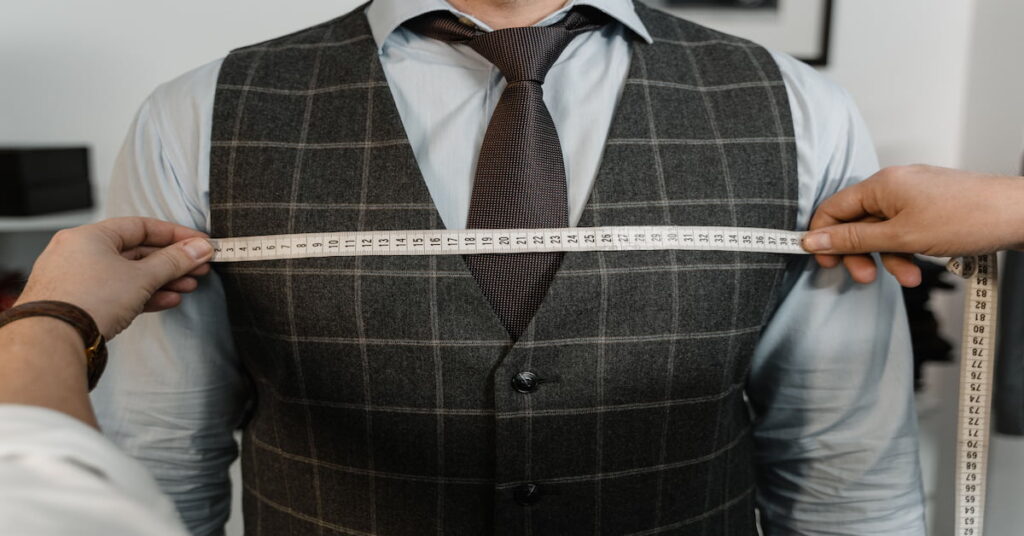
If every arm movement pulls the shirt upward, look beyond the hem.
Shoulders, chest, back, sleeves, and armholes all influence how much the body of a shirt moves when you reach or raise your arms. Excessive tension through the upper body can transfer directly to the tucked portion.
Trouser Rise and Waist Fit
The trousers are the other half of the system.
Mid-rise or higher-rise trousers generally provide more shirt fabric below the waistband than very low-rise styles. The waistband should also fit securely enough that it does not move excessively around your hips.
A good shirt tuck therefore depends on the shirt and trousers working together.
What Should a Tailor Check When a Shirt Will Not Stay Tucked?
When fit rather than technique is causing the problem, five areas deserve particular attention:
- Shirt length: The tails should remain securely beneath the waistband during normal sitting, bending, and reaching.
- Waist taper: There should be enough shape to prevent excessive ballooning without making the shirt so tight that movement pulls it upward.
- Bottom width: The hem needs enough ease to move comfortably over your hips.
- Upper-body fit: Shoulders, chest, back, and armholes should allow normal movement without dragging the entire shirt body upward.
- Trouser rise and waist: A secure waistband and suitable rise give the tucked shirt a stable anchor.
A good custom dress shirt fit addresses these areas together rather than relying on one measurement alone.
How Can Shirt Stays Keep a Shirt Tucked All Day?
Sometimes the shirt fits correctly but the occasion demands an especially secure tuck. Weddings, presentations, uniforms, performances, and long formal days are common examples.
Shirt stays use elastic tension to anchor the tails of the shirt and reduce upward movement.
Common versions include:
- Waistband shirt stays: Attach around or inside the waistband and connect to the shirt tails. They are relatively discreet beneath formal trousers.
- Leg or stirrup shirt stays: Connect the shirt tails to elastic straps running down the legs or beneath the feet, providing a stronger anchor for uniforms or highly active situations.
Whichever style you use, start with light tension. The purpose is to hold the shirt downward, not stretch it tightly enough to create visible pull lines.
For most everyday outfits, however, fit should come before accessories. Shirt stays work best as additional security rather than a permanent fix for a shirt that is too short or too loose.
How Should You Tuck a Shirt for Different Body Types?
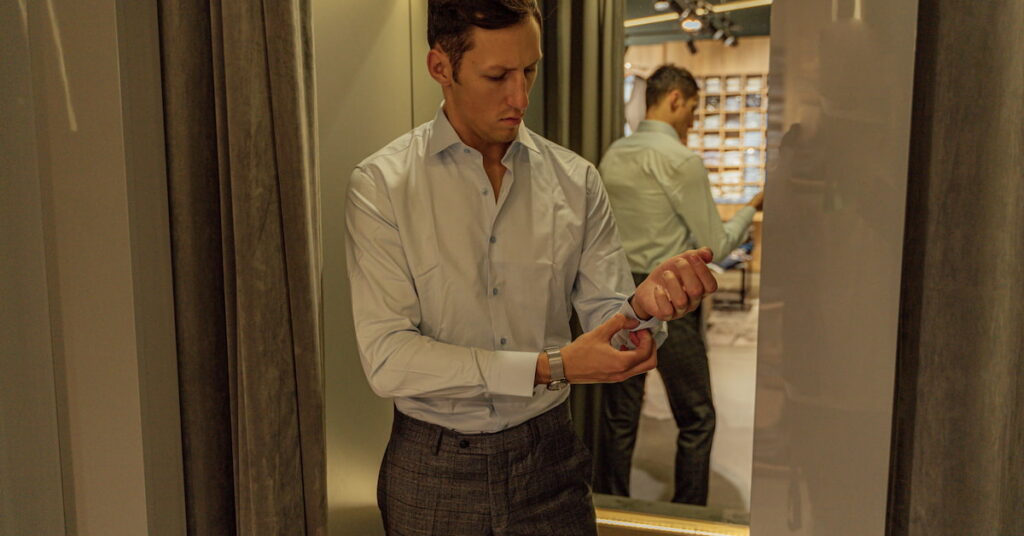
The question “How can I tuck in a shirt without my tummy showing?” often leads people toward one of two extremes: wearing something extremely loose or pulling the shirt extremely tight
Neither usually creates the cleanest silhouette.
Instead, focus on controlling unnecessary fabric while maintaining enough room for comfortable movement.
Three principles help across body types:
- Avoid both excessive looseness and excessive tightness. Too much material balloons above the waistband, while a shirt that is too tight can pull upward with every movement.
- Use structured outer layers when appropriate. An open blazer or correctly fitted waistcoat creates strong vertical lines around the tucked shirt. If you wear three-piece tailoring, our guide to styling a vest under a suit covers the proportions in more detail.
- Control excess where it naturally gathers. If only a moderate amount of material collects around the side seams, a military tuck can redistribute it without pulling the entire shirt tightly around the stomach.
For most men, the simplest hierarchy is enough: start with a basic tuck, move to a military tuck when moderate excess fabric needs controlling, use the underwear tuck for the undershirt, and reserve the French tuck for casual styling. If the shirt still refuses to stay in place, diagnose the fit before adding another trick.
Conclusion
At Michael Tailors, we believe a clean shirt tuck should begin with proper proportions rather than constant adjustments throughout the day. The right combination of shirt length, waist shaping, room through the hips, and trouser fit can make even a basic tuck stay noticeably neater. If you are looking for tailored shirts Bangkok, we can shape a dress shirt around your measurements and how you actually wear it, helping create a polished fit that works naturally with suits, tailored trousers, and everyday business clothing.
Frequently Asked Questions
How do you do a military tuck step by step?
Button and straighten the shirt, pinch an equal amount of excess fabric at each side seam, fold the fabric backward into flat pleats, tuck the shirt while holding the folds in place, then fasten your trousers. Check both sides in a mirror to make sure the folds are even and comfortable.
Why does my shirt keep coming untucked?
Common causes include shirt tails that are too short, low-rise trousers, a loose waistband, excessive fabric around the waist, insufficient room through the hips, or upper-body tension that pulls the shirt upward when you move.
What is the difference between a French tuck and a half tuck?
A French tuck normally means tucking the front section of the shirt while leaving the sides and back loose. “Half tuck” is a broader term for partially tucking one portion of a shirt. Both are primarily casual styling techniques.
Should a dress shirt always be tucked in?
Traditional dress shirts with longer tails are generally designed to be tucked. Shorter casual shirts can often be worn untucked depending on their hem, length, trousers, and the formality of the occasion.
Can you tuck in a shirt without a belt?
Yes. If the trousers fit securely around your waist and the shirt is long enough, a belt is not essential for keeping it tucked. A belt can complement the outfit, but it should not be the only thing preventing the shirt from coming loose.
Are shirt stays worth it?
They can be useful for weddings, presentations, uniforms, and long formal days when you need additional security. For everyday wear, start by getting the shirt and trousers to fit correctly, then use shirt stays as an extra measure rather than a substitute for fit.
Sources
- Fortune Business Insights (2026). Mens Wear Market Size, Share, and Industry Analysis. Global menswear market valued at USD 676.6 billion in 2025.
- Mordor Intelligence (2026). Menswear Market Size & Share Analysis. Shirts accounted for 19.46% of menswear market revenue in 2025.

More Articles
Getting a Suit Made in Bangkok on a Short Trip: Real Customer Stories

Suit vs Tuxedo: Key Differences and When to Wear Each One