
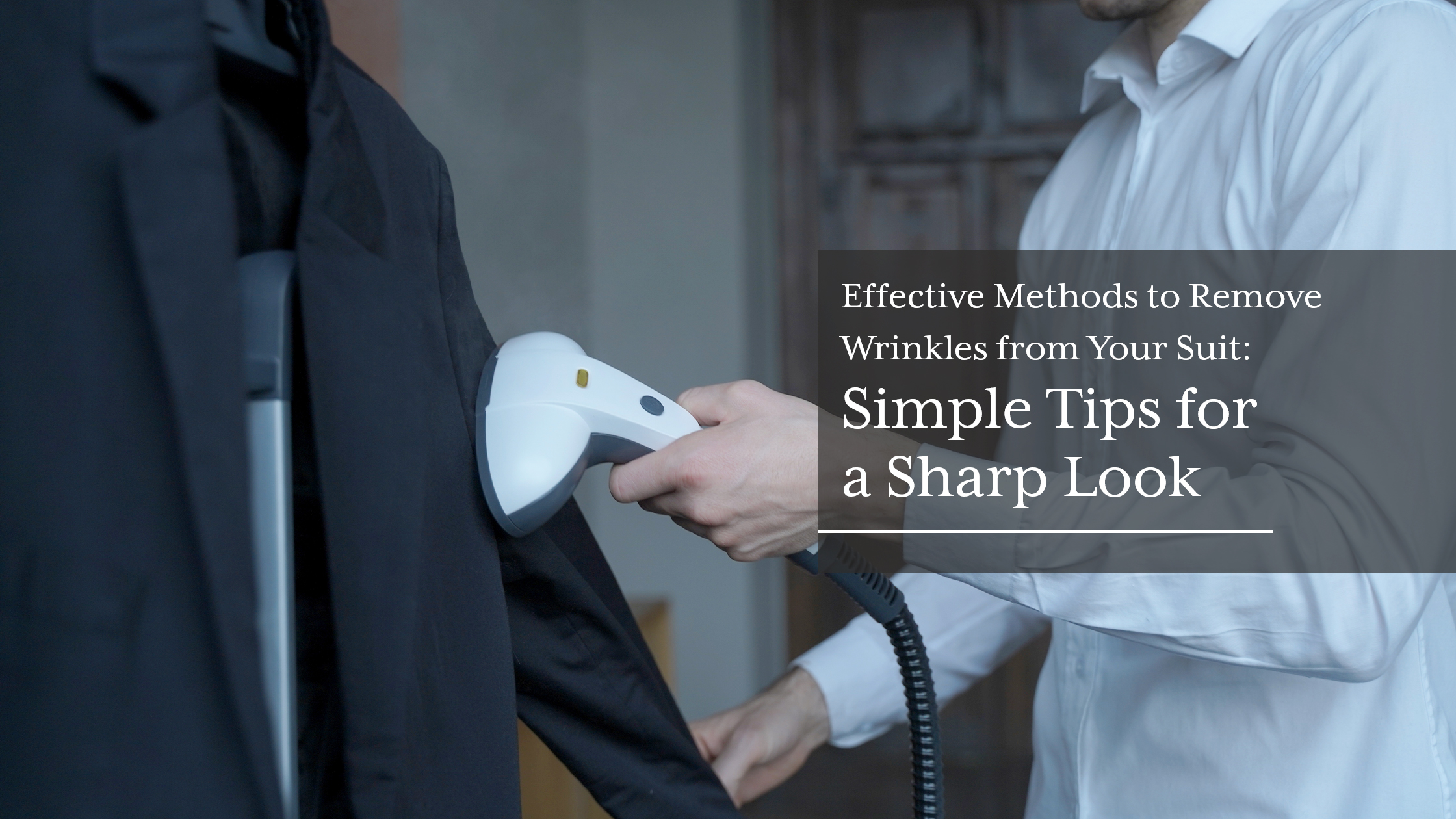
A wrinkled suit does not always need dry cleaning. Creases from sitting, travel, or storage can often be relaxed at home, provided the fabric and garment instructions allow it. To remove wrinkles from a suit before work, an interview, or an event, begin with a broad hanger and time. Use steam only for wrinkles that remain, and reserve careful pressing for areas you can safely support.
The distinction is between releasing a surface wrinkle and trying to repair damage. Water rings, shiny patches, melted fibres, distorted internal canvas, and deep folds through a shaped part of the jacket need professional assessment rather than more heat. The aim is to smooth the cloth while preserving the shoulders, chest, lapel roll, and trouser crease that give the suit its shape.
What should you check before treating a wrinkled suit?
Read the care label before reaching for an iron or steamer. Different suit fabrics, including wool, cotton, linen, silk blends, and synthetic cloth, respond differently to heat and moisture. The lining can also have different requirements from the outer fabric. Check the fibre composition and the ironing instructions together. A crossed-out iron means do not iron; a restriction on steam must also be followed.
“Dry clean only” describes the cleaning method, rather than automatically forbidding every form of steaming or pressing. However, it does not give permission to wet the jacket or ignore separate heat restrictions. If the instructions are missing or unclear, ask the maker or a professional presser before treating it. This matters especially when you are caring for someone else’s suit and do not know its fabric or construction.
Match the treatment to the cloth
A wool jacket often recovers from light compression when hung, so it is worth giving it time before applying heat. Linen is more prone to creasing and may retain a relaxed rumple as part of its appearance. Cotton can hold firmer folds, but a cotton jacket still contains seams, lining, and shaping that prevent it from being treated like a shirt.
Silk blends and delicate finishes can mark under uneven moisture or distort under direct heat. Synthetic blends also need care because excessive heat can damage or melt heat-sensitive fibres. Do not choose a hotter setting simply because the label mentions wool alongside another fibre. Follow the garment’s stated limit rather than guessing from the most familiar material.
Separate a wrinkle from a change in shape
Light ripples on the sleeve or back are usually the best candidates for home care. A sharp line across the lapel, puckering around a pocket, or a jacket that has lost its shape deserves a closer look. Internal canvas helps shape the chest, while some jackets use bonded interlining; neither should be soaked or repeatedly heated in an attempt to flatten an unexplained bump.
For example, a light travel crease in wool may improve after a night on a shaped hanger. A hard fold cutting across the lapel, particularly with visible shine, calls for assessment rather than another pass with an iron. Never use a clothes dryer as a shortcut for a tailored jacket unless its care label explicitly permits tumble drying.
How can you remove wrinkles from a suit safely at home?
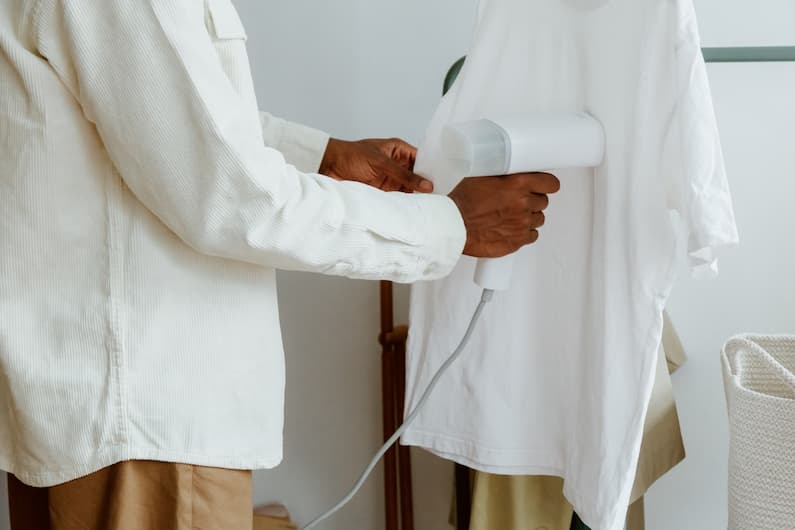
You can remove wrinkles without an iron by hanging the suit, using bathroom humidity, or treating individual areas with a garment steamer. Choose according to the fabric, the severity of the crease, and the tools available. These methods relax cloth; careful pressing is the next option when you need to restore an existing trouser crease rather than simply smooth the surface.
| What you see | Start with | Main limitation | When to stop home treatment |
|---|---|---|---|
| Light ripples after sitting or storage | A broad hanger, air, and several hours of rest | Hanging will not release every crease | The line remains deep or the jacket has lost its shape |
| Minor wrinkles when no tools are available | Brief bathroom humidity, followed by drying in a ventilated room | Avoid droplets and prolonged dampness; deep creases may remain | Water marks appear or the fabric does not tolerate moisture |
| Surface wrinkles that remain after hanging | A garment steamer, if the care instructions permit it | Keep the head moving and preserve the jacket’s shaped areas | The surface ripples, the shape changes, or the crease does not improve |
| An existing trouser crease that needs sharpening | Controlled pressing through a clean white cloth, if permitted | Align the original crease and avoid bulky seams or pocket bags | You cannot support the area properly or the finish changes |
| One small travel crease | Tested, very light moisture on suitable cloth | Less controlled than a steamer; unsuitable for delicate, water-sensitive, or unknown fabrics | The test leaves a tide mark or changes the finish |
| A sharp lapel fold, shine, bubbling, or distorted construction | Professional assessment | More home heat is not a repair method | Arrange an assessment before applying further treatment |
Method one: hang and let gravity work
Place the jacket on a broad, shaped hanger that supports the shoulders without extending beyond them. Button the front once if it hangs naturally without pulling, and leave space around it for air to circulate. Hang the trousers from the cuffs or waistband on a proper trouser hanger, keeping the legs aligned with their existing crease. Avoid clips that leave obvious marks on delicate cloth.
Empty the pockets and brush away lint with a soft garment brush first. Leave the suit for several hours, ideally overnight, in a dry, ventilated room. Gravity will not remove every crease, but hanging is the lowest-risk first step and can improve the ripples caused by a crowded wardrobe or luggage. Check it again before deciding whether any heat is necessary.
Method two: controlled bathroom humidity
A warm, steamy bathroom can help relax minor wrinkles without direct contact. Hang the suit outside the splash zone while taking a shower, with the door closed briefly to retain humidity. Around ten to fifteen minutes can be a starting point for observation, rather than a guaranteed treatment time. Keep the jacket off the shower rail and away from dripping surfaces.
Move it to a dry, ventilated room afterward and leave it hanging until fully dry. This can help in a hotel or before an event when you have no tools, but deep creases may remain. Excessive humidity can encourage odour or mildew in a poorly ventilated room, so leaving the suit in a damp bathroom overnight is a poor substitute for controlled steaming.
Method three: use a garment steamer
For permitted fabrics, a steamer avoids the hot plate and pressure of an iron, making it useful for surface wrinkles. It still delivers heat and moisture, so it is not harmless to every suit. Fill the reservoir with the water recommended by the manufacturer, allow the device to heat fully, and release the first steam away from the garment to check for spitting or residue.
Test a hidden area or matching spare fabric first, then let it dry and inspect it for changes. Hang the garment straight and begin with an accessible lining area only if its care instructions allow steaming. Move to the back and sleeves before cautiously treating the chest and trousers. There is no need to saturate the entire lining or steam every part of an otherwise smooth jacket.
Keep the head moving, held off the cloth at a distance appropriate to the device instructions. Do not press it into the jacket or linger over a stubborn fold. Guide the fabric lightly without pulling it hard; stretched fabric can dry into a new shape. Keep your hand out of the steam path, and never steam the suit while anyone is wearing it.
To unwrinkle a suit jacket while preserving its shape, let the lapels hang in their natural position instead of stretching them flat. Use brief treatment around the chest and avoid repeatedly heating the shoulder padding, pocket edges, or lapel roll. Stop if the surface begins to ripple or the shape changes.
Let the suit cool and dry on its hanger before wearing or storing it. Putting it on while warm and damp can recreate wrinkles at the elbows and waist. Treat the trousers along their natural drape, but avoid steaming away a crease you want to retain; a sharper crease may require pressing rather than more steam.
Method four: press with a protective cloth
An iron can help with an existing trouser crease or a manageable flat area that steam has not improved. A structured jacket requires more judgment because the fabric is shaped around the body. Being able to iron the cloth does not mean every part of the finished garment can safely be laid flat on a board.
Use an iron only when the care label permits it and you can control the temperature. Set it within the garment’s stated limit, place a clean white pressing cloth between the iron and suit, and press by lifting and lowering rather than dragging. Test a hidden area first. Use a little steam only where permitted, without saturating the jacket.
Avoid direct ironing on lapels, pocket flaps, shoulder padding, and dark wool. Too much heat or pressure can create shine, and pressing across a raised edge can leave an imprint. A protective cloth reduces exposure but does not make heavy pressure safe. Work only on areas you can support properly, and stop if the finish changes.
The lapel roll is the curve where the lapel turns back from the chest. Do not press it flat against an ironing board, even through a cloth, or try to turn it into a sharp trouser-style fold. A minor surface ripple beside it may respond to careful non-contact steam; a crease through the roll itself is better left to a professional who can support its shape.
For trousers, press from the inside where practical or through the protective cloth. Align the existing crease before applying the iron and smooth the layers so you do not create a second line. Keep bulky seams, pocket bags, and fastenings out from under the area being pressed. If you cannot position the garment confidently, stop and use a professional presser.
Method five: release a small spot while travelling
Unpack and hang the suit before trying an emergency treatment. A hotel steamer, if available and suitable for the fabric, is easier to control than improvised heat. If you have no tools, hanging or brief bathroom humidity remains the better first choice for minor travel wrinkles.
For a single crease on a sleeve or trouser leg, very light moisture is an option only when the fabric tolerates water and the care instructions allow it. Test a hidden area, let it dry, and check for marking first. Lightly mist the air close to the fabric so only a trace reaches it, without soaking or leaving visible droplets. Smooth gently with clean hands, without stretching, and let it dry naturally.
A hotel hair dryer on its lowest warm setting, held well away and kept moving, can speed drying on suitable cloth. However, this is less controlled than a garment steamer and is not a method for delicate, water-sensitive, or unknown fabrics. For wool, drying at room temperature is the safer approach. Never use high heat or aim concentrated hot air at a lapel, shoulder, or chest.
Uneven moisture can leave a tide mark, especially on dark or delicate cloth. If the test leaves a ring or changes the finish, do not treat the visible area. Likewise, if a small crease does not improve after gentle handling, leave it alone rather than adding more water and heat under time pressure.
When should you stop home treatment and use a professional?
Mistakes to avoid
Before increasing the heat, consider whether a stubborn line is a seam impression, a construction problem, or damage. Keep these limits in mind when treating the suit at home:
- Do not put a tailored suit in a tumble dryer unless its care label explicitly permits it.
- Do not spray perfume, hair spray, or household wrinkle products onto the cloth without garment-specific approval.
- Do not press directly over a lapel roll or pocket edge.
- Do not use a wire hanger that fails to support the shoulders.
- Do not soak the jacket in a bath or sink.
- Do not scrub a water mark; gently blot fresh excess moisture and seek advice.
- Do not keep applying heat when a wrinkle is not changing.
Repeated heat can damage fibres while leaving the underlying cause untouched. Let the area dry fully and inspect it in good light before deciding whether professional treatment is needed.
Professional pressing and assessment
Take the suit to a tailor or reputable cleaner when wrinkles remain deep after gentle treatment, the jacket is expensive or heavily structured, or its shape has changed. Visible shine, bubbling, a sharp lapel crease, water rings, or melted fibres also warrant professional assessment. Pressing can improve some problems, but it cannot guarantee reversal of permanent heat damage.
Professional suit pressing uses controlled steam, pressure, and suitable supports to preserve the chest, sleeve head, and lapel roll. Ask whether the service offers a press-only appointment rather than automatically requesting full cleaning. A suit that is clean but creased does not necessarily need dry cleaning simply to improve its appearance. For cleaning and maintenance beyond wrinkle removal, our guide to caring for tailored clothing covers the broader routine.
Bring the care label to the presser’s attention, especially if it says dry clean only or restricts heat. Explain any stain, odour, water exposure, or previous home treatment so the cleaner can choose an appropriate process. Ask specifically for the existing trouser crease and natural lapel roll to be preserved, rather than requesting that the whole suit be made flat.
How can you prevent wrinkles from returning?
Store the suit on a wide hanger with room around it, and brush dust from woven cloth after wearing. Give the garment a day of rest before wearing it again when possible, particularly for wool. Empty pockets and fasten the jacket if it hangs comfortably that way. Do not squeeze a broad-shouldered jacket into a narrow wardrobe section or cover it while damp.
For travel, fold the jacket along its natural structure, keep it above heavy luggage, and unpack immediately. A breathable garment bag helps protect it from dust while allowing air circulation during storage; avoid compressing it beneath shoes or other heavy items during transport. For packing details, our guide to the best way to travel with a suit explains ways to reduce travel creases before they need treatment.
Choose resilient wool or a suitable wool blend if you travel frequently, while recognising that weave, weight, finish, and construction also affect recovery. Delicate cloth can demand more careful handling and more recovery time, and linen will retain its characteristic tendency to rumple. Ask about crease recovery alongside appearance when selecting fabric, rather than assuming every wool blend behaves alike.
When selecting a suit, compare the cloth as well as the colour: navy wool and navy linen can need different care and give a different finish. Our guide to suit colours and choosing one for the occasion discusses how fabric affects that choice. Ask about crease recovery before buying, then use the finished garment’s label to guide its care at home.
What should you prioritise in the five minutes before an event?
The five minutes are for assessment and a limited touch-up, not a promise that the suit will be ready to wear. Follow these priorities rather than trying every method in quick succession:
- If only a few areas look creased, assess them first. Hang the suit and identify the worst areas rather than treating everything. Decide whether you are looking at a surface wrinkle or a sharp fold through a shaped part of the jacket.
- If the label permits steaming, treat the visible surface wrinkles. Give the sleeves, trouser knees, and chest beside the lapel brief attention. Leave the lapel roll undisturbed rather than pulling or pressing it flat.
- If a sharp fold remains, stop increasing the heat. Check the finish in daylight or good neutral lighting. Do not chase the fold with maximum heat; contact a professional if time allows or choose another outfit.
- If the suit is still warm or damp, give it more time. Complete the rest of your grooming while it rests. Allow fifteen to thirty minutes as a planning buffer where practical, but wait longer if needed. Wearing a fully dry garment matters more than meeting a fixed countdown.
Final takeaway
At Michael Tailors, we recommend starting with a hanger, air, and time, then using controlled humidity or a steamer for suitable fabrics with remaining surface wrinkles. Use an iron only with a protective cloth, the permitted temperature, and proper support; shine, puckering, an unknown fibre, or a damaged lapel calls for professional assessment, which can be less costly than attempting a repair after further damage. As your Bangkok suit tailor, we welcome questions about tailoring and garment care, including whether professional pressing is the appropriate next step for your suit.
Frequently asked questions
Can you steam a wool suit?
Yes, many wool suits can be steamed gently when their care instructions allow it. The word “wool” alone is not enough to decide: the lining, finish, and trim also matter. If you are caring for someone else’s suit, check its own label rather than using the settings that worked on another wool garment. Ask the maker if the instructions are unclear.
How do you remove wrinkles without damaging a lapel?
First distinguish a surface wrinkle beside the lapel from the curve of the lapel itself. That roll is part of the jacket’s intended shape, so do not try to make it lie flat against the chest. Treat a minor nearby ripple without pulling the lapel open. If a sharp fold cuts across the roll, leave it for shaped professional pressing.
When should a suit go to a professional presser?
Take it in when gentle treatment does not improve the crease or when the jacket’s shape or finish has changed. When booking, ask whether a press-only appointment is appropriate and whether the service can preserve the lapel roll and existing trouser crease. Mention any stain or previous heat treatment so the presser can assess the job before proceeding.
Does steaming clean a suit as well as remove wrinkles?
No. Home steaming for wrinkles does not replace appropriate cleaning for stains, body oils, or persistent odours. Do not steam over an unidentified stain and assume it will disappear. Tell a cleaner what caused the mark, if known, and follow the garment’s cleaning instructions rather than treating the entire suit with more moisture.
Why do wrinkles return soon after wearing the suit?
Sitting, bending, and pressure from filled pockets can create new creases, especially if the cloth was still damp when you put it on. If the same pulling lines appear whenever the jacket is buttoned or the trousers are worn, fit may also be involved. A tailor can assess that recurring tension instead of repeatedly pressing away its appearance.

More Articles
Getting a Suit Made in Bangkok on a Short Trip: Real Customer Stories

Suit vs Tuxedo: Key Differences and When to Wear Each One