Choosing the right shirt hem can make all the difference in how polished or relaxed your outfit appears. From straight hems to curved ones, each style serves a purpose and complements different looks. But how do you know which hem suits your wardrobe or the occasion?
Understanding the basics of shirt hem types helps you make smarter style choices. Whether you’re aiming for a casual vibe or something more formal, the hem plays a subtle yet significant role. In this text, you’ll explore the most common hem styles, when to wear them, and how they can elevate your overall appearance. Ready to refine your look with a tailor in Bangkok? Let’s dive straight in.
The Importance of Shirt Hem Styles in Fashion
Shirt hems influence not only how your shirt drapes but also the impression it leaves. A straight hem conveys professionalism and structure, while a curved hem offers ease and movement, perfect for Thailand’s humid weather and smart casual settings. Understanding the purpose of each style ensures your shirt complements both your body type and lifestyle.
At Michael Tailors, one of Bangkok’s most respected bespoke tailors, every detail from hem shape to button spacing is customised for precision. Their master tailors understand that even subtle choices such as hem length and curvature affect not just comfort, but the entire visual balance of an outfit.
How Hem Types Influence the Overall Appearance
Shirt hem types influence how your shirt drapes and fits with different outfits. A straight hem offers a balanced silhouette, perfect for tucked styles and a professional look. In contrast, curved hems suit untucked styles, providing better movement and a relaxed vibe.
Design variations like side gussets or tapered cuts can subtly change how hems fit various body types. These elements make hems both aesthetic and functional, helping you address fit issues. By understanding these options, you can effortlessly refine your look and exude confidence in any setting.
Curved or Shirt-Tail Hem
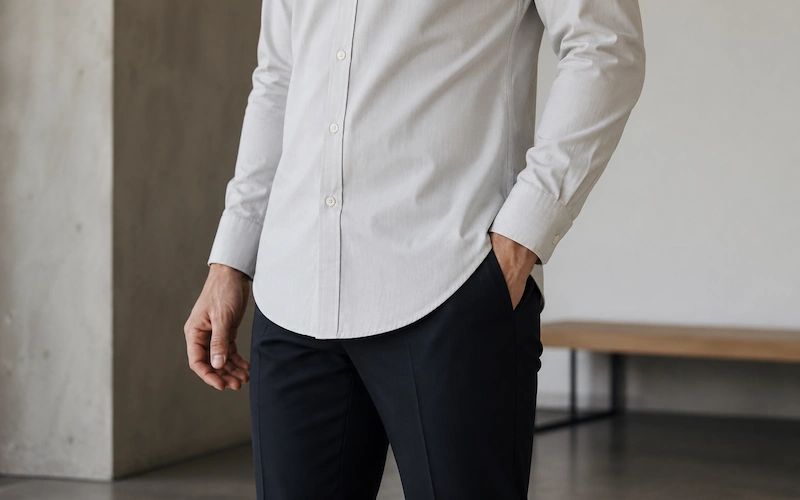
What Is a Curved or Shirt-Tail Hem?
A curved hem, also called a shirt-tail hem, rises slightly at the sides and extends lower at the front and back of the shirt. This traditional design provides extra fabric below the waistband, helping the shirt stay securely tucked in while sitting, walking, or raising your arms.
Curved hems are most commonly found on dress shirts, business shirts, and formal button-down shirts. In general, the deeper the curve and the longer the front and back tails, the more likely the shirt is designed to be worn tucked in.
Some casual shirts feature a shorter, more subtle rounded hem. These styles can often be worn untucked, provided the shirt ends around the middle of the trouser fly at the front and near the middle of the back pockets.
When Should You Wear a Curved-Hem Shirt?
A long curved-hem shirt is the best choice for formal and professional outfits, including:
- Business suits
- Formal trousers
- Weddings and special occasions
- Job interviews
- Shirts worn with a tie
- Outfits layered beneath a tailored jacket
A shirt with a shorter rounded hem can also work with jeans or chinos for a smart-casual look. However, the shirt should not extend too far below the seat, as excessive length can make an untucked outfit appear unbalanced.
When deciding whether to tuck in a curved-hem shirt, consider both the shape of the hem and the overall shirt length. A pronounced shirt-tail hem usually indicates that the shirt was specifically designed to remain tucked in.
Straight Shirt Hem
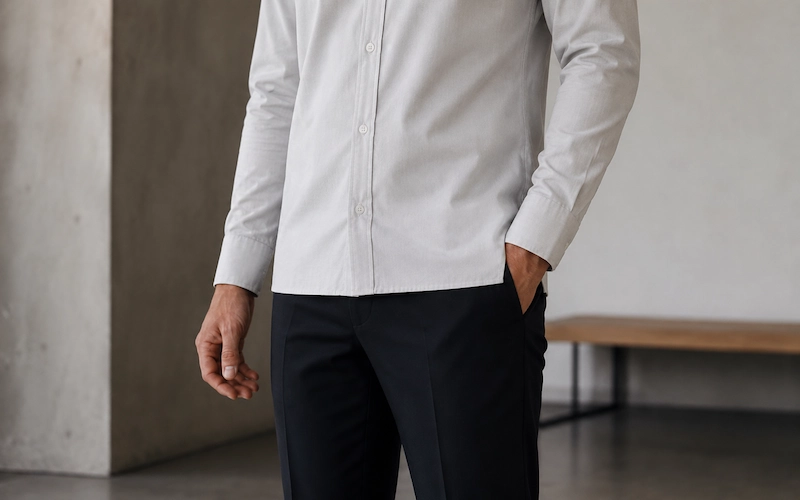
What Is a Straight Shirt Hem?
A straight shirt hem features an even, horizontal edge across both the front and back of the shirt. This style is commonly used on casual button-down shirts, overshirts, camp-collar shirts, and polo-inspired designs made to be worn untucked.
Unlike a curved hem, a straight shirt hem does not have extended front or back tails. This creates a cleaner, more balanced silhouette when the shirt is worn outside the trousers. Straight-hem shirts are also typically shorter than traditional dress shirts, allowing them to sit neatly around the hips without covering too much of the lower half of an outfit.
When Should You Wear a Straight-Hem Shirt?
A straight-hem shirt is ideal for casual and smart-casual occasions. It works especially well for weekend outings, informal dinners, holidays, social events, and relaxed office environments.
You can style a straight-hem shirt with:
- Chinos or tailored shorts
- Jeans
- Casual trousers
- Loafers, trainers, or leather sandals
- Lightweight jackets or unstructured blazers
Although a straight-hem shirt can be tucked in, it may come loose more easily because it does not have the extra length of a traditional shirt tail. For business suits, formal occasions, or outfits worn with a tie, a longer curved hem is usually the more suitable option.
Polo Hem
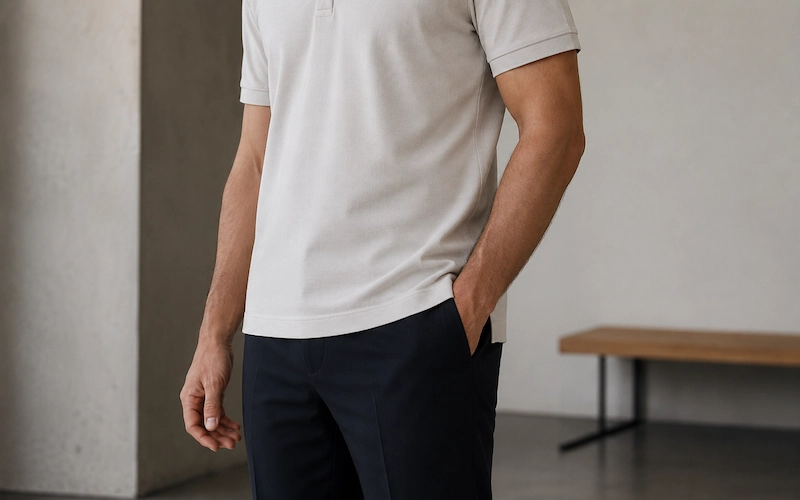
What Is a Polo Hem?
A polo hem is a practical shirt hem commonly found on polo shirts and other sports-inspired designs. It usually features a slightly curved shape, with the back extending lower than the front to provide extra coverage during movement.
Many polo hems also include side vents, which improve comfort and allow the shirt to sit more naturally around the hips. Reinforced side seams and double-stitched edges may be added for durability, particularly on shirts designed for regular or active wear.
Polo shirts are often made from lightweight yet hard-wearing fabrics such as cotton piqué. Their semi-fitted shape and balanced proportions create a clean, relaxed silhouette that works well when worn untucked.
When Should You Wear a Polo-Hem Shirt?
A polo-hem shirt is ideal for casual, sporty, and smart-casual occasions, including:
- Weekend outings
- Casual workplaces
- Golf and leisure activities
- Informal lunches or dinners
- Holidays and warm-weather events
- Relaxed social occasions
Polo-hem shirts pair well with chinos, tailored shorts, jeans, and casual trousers. They can be worn with trainers, loafers, boat shoes, or leather sandals, depending on the setting.
Most polo shirts are designed to be worn untucked, especially when the hem finishes around the hips and the back does not extend too far below the seat. However, longer polo shirts may be tucked into trousers for a neater or more traditional appearance.
How Long Should a Shirt Be for Tucked and Untucked Wear?
The ideal shirt length depends on whether you plan to wear the shirt tucked in or untucked. While the hem shape offers a useful guide, the overall length determines whether the shirt looks balanced, feels comfortable, and stays in place throughout the day.
Ideal Length for a Tucked-In Shirt
A shirt designed to be tucked in should extend several centimetres below the waistband. It should remain securely inside the trousers when you sit, bend, walk, or raise your arms.
The front and back tails need to provide enough coverage without creating too much excess fabric around the waist and hips. A shirt that is too short will frequently come untucked, while one that is too long or loose may bunch beneath the trousers.
Dress shirts and formal button-down shirts usually feature longer curved hems for this reason. The added length helps create a cleaner appearance when the shirt is worn with tailored trousers, a suit, or a tie.
Ideal Length for an Untucked Shirt
An untucked shirt should usually finish around the middle of the trouser fly at the front and near the middle of the back pockets. This length creates a balanced silhouette without making the shirt appear oversized.
If the shirt ends above the waistband, it may expose the stomach when you move. If it covers most of the seat, it can look like a dress shirt that has simply been left untucked.
Straight hems, shallow curved hems, and polo hems are often best suited to untucked wear because they are typically cut shorter. They pair well with jeans, chinos, tailored shorts, and casual trousers.
Body height, torso length, shirt fit, and trouser rise can all affect the correct shirt length. Custom shirts can therefore be tailored to the wearer’s proportions and intended styling, helping achieve a cleaner fit for both tucked and untucked outfits.
Quick Comparison
| Hem type | Typical shape | Usually tucked? | Best occasions |
|---|---|---|---|
| Curved or shirt-tail hem | Longer front and back with raised sides | Yes | Business, suits, weddings and formal events |
| Straight or square hem | Even edge around the shirt | No | Casual and smart-casual outfits |
| Short rounded hem | Gentle curve with limited drop | Either | Smart-casual and relaxed occasions |
| Polo hem | Slightly longer back with side vents | Usually no | Golf, travel and casual daytime wear |
| High-low hem | Noticeably longer at the back | Usually no | Contemporary casual and layered outfits |
Factors to Consider When Choosing a Hem Type
Body Type and Proportions
How Different Hems Complement Various Body Shapes
Shirt hem types greatly influence fit for different body shapes. Straight hems create a balanced look for rectangular or slim body types, reducing bulk when tucked in. Curved hems suit broader frames, offering a slimming effect and ease for untucked styles. Rounded hems can visually elongate shorter figures with their slight drop at the sides.
Polo hems, designed for athletic builds, feature a dropped-back design for added coverage and a neat fit during movement. For muscular or varying body proportions, consider roomier designs like side gussets. Choosing the right hem enhances proportions and ensures a custom feel.
Intended Use and Occasion
Selecting Hems for Formal vs. Casual Settings
Different shirt hem types suit specific occasions and dress codes. Straight hems, found in dress shirts, are ideal for formal and semi-formal events, best worn tucked in with tailored trousers or blazers for a polished look.
Curved hems are perfect for casual settings, promoting a laid-back vibe for weekend outings or layered looks. They can transition to semi-formal with blazers over chinos but should be avoided for corporate attire. Polo hems balance smart-casual and relaxed styles, shining at social events, golf days, or alfresco lunches. Choose your hem style to match the occasion for the right balance of formality and comfort.
Personal Style and Comfort
Aligning Hem Choices with Personal Aesthetics
Your personal style determines which hem enhances your vibe. Straight hems offer a timeless, minimalist look, easily styled with neutral and classic staples. For a relaxed, flowy appearance, curved and rounded hems fit well into streetwear, pairing effortlessly with loafers or trainers for a youthful aesthetic.
If comfort is your priority, polo hems provide casual refinement and freedom of movement. Curved hems blend function with fashion, adding versatility to informal wear. To express individuality, experiment with fabric textures, patterns, or layers. Matching your hem to your aesthetic elevates your outfit and ensures it feels intuitive.
Understanding shirt hem types helps elevate your style with choices that match your needs. Whether seeking a polished look or a relaxed vibe, the right hem makes a difference.
Does Shirt Fabric Affect Which Hem You Should Choose?
Shirt fabric plays an important role in choosing the right hem because it affects how the shirt drapes, holds its shape, and appears when worn. The best shirt hem should complement the fabric weight, structure, and intended level of formality.
Structured dress-shirt fabrics such as poplin, broadcloth, and fine twill usually work best with longer curved hems. These materials create a smooth, polished appearance beneath a suit or tailored jacket and are typically designed to be worn tucked in.
More relaxed fabrics often suit shorter straight hems or softly rounded hems. Common examples include:
- Linen
- Oxford cloth
- Chambray
- Denim
- Flannel
- Textured cotton
These fabrics naturally create a more casual look and are well suited to untucked shirts worn with jeans, chinos, tailored shorts, or casual trousers.
How Fabric Weight Affects Shirt Hem Choice
Fabric weight should also be considered when selecting a shirt hem. A heavy shirt with a long curved hem may create unnecessary bulk inside lightweight trousers, while a very light shirt with a short straight hem may lift or shift too easily during movement.
For the best fit and appearance, shirt fabric, hem shape, and overall length should be chosen together. A balanced combination will help the shirt drape cleanly, stay comfortable, and suit the way you intend to wear it.
FAQ
Can a Curved-Hem Shirt Be Worn Untucked?
Yes, provided the curve is shallow and the shirt is short enough to finish around the middle of the trouser fly. A long dress-shirt tail usually looks unbalanced when left untucked.
Can a Straight-Hem Shirt Be Tucked In?
It can be tucked in, but it may not remain securely inside the trousers because it has less fabric below the waistband. A curved dress-shirt hem is more practical for regular tucked-in wear.
Should a Shirt Be Tucked In With a Suit?
Yes. A collared dress shirt worn with a business suit, formal jacket or tie should normally be tucked in for a cleaner and more professional appearance.
Where Should an Untucked Shirt End?
An untucked shirt should generally finish near the middle of the trouser fly at the front and around the middle of the back pockets.
Why Does My Shirt Keep Coming Untucked?
Common causes include insufficient shirt length, excess fabric around the waist, tight sleeves or armholes, and trousers that do not hold the shirt securely. A properly fitted shirt with longer tails is less likely to come loose.
Why Choose Michael Tailors in Bangkok
Michael Tailors has been crafting bespoke garments in Bangkok for decades, blending traditional techniques with modern precision. Known for exceptional craftsmanship and personalised service, the brand’s philosophy is built on attention to detail, from fabric selection to the finishing hemline.
When you step into Michael Tailors, you receive more than just a shirt; you experience a full tailoring consultation that considers your lifestyle, body type, and wardrobe needs. Every hem is cut with purpose, every stitch measured to perfection. Whether you are seeking a sharp business shirt or a relaxed weekend piece, Michael Tailors ensures every detail reflects who you are.

More Articles
Getting a Suit Made in Bangkok on a Short Trip: Real Customer Stories
Suit vs Tuxedo: Key Differences and When to Wear Each One