

A custom suit should feel comfortable, move naturally, and look polished long after you leave the tailor’s shop. In Bangkok, where visitors may have only a few days to order, fit, and collect a garment, choosing the right tailor depends on more than glossy fabric books, low prices, or a confident sales pitch.
Before paying a deposit, find out who will make the garment, how it will be constructed, which fittings are included, and what happens if it needs adjustments. These questions matter whether you are visiting a custom tailor in Bangkok for a short trip or building a long-term relationship with a local tailor.
This article provides 15 practical tips to help you choose a suitable custom tailor in Bangkok. A good suit tailor can explain the process clearly, show relevant workmanship, record your preferences, and put the agreed terms in writing. The right choice is not based on price alone, but on whether the tailor can deliver a garment that fits, performs, and meets your expectations.
1. What garment do you need and how will you wear it?
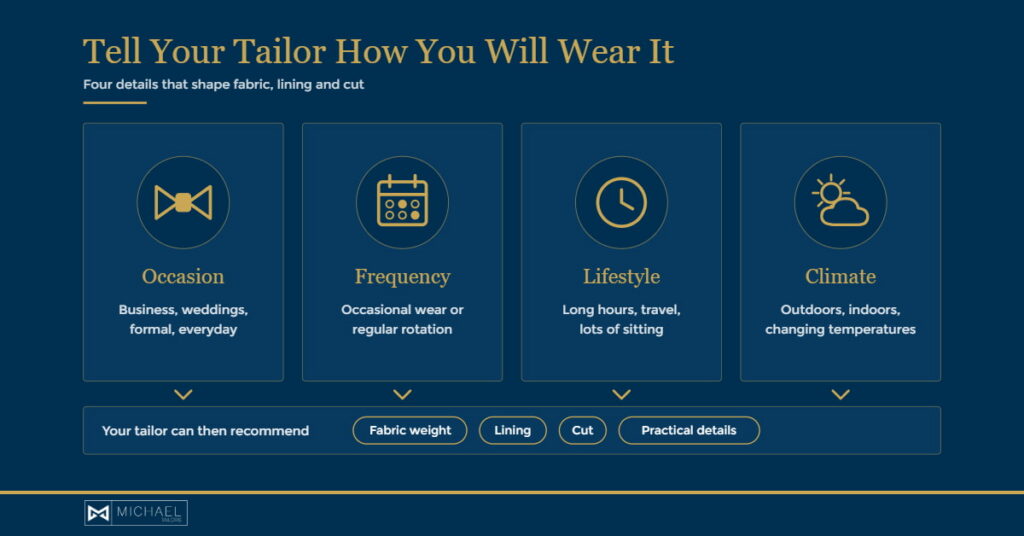
Start by identifying the purpose of the garment. A business suit for an air-conditioned office, a lightweight travel suit, a wedding outfit, and everyday separates all have different requirements.
Tell the tailor:
- Occasion: Business, weddings, formal events, or everyday wear.
- Frequency of use: Occasional wear or regular rotation.
- Lifestyle: Long working hours, frequent travel, or extended periods of sitting.
- Climate: Whether the garment will be worn mainly outdoors, indoors, or in changing temperatures.
This gives the tailor a clearer basis for recommending fabric weight, lining, cut, and practical details instead of relying on a vague request for something modern.
2. What is the difference between bespoke and made-to-measure?
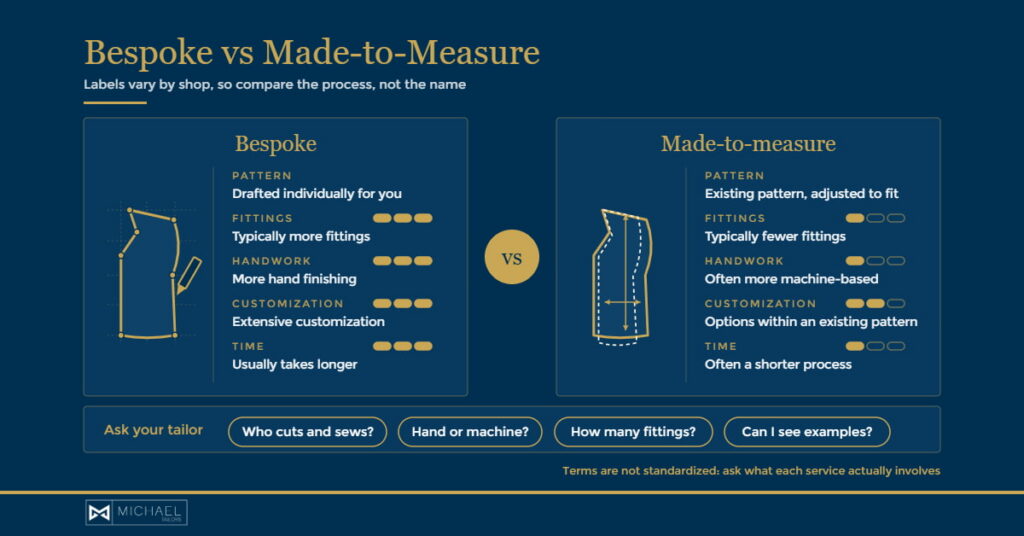
The terms are not used consistently by every shop, so ask what each service actually involves. Does the tailor draft an individual pattern, or adjust an existing one? Who cuts and sews the garment? Which stages are completed by hand or machine, and how many fittings are included? Generally, made-to-measure adjusts an existing pattern, while bespoke involves a pattern developed specifically for the customer.
Rather than relying on the label, ask to see examples of the process and understand what level of customization is available.
For a more detailed explanation, check out our blog on bespoke vs made-to-measure tailoring.
3. Can you inspect a finished garment?
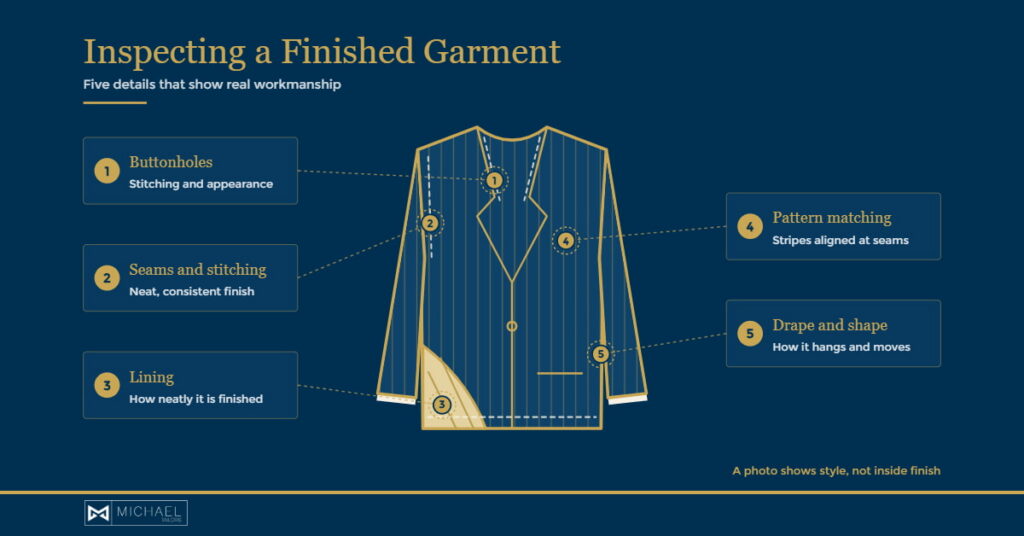
Photographs and portfolios are useful starting points, but inspecting a finished garment in person provides a better understanding of workmanship.
Ask to examine a sample in a similar fabric and style to your intended order. Pay attention to:
- Seams and stitching: Look for consistent, neat finishing.
- Lining: Check how neatly it is attached and finished.
- Buttonholes: Examine their stitching and overall appearance.
- Pattern matching: Look at how checks or stripes align across seams.
- Drape and shape: Notice how the garment hangs and moves when worn.
A photograph can demonstrate style, but it cannot fully show the inside finish or how a garment feels in use. Ask what the sample demonstrates and which details may differ in your own order.
4. Who will handle the tailoring work?
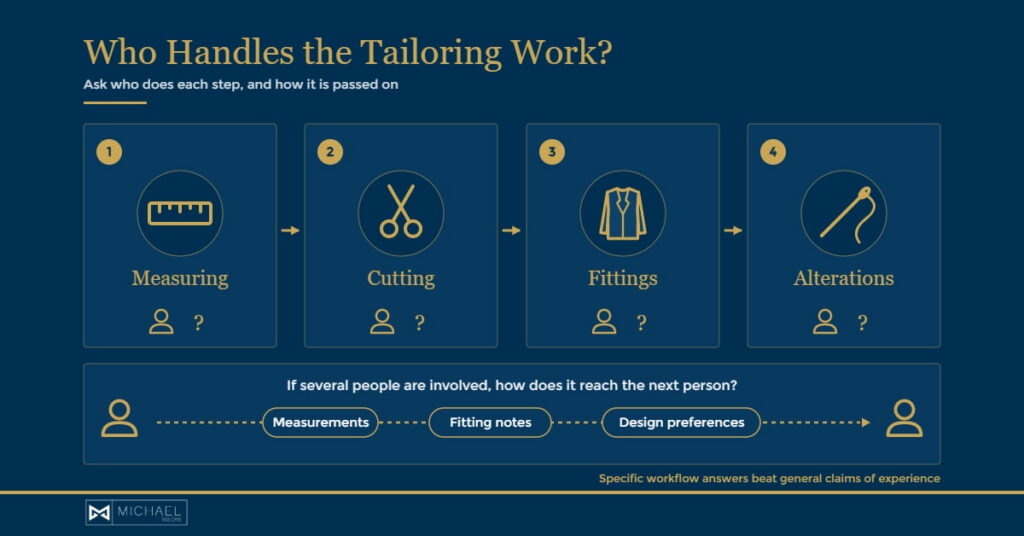
The person helping you choose fabric may not be the person making your suit. Ask whether the garment is made at the shop or in a separate workshop, and who will take your measurements and conduct the fittings.
You can ask:
- Do you make the suits here or use a separate workshop?
- Will I see the same person at each fitting?
- If something needs changing, who should I speak to?
If several people are involved, explain any specific requests during the consultation and ask for them to be added to your order. At each fitting, confirm that the agreed changes have been noted before arranging your next visit.
5. Does the consultation address your preferences?
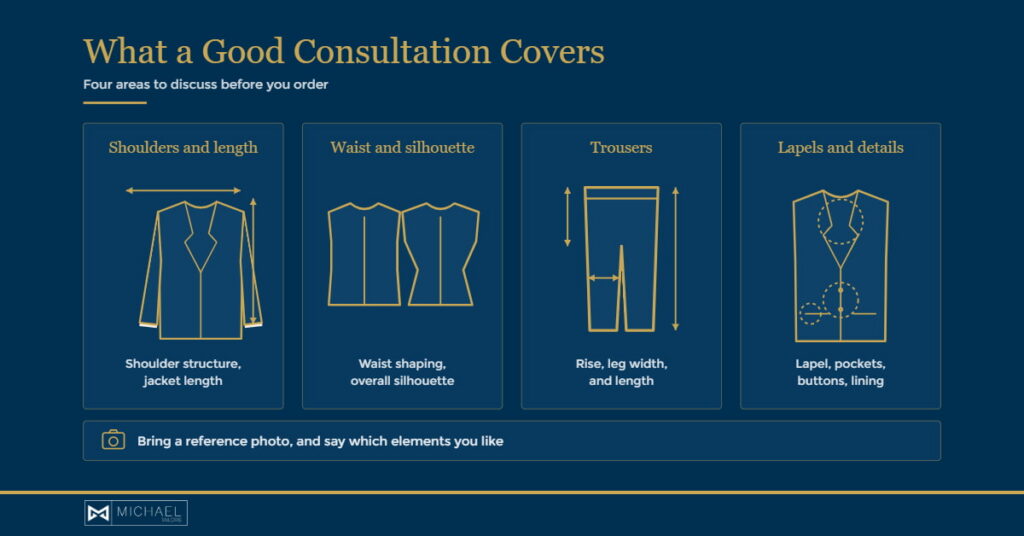
A good consultation should involve more than taking measurements and presenting fabric options. The tailor should ask about personal preferences, intended use, and the fit you expect.
Bring a reference photograph if you have a particular style in mind, but explain which elements you like. Discuss details such as:
- Shoulder structure and jacket length.
- Waist shaping and overall silhouette.
- Trouser rise, leg width, and length.
- Lapel style, pockets, buttons, and lining.
Ask the tailor to explain how the proposed design will suit your proportions and intended use. Recommendations should be understandable and open to discussion rather than presented as a standard style that everyone should accept.
6. What should you look for during a fitting?
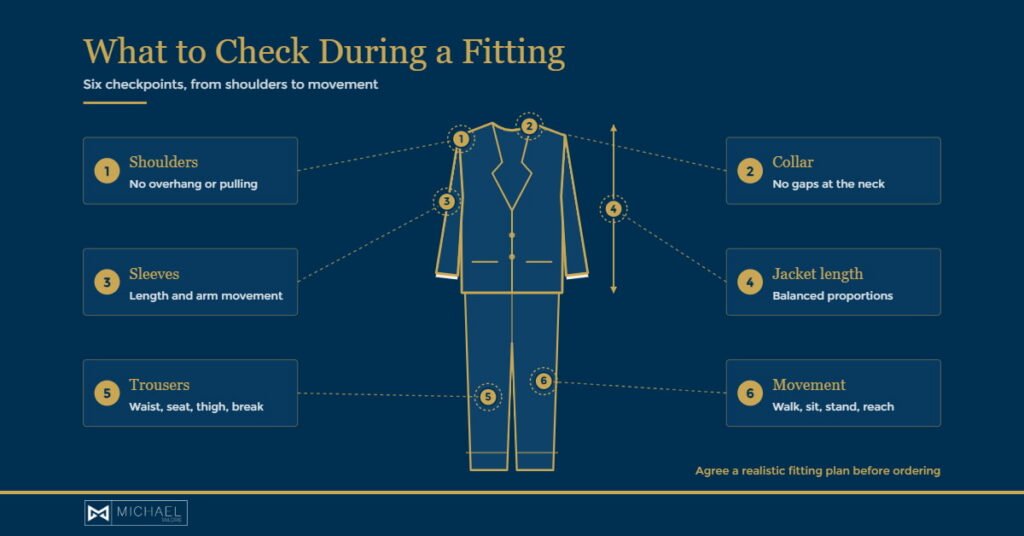
A fitting should involve more than a quick look in the mirror. It provides an opportunity to assess proportions, identify fitting problems, and determine which adjustments are necessary.
Pay attention to the following areas:
- Shoulders: Check for uneven lines, excessive overhang, or tightness.
- Collar: Look for gaps or unwanted pulling around the neck.
- Sleeves: Check their length, position, and how they move with the arms.
- Jacket length: Make sure it creates balanced proportions.
- Trousers: Check the waist, seat, thigh room, and trouser break.
- Movement: Walk, sit, stand, and raise your arms to assess comfort.
The tailor should identify necessary corrections and explain what can be adjusted at that stage. The number of fittings varies according to the garment and process, so agree on a realistic plan before ordering.
7. Have you explained your preferred measurements and fit?
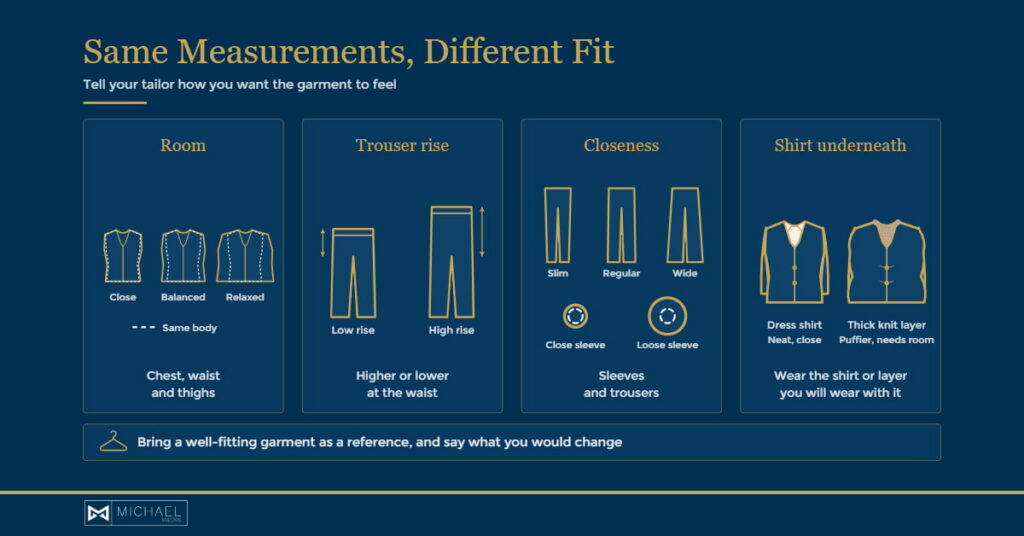
Measurements alone do not communicate how you want clothing to fit. Two people with similar body measurements may prefer very different silhouettes.
Be specific about your preferences, including:
- How much room you want through the chest, waist, and thighs.
- Whether you prefer a higher or lower trouser rise.
- How close the sleeves and trousers should fit.
- What type of shirt or clothing you normally wear underneath.
If you already own a well-fitting garment, bring it as a reference and explain what you would change. Our guide to measuring pants for a better fit also covers the measurements that influence trouser comfort and proportions.
8. Is the fabric suitable for your needs and climate?
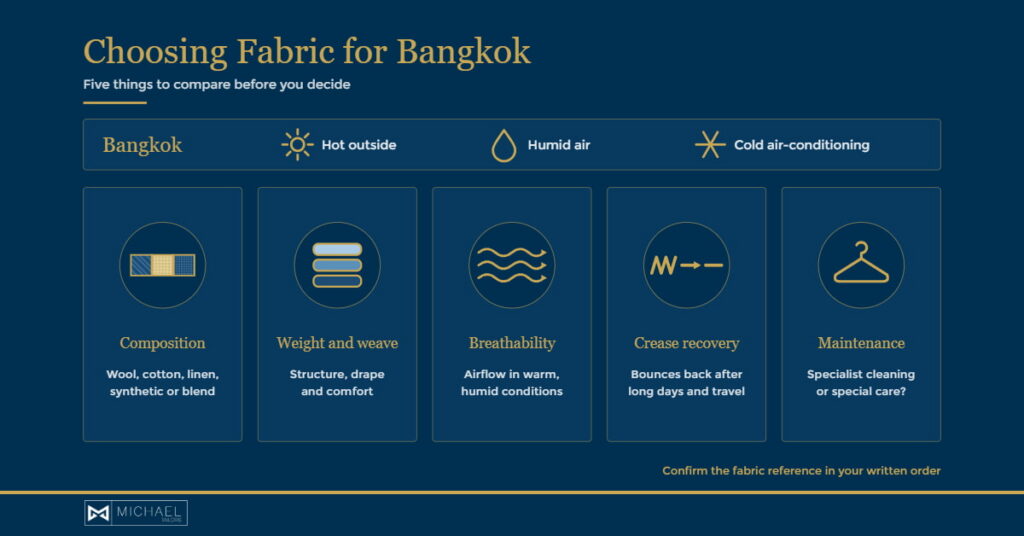
Fabric selection affects more than appearance. Composition, weight, weave, drape, breathability, crease recovery, and care requirements all influence how a finished garment performs.
When comparing fabric options, consider:
- Composition: Understand whether the cloth is wool, cotton, linen, a synthetic fibre, or a blend.
- Weight and weave: These influence structure, drape, and comfort.
- Breathability: Consider how the fabric performs in Bangkok’s warm and humid conditions.
- Crease recovery: Important for garments worn during long working days or frequent travel.
- Maintenance: Check whether the fabric requires specialist cleaning or particular care.
Touching a swatch is useful, but ask how the material will behave as a finished garment. Confirm the selected fabric, including its reference or swatch number where available, in the written order.
For more guidance on material selection, check out our blog on choosing fabrics for tailored clothing.
9. Are all inclusions and costs recorded in writing?
Before paying a deposit, request an itemized written quotation. This makes it easier to understand exactly what is included and compare different tailors fairly.
The quotation should identify:
- Garment type and quantity.
- Selected fabric or agreed fabric range.
- Construction and customization details.
- Consultation and fitting arrangements.
- Included alterations.
- Collection or delivery arrangements.
- Deposit, remaining balance, and payment schedule.
- Additional charges or optional upgrades.
Also ask how changes requested after the fabric has been cut are handled. A clear written record helps prevent misunderstandings later.
10. Does the price reflect comparable services?
A low starting price does not necessarily represent better value. Compare quotations using the same garment specifications and services rather than focusing on the headline figure.
Consider whether the price includes the same:
- Fabric quality and composition.
- Garment construction and finishing.
- Lining, buttons, and customization.
- Number of fittings.
- Alterations and aftercare.
- Delivery or collection arrangements.
There is no universal price that defines tailoring quality across Bangkok, and a higher price alone does not guarantee better workmanship.
11. Is the shop and its communication reliable?
Visit the shop if possible. Confirm its location and opening hours, see where consultations and fittings take place, and notice whether staff can answer practical questions clearly.
Online reviews and portfolios can provide additional information, but treat them as supporting evidence rather than proof of quality.
Look for:
- A consistent collection of relevant finished work.
- Clear communication about orders and schedules.
- Specific answers about construction and fitting procedures.
- Consistent feedback across different customer experiences.
- An established location where follow-up visits can be arranged.
Consider visiting more than one shop if time allows. Comparing consultations can reveal differences in workmanship, service, and the level of attention given to individual requirements.
12. Can the tailor meet your travel deadline?
If visiting Bangkok, share your departure date before selecting fabric or paying a deposit. Work backward from that date and agree on actual consultation, fitting, and collection appointments.
An advertised turnaround time should not automatically be treated as a guarantee for every order. The schedule may depend on fabric availability, garment complexity, workshop capacity, and the number of adjustments required.
For a short visit, avoid scheduling collection on your departure day. Leave at least one extra day for a final fitting or adjustment.
If another fitting will not be possible after leaving Bangkok, discuss:
- Whether remote adjustments can be arranged.
- Whether international shipping is available.
- Who is responsible for shipping costs.
- How further alterations would be handled.
For additional planning advice, check out our blog on express tailoring in Bangkok. The important consideration is whether the proposed schedule allows enough time for the fitting process.
13. What happens if the garment needs further adjustments?

Before placing an order, clarify how many visits are expected and what each fitting is intended to achieve. Also ask what happens if the finished garment does not fit as expected at collection.
Confirm:
- Which adjustments are included in the original price.
- Whether there is a time limit for requesting corrections.
- Whether adjustments must be completed at the original shop.
- Whether further alterations incur additional charges.
When trying on the finished garment, wear the shoes and shirt intended for use with it. Walk, sit, stand, and move naturally before accepting the order as complete.
If something feels uncomfortable or looks unbalanced, raise the concern with the tailor before leaving. Clear communication at this stage makes it easier to identify suitable corrections.
14. Does the tailor provide records and aftercare?
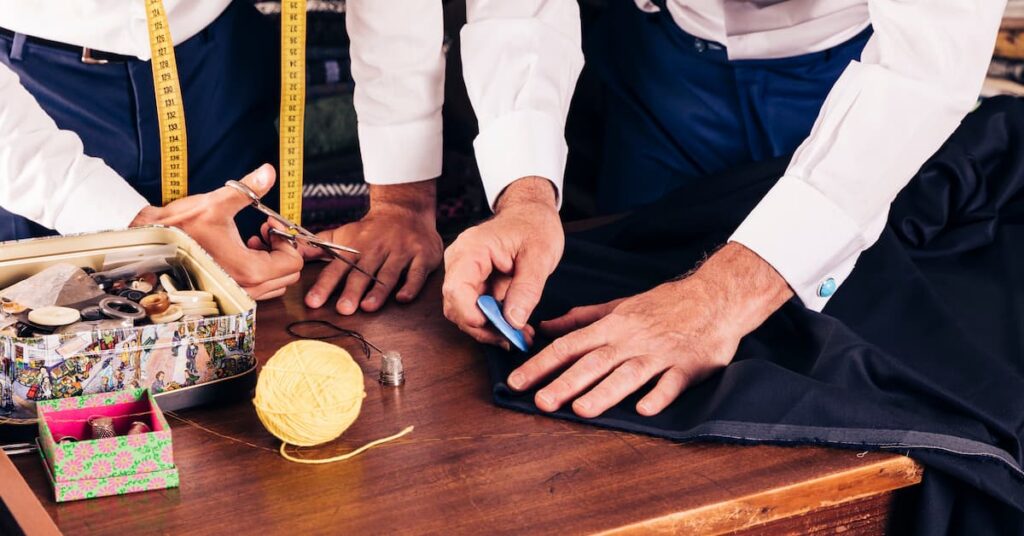
Ask whether the shop keeps your measurements, pattern, and order specifications for future reference. Find out how these records can be accessed and whether the shop offers repairs or alterations after collection.
This can be particularly useful for repeat orders or customers living abroad.
Also clarify:
- Whether future alterations are available.
- How repair requests are handled.
- Whether measurements can be updated for subsequent orders.
- What care instructions apply to the finished garment.
- Whether international shipping can be arranged if required.
Keeping measurements on file can simplify future orders, but it does not guarantee an unchanged fit. Body measurements, preferences, and garment requirements can all change over time.
15. Are you comfortable with all the agreed terms?
Before committing, review the important details one final time. A suitable tailor should be willing to answer questions without making customers feel rushed.
Make sure you understand the garment specifications, fabric, construction, total price, payment milestones, fitting arrangements, collection date, and aftercare conditions.
If important details remain unclear, pause before paying a deposit and compare another shop. Taking time to establish expectations is generally more useful than relying on promises that have not been confirmed.
What Should You Confirm Before Choosing a Tailor?
Use this checklist before placing an order:
- The tailor has explained what bespoke or made-to-measure means for the specific order.
- Relevant finished garments have been inspected.
- Responsibilities for measuring, cutting, fittings, and alterations are clear.
- Fabric and customization details are recorded.
- The written quotation identifies inclusions, exclusions, and additional charges.
- Fitting dates and included alterations have been agreed.
- The collection date allows enough time for potential corrections.
- Deposit and remaining payment terms are clear.
- Contact arrangements and aftercare options are understood.
Choosing a tailor becomes easier when the decision is based on observable workmanship, a clear process, and realistic expectations rather than price or promises alone.
Ready to Order Your Custom Garment?

At Michael Tailors, we believe successful custom tailoring starts with understanding each customer’s requirements and communicating clearly throughout the process. We encourage customers to discuss their preferred style, fabric, budget, and fitting schedule before placing an order. For those exploring a custom tailor in Bangkok, we aim to make the experience straightforward, with attention to individual preferences and the details that contribute to a comfortable, well-fitted garment.
Frequently Asked Questions
What should you ask a tailor before ordering a suit?
Ask who will make the garment, how the pattern is developed, what fabric and construction are included, how many fittings are planned, and which alterations are covered. Request a written quotation with the total price and collection arrangements before paying a deposit.
How many fittings are needed for a custom suit?
The number depends on the tailoring method, garment complexity, and adjustments required. Ask the tailor to explain what each fitting involves rather than assuming that a particular number guarantees quality.
How long does it take to get a custom suit in Bangkok?
The schedule varies according to fabric availability, construction, workshop workload, and fitting requirements. Express services may be available, but confirm the actual fitting and collection dates for the specific order.
Is bespoke tailoring better than made-to-measure?
Neither option is automatically better for every customer. Bespoke generally involves an individual pattern and a more extensive customization process, while made-to-measure adjusts an existing pattern. The right choice depends on the desired fit, customization, budget, and available time.

More Articles

Getting a Suit Made in Bangkok on a Short Trip: Real Customer Stories
Suit vs Tuxedo: Key Differences and When to Wear Each One